Security Affairs
U.S. CISA adds DD-WRT, Langflow and WordPress flaws to its Known Exploited Vulnerabilities catalog|OpenAI AI models exploited zero-days to reach Hugging Face in benchmark test|Public PoC triggers active exploitation of critical SharePoint RCE vulnerability CVE-2026-50522|Zimbra 10.1.20 patches multiple security issues, including a critical command injection bug|Qilin Ransomware Affiliates Abuse CVE-2026-0257 to Gain Unauthorized VPN Access|Attackers Exploit Critical ServiceNow RCE Flaw CVE-2026-6875|Dutch Intelligence Warns Russia Uses Hacked IP Cameras for Military Espionage|Critical 7-Zip Flaw Allows Code Execution by Opening Crafted XZ-Compressed Files. Update it now!|CVE-2026-42533: Critical NGINX Bug Could Turn HTTP Requests Into Server Takeovers|AI Agents Turned Into Attackers: Hugging Face Reveals Autonomous Intrusion Campaign|Volexity Uncovers Zero-Day Campaign Targeting SonicWall VPN Appliances|SECURITY AFFAIRS MALWARE NEWSLETTER ROUND 106|U.S. CISA adds DD-WRT, Langflow and WordPress flaws to its Known Exploited Vulnerabilities catalog|OpenAI AI models exploited zero-days to reach Hugging Face in benchmark test|Public PoC triggers active exploitation of critical SharePoint RCE vulnerability CVE-2026-50522|Zimbra 10.1.20 patches multiple security issues, including a critical command injection bug|Qilin Ransomware Affiliates Abuse CVE-2026-0257 to Gain Unauthorized VPN Access|Attackers Exploit Critical ServiceNow RCE Flaw CVE-2026-6875|Dutch Intelligence Warns Russia Uses Hacked IP Cameras for Military Espionage|Critical 7-Zip Flaw Allows Code Execution by Opening Crafted XZ-Compressed Files. Update it now!|CVE-2026-42533: Critical NGINX Bug Could Turn HTTP Requests Into Server Takeovers|AI Agents Turned Into Attackers: Hugging Face Reveals Autonomous Intrusion Campaign|Volexity Uncovers Zero-Day Campaign Targeting SonicWall VPN Appliances|SECURITY AFFAIRS MALWARE NEWSLETTER ROUND 106|
Advertisement

Ad Placeholder

Full Width × 90

Breaking News

Weaponize a Mouse with WHID Injector for Fun & W00t

Researcher Luca Bongiorni has detailed the procedure to weaponize a new mouse with WHID Injector to show you how to create malicious HID devices. Hello there! Finally, I had some spare time to Weaponize a new Mouse, in order to show you how easy is possible to create malicious HID devices. Materials Needed: WHID Injector […]

WHID 2 USB HUB

Researcher Luca Bongiorni has detailed the procedure to weaponize a new mouse with WHID Injector to show you how to create malicious HID devices.

Hello there! Finally, I had some spare time to Weaponize a new Mouse, in order to show you how easy is possible to create malicious HID devices.
Materials Needed:
  • WHID Injector [x1]
  • Mini USB HUB [x1]
  • Wired USB Mouse [1]
  • Soldering Kit (Iron, Flux, etc.)
  • Wires
  • Rubber Tape
  • Bit of Hot Glue
First of all let’s start ripping a part one mini USB HUB.
WHID 1 USB HUB

Usually, I do use one of these two:

For this project, I have used the first one, since was cheaper and already available in my lab.
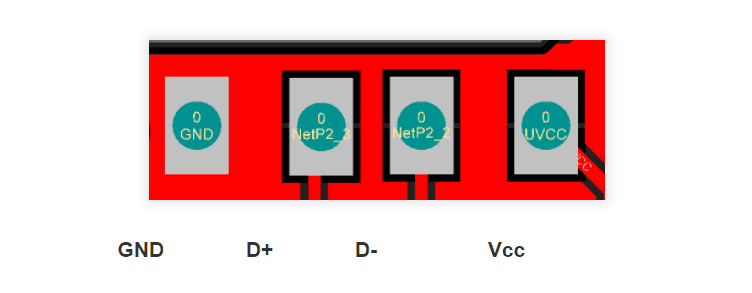
Next step is to desolder all those wires while keeping notes of its pinouts (i.e. GND, D+, D-, Vcc) since we will have to match the USB pinouts with the WHID Injector.
Afterward, we will have to solder the wires to the WHID Injector as explained in its Wiki.
WHID 2 USB HUB WHID 3 USB HUB

At this point, we need to solder back the wires in the USB HUB and connect WHID_Injector to it.

In my case the colors were:

WHID 2 USB HUB

Here below how it looks like once everything is assembled:

WHID 2 USB HUB

 Now the tricky part is to put everything back into the plastic case… and voila’ the final result!

WHID 6 USB HUB

Now we test if everything works properly and start thinking of which payloads we can deploy, on-demand and remotely, into the targeted machines. ?

Here below I recorded a couple of PoCs about some useful payloads I was using during engagements. Enjoy!

You will see how WHID can easily help pen testers to exfiltrate domain credentials with both Phishing Technique and Mimikatz (FUDed) In-Memory.

[adrotate banner=”9″]

Edited by Pierluigi Paganini

(Security Affairs – hacking)

[adrotate banner=”13″]