Security Affairs
Dutch Intelligence Warns Russia Uses Hacked IP Cameras for Military Espionage|Critical 7-Zip Flaw Allows Code Execution by Opening Crafted XZ-Compressed Files. Update it now!|CVE-2026-42533: Critical NGINX Bug Could Turn HTTP Requests Into Server Takeovers|AI Agents Turned Into Attackers: Hugging Face Reveals Autonomous Intrusion Campaign|Volexity Uncovers Zero-Day Campaign Targeting SonicWall VPN Appliances|SECURITY AFFAIRS MALWARE NEWSLETTER ROUND 106|Security Affairs newsletter Round 586 by Pierluigi Paganini – INTERNATIONAL EDITION|Attackers Can Take Over WordPress Sites Using Newly Released wp2shell Exploits|OpenSSL Fixes HollowByte Memory Exhaustion Bug|Daxin: 13-Year-Old China-Linked Malware Found Still Active on Manufacturer’s Network|U.S. CISA adds Fortinet FortiSandbox and Microsoft SharePoint flaws to its Known Exploited Vulnerabilities catalog|Ernst & Young (EY) Investigates Data Breach Involving Third-Party Support Tickets|Dutch Intelligence Warns Russia Uses Hacked IP Cameras for Military Espionage|Critical 7-Zip Flaw Allows Code Execution by Opening Crafted XZ-Compressed Files. Update it now!|CVE-2026-42533: Critical NGINX Bug Could Turn HTTP Requests Into Server Takeovers|AI Agents Turned Into Attackers: Hugging Face Reveals Autonomous Intrusion Campaign|Volexity Uncovers Zero-Day Campaign Targeting SonicWall VPN Appliances|SECURITY AFFAIRS MALWARE NEWSLETTER ROUND 106|Security Affairs newsletter Round 586 by Pierluigi Paganini – INTERNATIONAL EDITION|Attackers Can Take Over WordPress Sites Using Newly Released wp2shell Exploits|OpenSSL Fixes HollowByte Memory Exhaustion Bug|Daxin: 13-Year-Old China-Linked Malware Found Still Active on Manufacturer’s Network|U.S. CISA adds Fortinet FortiSandbox and Microsoft SharePoint flaws to its Known Exploited Vulnerabilities catalog|Ernst & Young (EY) Investigates Data Breach Involving Third-Party Support Tickets|
Advertisement

Ad Placeholder

Full Width × 90

Breaking News

QNAP QTS Domain Privilege Escalation Vulnerability

The vulnerability allows any local user, such as “httpdusr” used to run web application, to escalate to Domain Administrator if the NAS is a domain member. Pasquale ‘sid’ Fiorillo from ISGroup (www.isgroup.biz), an Italian Security Company, and Guido ‘go’ Oricchio of PCego (www.pcego.com), a System Integrator, have just released a critical security advisory for any […]

eCh0raix Ransomware

The vulnerability allows any local user, such as “httpdusr” used to run web application, to escalate to Domain Administrator if the NAS is a domain member.

Pasquale ‘sid’ Fiorillo from ISGroup (www.isgroup.biz), an Italian
Security Company, and Guido ‘go’ Oricchio of PCego (www.pcego.com), a
System Integrator, have just released a critical security advisory for
any version of QNAP NAS prior to 4.2.4 Build 20170313
(https://www.qnap.com/en/support/con_show.php?cid=113).

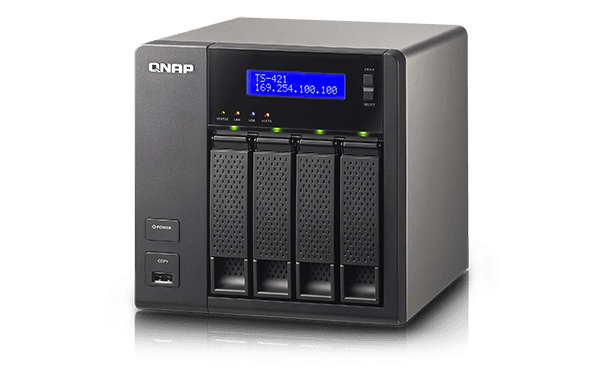
QNAP NAS

QNAP Systems, founded in 2004, provides network attached storage (NAS)
and network video recorder (NVR) solutions for home and business use to
the global market.
QNAP also delivers a cloud service, called myQNAPcloud, that allows
users to access and manage devices from anywhere. QTS is a QNAP device proprietary firmware based on Linux.

The issue involves all the QNAP NAS (all models and all versions) that are members of a Microsoft Active Directory and allows a local QTS admin user, or other low privileged user (such as “httpdusr” used to run web application) to access configuration file that includes a bad crypted Microsoft Domain Administrator password.

The affected component is the “uLinux.conf” configuration file, created
with a world-readable permission used to store a Domain Administrator
password.

This password is stored in the file obfuscated by a simple XOR cypher
and base64 encoded.

“The vulnerability allows a local QTS admin user, or other low privileged user, to access configuration file that includes a bad crypted Microsoft Domain Administrator password if the NAS was joined to a Microsoft Active Directory domain.” reads the advisory. “The affected component is the “uLinux.conf” configuration file, created with a world-readable permission used to store a Domain Administrator password. Admin user can access the file using ssh that is enabled by default. Other users are not allowed to login, so they have to exploit a component, such as a web application, to run arbitrary command or arbitrary file read. Anyone is able to read uLinux.conf file, world readable by default, can escalate to Domain Administrator if a NAS is a domain member.”

Users are strongly advised to update their systems to the latest version released by the vendor
(https://www.qnap.com/en/support/con_show.php?cid=113).

The Official advisory is available at: http://www.ush.it/team/ush/hack-qnap/qnap.txt

[adrotate banner=”9″]

Pierluigi Paganini

(Security Affairs – QNAP NAS, hacking)