
Security Affairs
Dark Caracal Deploys New Go Malware With Ethereum-Based C2 Fallback|Australian Police Charge Two Over TeamPCP Credential Theft|Meta to Pay Up to $18B Over Teen Social Media Use|CISA Warns Water Utilities: Find Your Exposed PLCs Before Attackers Do|OpenAI banned Russian ChatGPT accounts backing covert influence operation|CISA Red Team Fully Compromised Two Critical Infrastructure Orgs|FBI Seizes China-Linked Hacking Platforms QScan and QTRouter Used Against Critical Infrastructure|U.S. CISA adds Gitea flaw to its Known Exploited Vulnerabilities catalog|88 ID Verification Breaches Show the Cost of Collecting Identity Data|WhatsApp Adds Stronger Security as Passkeys Hit 1 Billion|Operation Jackal: 58 Arrests Expose the Money Laundering Machine Behind Global Scams|Norway ’s Digital Government Infrastructure Hit by a new DDoS Attack|Dark Caracal Deploys New Go Malware With Ethereum-Based C2 Fallback|Australian Police Charge Two Over TeamPCP Credential Theft|Meta to Pay Up to $18B Over Teen Social Media Use|CISA Warns Water Utilities: Find Your Exposed PLCs Before Attackers Do|OpenAI banned Russian ChatGPT accounts backing covert influence operation|CISA Red Team Fully Compromised Two Critical Infrastructure Orgs|FBI Seizes China-Linked Hacking Platforms QScan and QTRouter Used Against Critical Infrastructure|U.S. CISA adds Gitea flaw to its Known Exploited Vulnerabilities catalog|88 ID Verification Breaches Show the Cost of Collecting Identity Data|WhatsApp Adds Stronger Security as Passkeys Hit 1 Billion|Operation Jackal: 58 Arrests Expose the Money Laundering Machine Behind Global Scams|Norway ’s Digital Government Infrastructure Hit by a new DDoS Attack|
Advertisement

Ad Placeholder

Full Width × 90

Breaking News

Expert found a critical RCE zero-day in TP-Link Wi-Fi Extenders

A zero-day vulnerability affects multiple models of TP-Link Wi-Fi extenders, it could be exploited to remotely execute code. Security expert Grzegorz Wypych from IBM X-Force found a zero-day flaw that affects multiple models of TP-Link Wi-Fi extenders. The Wi-Fi extenders capture the Wi-Fi signal from the main network device and rebroadcast it to areas where […]

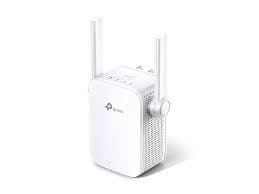
RE365 TP-Link Wi-Fi extenders

A zero-day vulnerability affects multiple models of TP-Link Wi-Fi extenders, it could be exploited to remotely execute code.

Security expert Grzegorz Wypych from IBM X-Force found a zero-day flaw that affects multiple models of TP-Link Wi-Fi extenders.

The Wi-Fi extenders capture the Wi-Fi signal from the main network device and rebroadcast it to areas where the signal is weak.

RE365 TP-Link Wi-Fi extenders

The vulnerability discovered by the expert could be exploited to remotely execute code on vulnerable devices and get complete control over the device and command it with the same privileges of the device’s legitimate user.

“As part of a recent series of vulnerabilities discovered in home routers, IBM X-Force researcher Grzegorz Wypych discovered a zero-day flaw in a TP-Link Wi-Fi extender.” reads the advisory published by IBM. “If exploited, this remote code execution (RCE) vulnerability can allow arbitrary command execution via a malformed user agent field in HTTP headers.”

The RCE flaw affects TP-Link Wi-Fi Extender models RE365, RE650, RE350 and RE500 running firmware version 1.0.2, build 20180213.

The flaw could be exploited by an unauthenticated remote attacker, the attack doesn’t require privilege escalation since all processes on the vulnerable devices already run with root-level access.

The extender operates on the MIPS architecture, like many routers, the zero-day flaw can be triggered

TP-Link’s Wi-Fi extenders operate on MIPS architecture and the vulnerability can be triggered by sending a malformed HTTP request.

The HTTP request that can allow the execution of any shell command on the targeted RE365 Wi-Fi extender.

“The following image shows an open telnet session from a fully compromised device. After connecting to TCP port 4444 we were able to obtain root level shell on the Wi-Fi extender without any privilege escalation, with all processes running as root.” continues the analysis.

TP-Link Wi-Fi extenders

“The sort of impact one can expect from such unauthenticated access is, for example, requesting the device to browse to a botnet command and control server or an infection zone,”

The experts warn of the risks of massive attacks on IoT devices carried out thought Mirai-like bots.

TP-Link already released security patches to address the zero-day flaw, the vendor published separated updates for each of the impacted models of Wi-Fi extenders (RE365RE500RE650RE350).

[adrotate banner=”9″] [adrotate banner=”12″]

Pierluigi Paganini

(SecurityAffairs – TP-Link Wi-Fi extenders, hacking)

[adrotate banner=”5″]

[adrotate banner=”13″]


