
Europe Confirms Record €4.1B Penalty Against Google for Android Practices|U.S. CISA adds a Microsoft SharePoint Server flaw to its Known Exploited Vulnerabilities catalog|430,000 FortiGate Devices Exposed in FortiBleed Ransomware Link|Adobe fixed multiple maximum-severity flaws in ColdFusion and Campaign Classic|Alleged Scattered Spider Hacker Extradited to U.S. to Face Cybercrime Charges|Oracle E-Business Suite Flaw Under Active Attack, 950 Systems Exposed|Azure CLI Targeted in LSHIY Password Spray Campaign Across 64 Orgs|CISA Warns BlueHammer Flaw Is Now Exploited in Ransomware Attacks|RustDuck: The Botnet That’s Still Small but Engineering Like It Plans to Grow|GuardFall Flaw Hits 10 of 11 Popular Open-Source AI Agents|XSS.is, The Forum That Ran the Ransomware Supply Chain Is Down. The Market Isn’t|U.S. CISA adds SimpleHelp flaw to its Known Exploited Vulnerabilities catalog|Europe Confirms Record €4.1B Penalty Against Google for Android Practices|U.S. CISA adds a Microsoft SharePoint Server flaw to its Known Exploited Vulnerabilities catalog|430,000 FortiGate Devices Exposed in FortiBleed Ransomware Link|Adobe fixed multiple maximum-severity flaws in ColdFusion and Campaign Classic|Alleged Scattered Spider Hacker Extradited to U.S. to Face Cybercrime Charges|Oracle E-Business Suite Flaw Under Active Attack, 950 Systems Exposed|Azure CLI Targeted in LSHIY Password Spray Campaign Across 64 Orgs|CISA Warns BlueHammer Flaw Is Now Exploited in Ransomware Attacks|RustDuck: The Botnet That’s Still Small but Engineering Like It Plans to Grow|GuardFall Flaw Hits 10 of 11 Popular Open-Source AI Agents|XSS.is, The Forum That Ran the Ransomware Supply Chain Is Down. The Market Isn’t|U.S. CISA adds SimpleHelp flaw to its Known Exploited Vulnerabilities catalog|
Advertisement

Ad Placeholder

Full Width × 90

Breaking News

A zero-day flaw allows to run arbitrary commands on macOS systems

Security researchers disclosed a new zero-day flaw in Apple’s macOS Finder that can allow attackers to run arbitrary commands on Macs. Independent security researcher Park Minchan disclosed a zero-day vulnerability in Apple’s macOS Finder that can be exploited by attackers to run arbitrary commands on Mac systems running any macOS version. The flaw is due […]

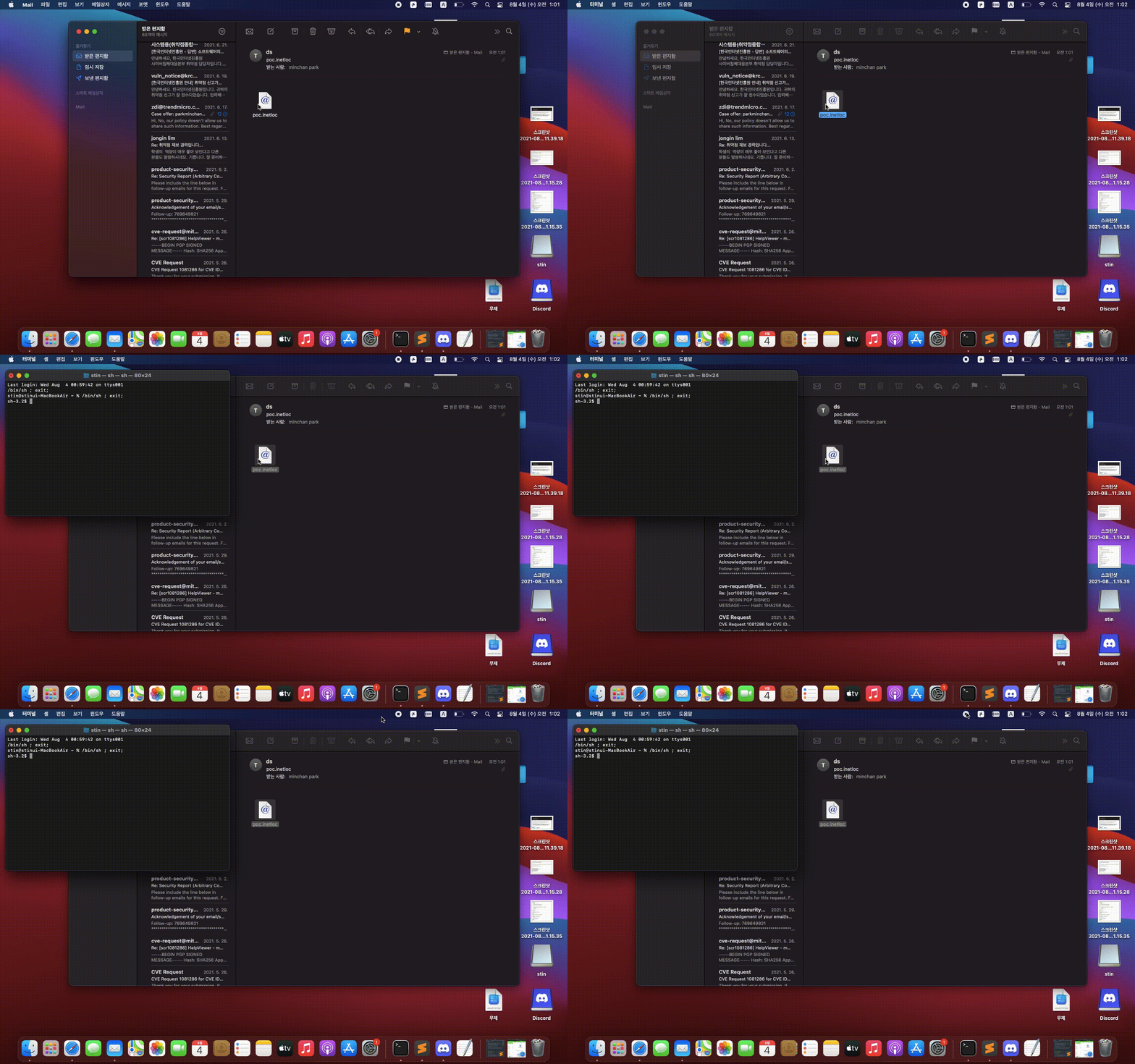
zero-day mac mail-1

Security researchers disclosed a new zero-day flaw in Apple’s macOS Finder that can allow attackers to run arbitrary commands on Macs.

Independent security researcher Park Minchan disclosed a zero-day vulnerability in Apple’s macOS Finder that can be exploited by attackers to run arbitrary commands on Mac systems running any macOS version.

The flaw is due to the way macOS handles inetloc files that causes it to run commands embedded inside. According to the SSD Secure Disclosure advisory, the commands it runs can be local to the macOS allowing the execution of arbitrary commands by the user without any prompts.

An Internet location file is a sort of system bookmark, upon double-clicking one, an online resource or local files (file://) will be opened.

Initially, the flaw was silently addressed by Apple, but Minchan noticed that the IT giant only partially addressed the flaw. However, the expert discovered that it is still possible to exploit the flaw using a different protocol, from file:// to FiLe://, to execute the embedded commands.

“A vulnerability in the way macOS processes inetloc files causes it to run commands embedded inside, the commands it runs can be local to the macOS allowing the execution of arbitrary commands by the user without any warning / prompts.”  reads the SSD Secure Disclosure advisory. “Newer versions of macOS (from Big Sur) have blocked the file:// prefix (in the com.apple.generic-internet-location) however they did a case matching causing File:// or fIle:// to bypass the check.”

The researcher also PoC exploit code for this issue and a video demo:
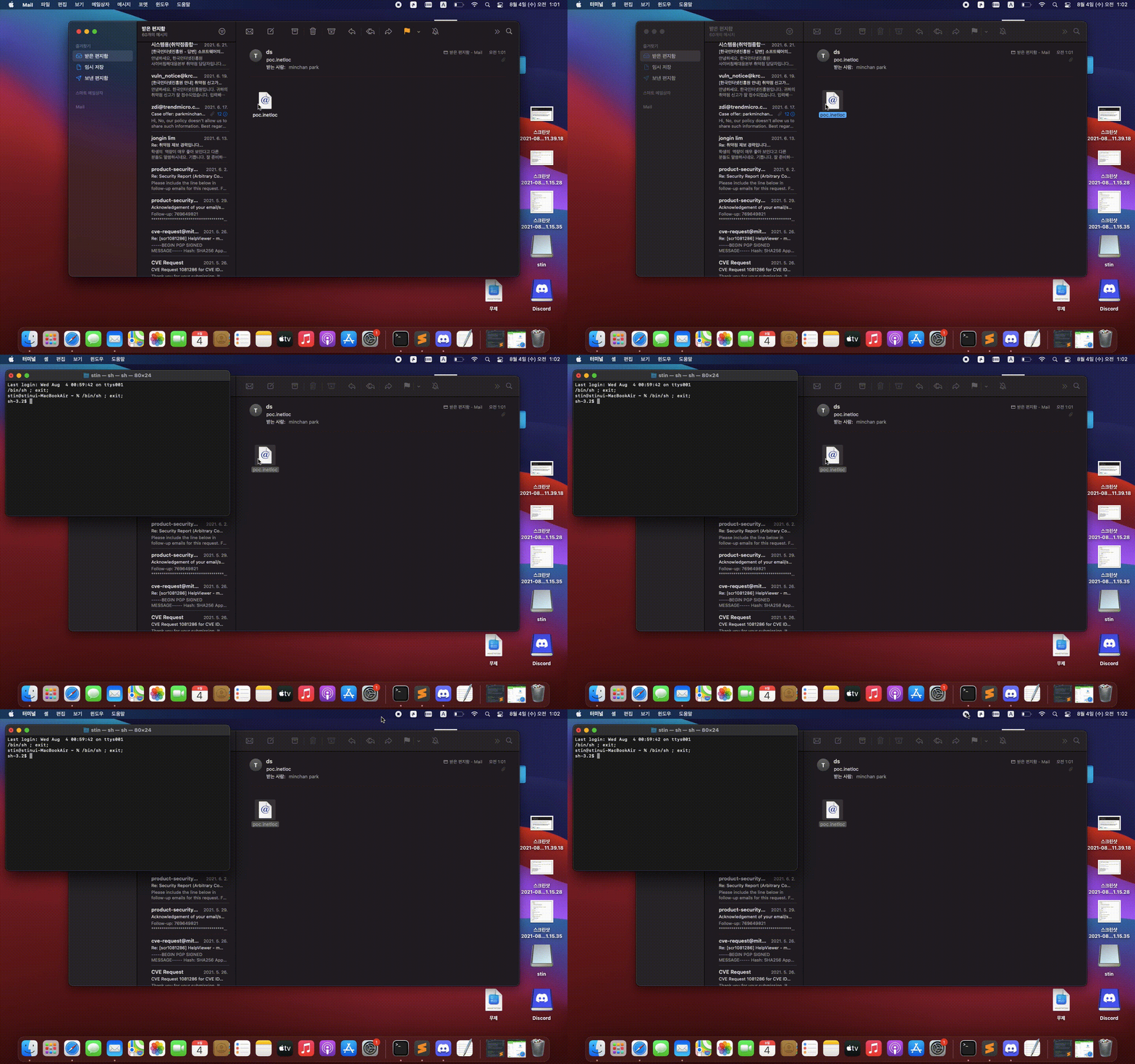
zero-day mac mail-1

According to BleepingComputer, at the time of this writing, the PoC code has a detection rate of zero VirusTotal.

Follow me on Twitter: @securityaffairs and Facebook

[adrotate banner=”9″][adrotate banner=”12″]

Pierluigi Paganini

(SecurityAffairs – hacking, zero-day)

[adrotate banner=”5″]

[adrotate banner=”13″]


