
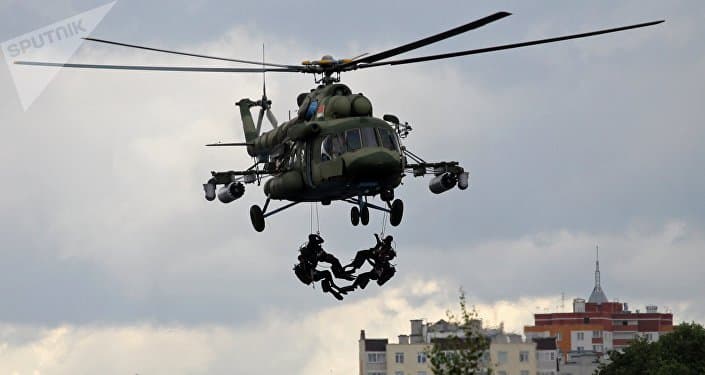
According to intelligence experts the recent Zapad drills conducted by Russia simulated an attack on all Baltic countries, it included the use of cyber weapons.
Baltic and NATO officials claim Russia was behind outage in Latvia’s mobile communications network before Russia’s war games in September code-named Zapad. According to the expert, Russia may have tested one of the weapons in its cyber arsenal.
The cyber attacks caused the interruption of the mobile network along Latvia’s western coast for seven hours on Aug. 30. The Russian army may have used communications jammer aimed towards Sweden from the Russia’s Baltic outpost Kaliningrad.
A Swedish defense ministry spokesperson said the ministry was not aware of any jamming attempt directed at Sweden infrastructure.
“Russia appears to have switched on a mobile communications jammer in Kaliningrad, a very powerful one that wasn’t aimed at Latvia, but towards Gotland, the Aland Islands,” explained Karlis Serzants, the deputy chairman of the Latvian parliament’s National Security Committee.
“One of the edges (of the beam) affected Latvia too,” he told Reuters after being briefed by Latvian intelligence.

Latvian officials believe the Russian hackers also targeted Latvia’s emergency services’ 112 hotline, which started having problems since Sept. 13.
“Russia simulated an attack on all Baltic countries,” said Lithuania’s Defence Minister Raimundas Karoblis.
Reuters contacted the Russian Defence Ministry but did not receive any comment on the allegations.
The experts also observed other incidents linked to the Zapad drills, the first one revolves around hacking soldiers’ smartphones. It seems that Russian soldiers used both drones with hacking tools a mobile telephone tower similar to the stingray equipment. The sophistication of the attacks leaves little doubt that there is some state-sponsorship involved.
According to the WSJ, one victim, U.S. Army Lt. Col. Christopher L’Heureux, “said at least six soldiers he commands have had phones or Facebook accounts hacked. He said he suspects the incidents were meant as a message that Russian intelligence forces were tracking him, could crack his passwords and wanted to intimidate his soldiers.”
WSJ reports, “Military cyberespionage experts said the drone flights and cellphone data collection suggest Russia is trying to monitor troop levels at NATO’s new bases to see if there are more forces present there than the alliance has publicly disclosed.”
Unfortunately, not all European allies in NATO are ready to repel such kind of attacks, and NATO cyber strategy is purely defensive.
NATO diplomat highlighted the ability of Russian units to intercept or jam civilian networks “within a significant radius and with relative ease”, posing serious risks for NATO communications and radars.
There is no doubt, the Zapad drills just confirmed that Russia had developed “a significant electronic warfare capability” over the past three years.
“A lot of this was on display during the (Zapad) exercises,” U.S. Army Lieutenant General Ben Hodges, who heads U.S. Army forces in Europe, told reporters.
| [adrotate banner=”9″] | [adrotate banner=”12″] |
(Security Affairs – Russia, Zapad Drills)
[adrotate banner=”5″]
[adrotate banner=”13″]


