
WhatsApp removed 6.8M accounts linked to global scam centers, mainly in Cambodia, in a crackdown with Meta and OpenAI.
Meta announced that WhatsApp has removed 6.8 million accounts tied to criminal scam centers, mainly in Cambodia, in a joint effort with OpenAI. Scam centers run multiple schemes, often requiring upfront payment for fake returns. Fraudulent schemes start with text messages or on a dating app, then shift across platforms to avoid detection.
“Some of the most prolific sources of scams are criminal scam centers, often fueled by forced labor and operated by organized crime primarily in Southeast Asia. In the first six months of this year, as part of our ongoing proactive work to protect people from scams, WhatsApp detected and banned over 6.8 million accounts linked to scam centers.” reads the announcement published by Meta. “Based on our investigative insights into the latest enforcement efforts, we proactively detected and took down accounts before scam centers were able to operationalize them.”
Recently, WhatsApp, Meta, and OpenAI disrupted scams linked to a criminal group in Cambodia. These included fake paid likes, scooter rental schemes, and crypto cons. Scammers used ChatGPT to send initial WhatsApp messages, then moved victims to Telegram, where they were assigned tasks like liking TikTok videos. To build trust, scammers showed fake earnings before asking for crypto deposits.
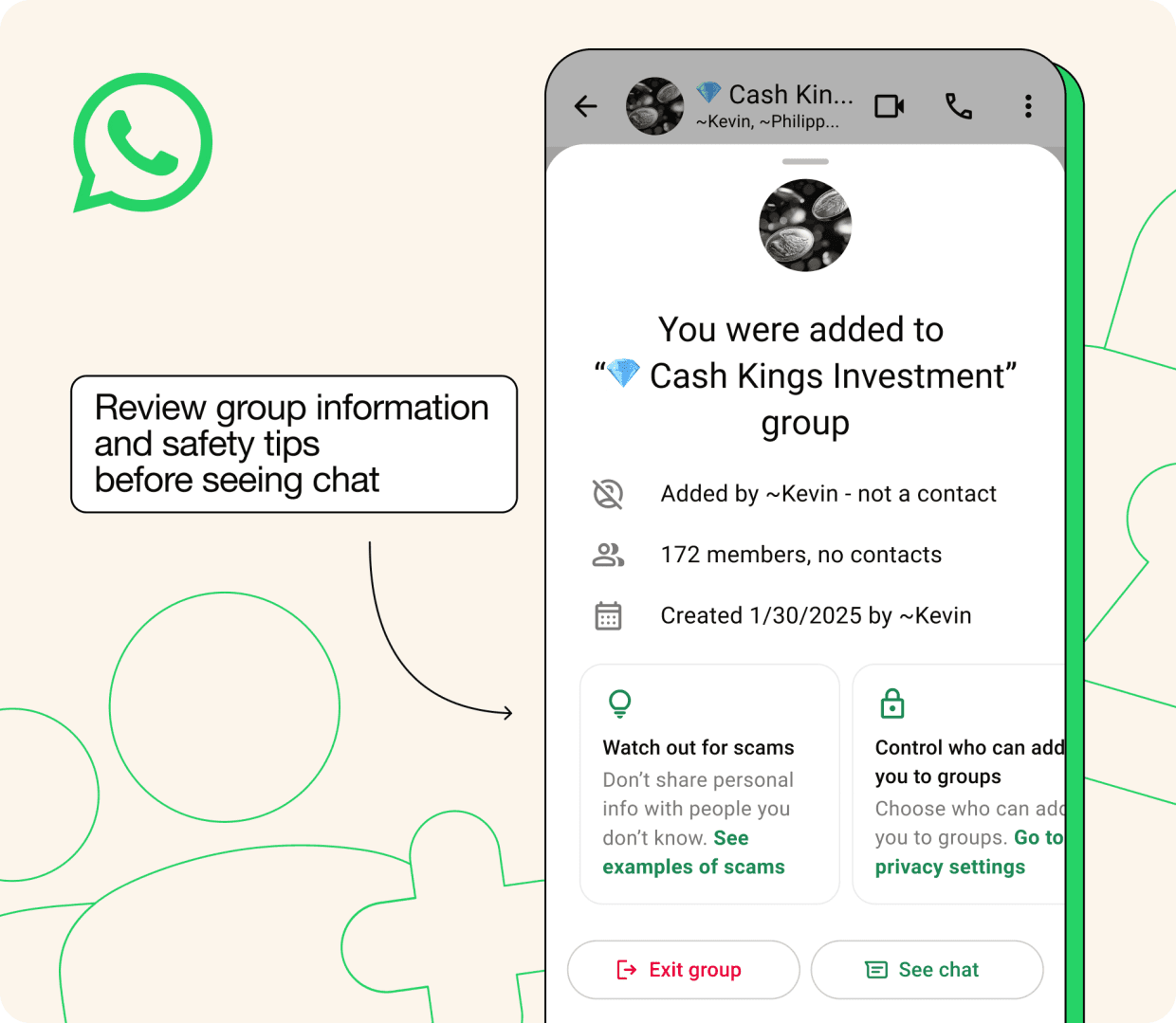
WhatsApp is also rolling out new anti-scam tools to protect its users. A new safety overview will appear when you’re added to unknown groups, allowing users to review the details before deciding to stay or leave, notifications stay silenced until users choose. For one-on-one chats, WhatsApp is testing warnings when messaging people not in your contacts, offering more context to help users pause and think before engaging. These features aim to counter common scam tactics at scale and keep users safer across the platform.

To avoid scams in private messaging, WhatsApp experts recommend users to pause, question, and verify before responding to suspicious messages, especially from unknown numbers promising quick money or claiming urgent issues like unpaid bills. Scammers often exploit trust or fear to get people to send money or personal info. Always take a moment to assess the request, look for red flags (like high pay for little work or pressure to act fast), and confirm identities through a trusted communication method before engaging.
Follow me on Twitter: @securityaffairs and Facebook and Mastodon
(SecurityAffairs – hacking, scam centers)


