
Ukraine ‘s SBU Security Service reportedly stopped VPNFilter attack at chlorine station, the malware infected the network equipment in the facility that supplies water treatment and sewage plants.
According to the Interfax-Ukraine media outlet, the VPNFilter hit the LLC Aulska station in Auly (Dnipropetrovsk region), according to the experts the malware aimed at disrupting operations at the chlorine station.
“Specialists of the cyber security service established minutes after [the incident] that the enterprise’s process control system and system for detecting signs of emergencies had deliberately been infected by the VPNFilter computer virus originating from Russia. The continuation of the cyber attack could have led to a breakdown in technological processes and a possible accident,” the SBU said on its Facebook page on Wednesday.
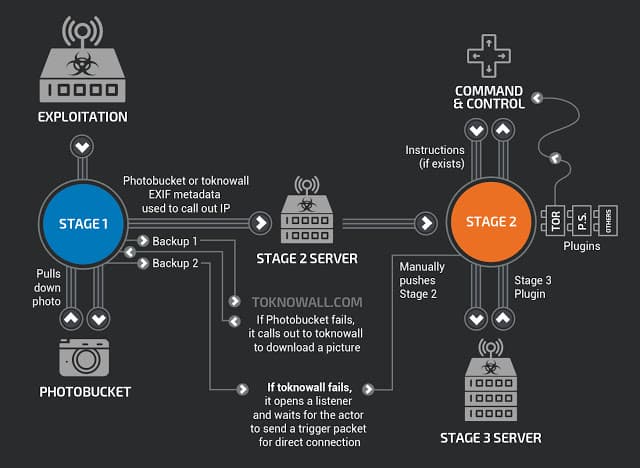
VPNFilter is a multi-stage, modular strain of malware that has a wide range of capabilities for both cyber espionage and sabotage purpose.
According to the experts at Fortinet that analyzed the malware, VPNFilter operates in the following three stages:
- Stage 1 implements a persistence mechanism and redundancy; it allows the malware to survive a reboot.
- Stage 2 includes data exfiltration, command execution, file collection, and device management. Only in some versions it is present a self-destruct module.
- Stage 3 includes multiple modules that perform different tasks. At the time researchers identified only three modules:
- A packet sniffer for traffic analysis and potential data exfiltration.
- The monitoring of MODBUS SCADA protocols.
- Communication with obfuscated addresses via TOR
The main concerns are for a self-destruct mode that could cause severe damages across all infected devices simultaneously, a feature that could potentially result in widespread Internet outage over a targeted geographic region.
Technical analysis of the code revealed many similarities with another nation-state malware, the BlackEnergy malware that was specifically designed to target ISC-SCADA systems and attributed to Russian threat actors.
Another similarity is the geographic distribution of the infections, both BlackEnergy and VPNFilter infected a large number of devices in Ukraine.

According to the experts, many infected devices have been discovered in Ukraine, and their number in the country continues to increase. On May 8, Talos researchers observed a spike in VPNFilter infection activity, most infections in Ukraine and the majority of compromised devices contacted a separate stage 2 C2 infrastructure at the IP 46.151.209[.]33.
The experts discovered the VPNFilter malware had infected devices manufactured by Linksys, MikroTik, Netgear, QNAP, and TP-Link.
At the time of first discovery, the US Justice Department seized a domain used as part of the command and control infrastructure, its press release explicitly referred the Russian APT groups (APT28, Pawn Storm, Sandworm, Fancy Bear and the Sofacy Group) as the operators behind the huge botnet,
“The Justice Department today announced an effort to disrupt a global botnet of hundreds of thousands of infected home and office (SOHO) routers and other networked devices under the control of a group of actors known as the “Sofacy Group” (also known as “apt28,” “sandworm,” “x-agent,” “pawn storm,” “fancy bear” and “sednit”),” reads the press release published by the DoJ.
“The SBU said its agents together with a telecoms provider and workers of the station managed to prevent a potential man-made disaster, adding Russia special forces were behind cyber attacks with the same virus on the public and private sectors in May 2018.” concluded the Interfax-Ukraine.


