
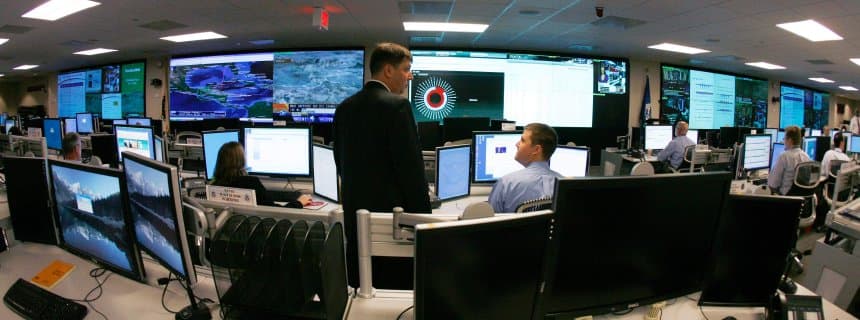
Analysts prepare for the Cyber Storm III, a three-to four-day drill at the National Cybersecurity & Communications Integration Center (NCCIC) just outside Washington, DC in Arlington, Virginia, September 24, 2010. The United States is launching its first test of a new blueprint for responding to an enemy cyber blitz, including any aimed at vital services […]
US Cyber Command published technical details on malware implants used by Russia-linked APTs on multiple parliaments, embassies
US Cyber Command shared technical details about malware implants employed by Russian hacking groups in attacks against multiple ministries of foreign affairs, national parliaments, and embassies.
Experts from the US Cyber Command’s Cyber National Mission Force (CNMF) unit and the Cybersecurity and Infrastructure Security Agency (CISA) uploaded the samples on the Virus Total online virus scan platform.
CISA also published two joint advisories with the FBI and CNMF that provides info regarding the ComRAT and Zebrocy malware that were used by Russia-linked APT groups, including the APT28 and Turla.
The Turla APT group (aka Snake, Uroburos, Waterbug, Venomous Bear and KRYPTON) has been active since at least 2007 targeting diplomatic and government organizations and private businesses in the Middle East, Asia, Europe, North and South America, and former Soviet bloc nations.
The list of previously known victims is long and includes also the Swiss defense firm RUAG, US Department of State, NASA and the US Central Command.
“FBI has high-confidence that Russian-sponsored APT actor Turla, which is an espionage group active for at least a decade, is using ComRAT malware to exploit victim networks. The group is well known for its custom tools and targeted operations.” reads the advisory published CISA.
Russia-linked cyberespionage groups utilized the Zebrocy backdoor in attacks aimed at embassies and ministries of foreign affairs from Eastern Europe and Central Asia.
“Two Windows executables identified as a new variant of the Zebrocy backdoor were submitted for analysis. The file is designed to allow a remote operator to perform various functions on the compromised system.” reads the CISA’s advisory.
Zebrocy is known to be a malware of the APT28’s arsenal, a Russia linked APT group working under the control of the Russian Main Intelligence Directorate (GRU).
| [adrotate banner=”9″] | [adrotate banner=”12″] |
(SecurityAffairs – hacking, US Cyber Command)
[adrotate banner=”5″]
[adrotate banner=”13″]


