
The industrial giant Schneider discovered that the Triton malware exploited a zero-day vulnerability in Triconex Safety Instrumented System (SIS) controllers in an attack aimed at a critical infrastructure organization.
In December 2017, a new malicious code dubbed Triton malware (aka Trisis) was discovered by researchers at FireEye, it was specifically designed to target industrial control systems (ICS) system.
Security experts at CyberX who analyzed samples of the malware provided further details on the attack, revealing that Triton was likely developed by Iran and used to target an organization in Saudi Arabia.

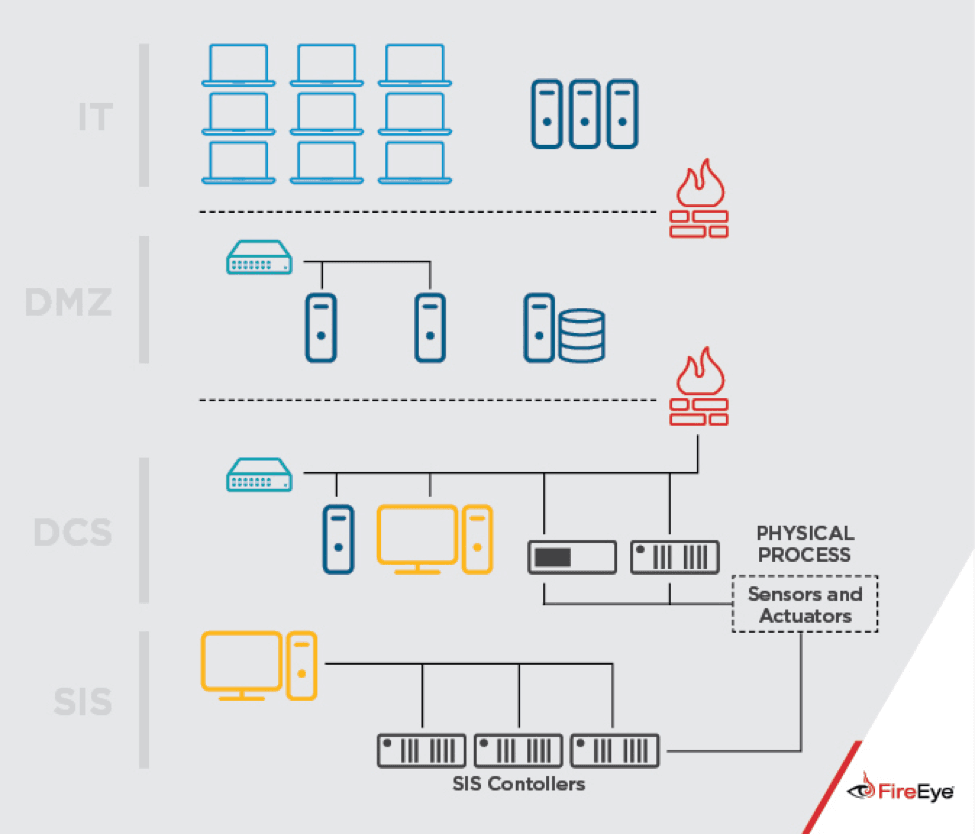
The Triton malware is designed to target Schneider Electric’s Triconex Safety Instrumented System (SIS) controllers that are used in industrial environments to monitor the state of a process and restore it to a safe state or safely shut it down if parameters indicate a potentially hazardous situation.
TRITON is designed to communicate using the proprietary TriStation protocol which is not publicly documented, this implies that the attackers reverse engineered the protocol to carry out the attack.
Initial analysis conducted by Schneider excluded that hackers may have leveraged any vulnerabilities in the target products, but now the vendor has discovered that Triton malware exploited a flaw in older versions of the Triconex Tricon system.
Schneider confirmed the presence of a flaw only in a small number of older versions and plans to release security updates that address it in the next weeks.
Schneider also announced that it is developing an application to detects the presence of the malware on a controller and removes it.
Anyway, Schneider pointed out that the root cause of the success of the Triton malware is that victims failed in implementing best practices and security procedures.
Just after the disclosure of the attack, Schneider published a security advisory to warn its customers and recommended to avoid leaving the front panel key position in “Program” mode when the controller is not being configured. The malicious code can only deliver its payload if the key switch is set to this mode.
“Schneider Electric is aware of a directed incident targeting a single customer’s Triconex Tricon safety shutdown system. We are working closely with our customer, independent cybersecurity organizations and ICSCERT to investigate and mitigate the risks of this type of attack.” reads the security advisory.
“The modules of this malware are designed to disrupt Triconex safety controllers, which are used widely in critical infrastructure. The malware requires the keyswitch to be in the “PROGRAM” mode in order to deliver its payload. Among others, the reported malware has the capability to scan and map the industrial control system environment to provide reconnaissance and issue commands directly to Tricon safety controllers.”
Schneider advised customers to implement the instructions in the “Security Considerations” section of the Triconex documentation.
| [adrotate banner=”9″] | [adrotate banner=”12″] |
(Security Affairs – Triton malware, ICS)
[adrotate banner=”5″]
[adrotate banner=”13″]


