
China-linked Hafnium APT group started using a new piece of new malware to gain persistence on compromised Windows systems.
The China-backed Hafnium cyberespionage group is likely behind a piece of a new malware, dubbed Tarrask, that’s used to maintain persistence on compromised Windows systems, reported Microsoft Threat Intelligence Center (MSTIC) experts.
HAFNIUM primarily targets entities in the United States across multiple industries, including infectious disease researchers, law firms, higher education institutions, defense contractors, policy think tanks, and NGOs.
HAFNIUM has previously compromised victims by exploiting vulnerabilities in internet-facing servers, and has used legitimate open-source frameworks, like Covenant, for command and control.
Microsoft Threat Intelligence Center (MSTIC) highlighted the simplicity of the technique employed by the Tarrask malware that creates “hidden” scheduled tasks on the system to maintain persistence.
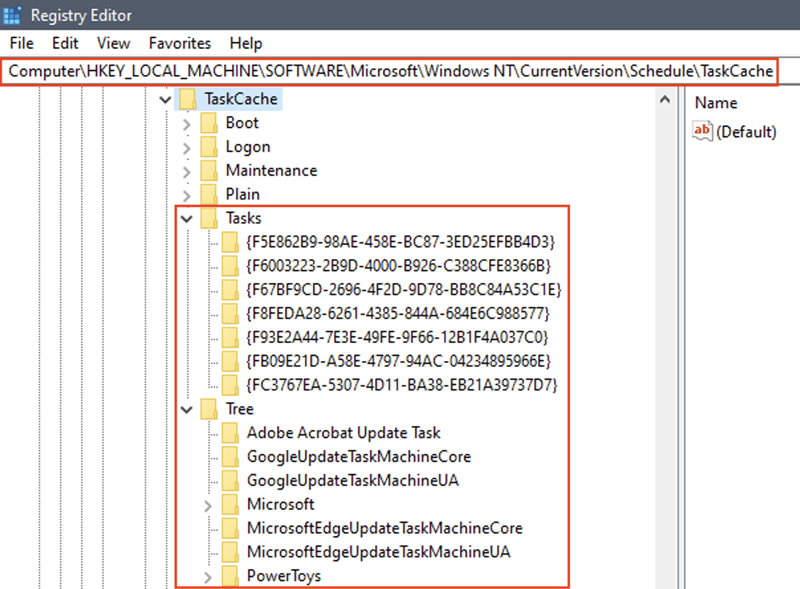
Tarrask creates new registry keys upon the creation of a new task:
- HKEY_LOCAL_MACHINE\SOFTWARE\Microsoft\Windows NT\CurrentVersion\Schedule\TaskCache\Tree\TASK_NAME
- HKEY_LOCAL_MACHINE\SOFTWARE\Microsoft\Windows NT\CurrentVersion\Schedule\TaskCache\Tasks\{GUID}

“The first subkey, created within the Tree path, matches the name of the scheduled task. The values created within it (Id, Index, and SD) contain metadata for task registration within the system. The second subkey, created within the Tasks path, is a GUID mapping to the Id value found in the Tree key. The values created within (Actions, Path, Triggers, etc.) contain the basic parameters necessary to facilitate execution of the task.” reads the post published by Microsoft.
In the attack analyzed by Mcirosoft, the nation-state actors created a scheduled task named ‘WinUpdate’ via HackTool:Win64/Tarrask to re-establish any dropped connections to the C2 servers.

The attackers deleted the [Security Descriptor] value within the Tree registry path. The security descriptor (SD) defines access controls for running the scheduled task.
The trick consists of erasing the SD value from the Tree registry path to make the task hidden from the Windows Task Scheduler or the schtasks command-line utility. The only way to see the tack is to manually examine the Registry Editor.
The experts pointed out that executing a “reg delete” command to delete the SD value will result in an “Access Denied” error even when run from an elevated command prompt. The only way to delete the SD value is to execute the command within the context of the SYSTEM user. For this reason, the Tarrask malware utilized token theft to obtain the security permissions associated with the lsass.exe process.
“The attacks we described signify how the threat actor HAFNIUM displays a unique understanding of the Windows subsystem and uses this expertise to mask activities on targeted endpoints to maintain persistence on affected systems and hide in plain sight.” concludes the report. “As such, we recognize that scheduled tasks are an effective tool for adversaries to automate certain tasks while achieving persistence, which brings us to raising awareness about this oft-overlooked technique.”
Please vote for Security Affairs as the best European Cybersecurity Blogger Awards 2022 – VOTE FOR YOUR WINNERS
Vote for me in the sections “The Underdogs – Best Personal (non-commercial) Security Blog” and “The Tech Whizz – Best Technical Blog” and others of your choice.
To nominate, please visit: https://docs.google.com/forms/d/e/1FAIpQLSfxxrxICiMZ9QM9iiPuMQIC-IoM-NpQMOsFZnJXrBQRYJGCOw/viewform
Follow me on Twitter: @securityaffairs and Facebook
| [adrotate banner=”9″] | [adrotate banner=”12″] |
(SecurityAffairs – hacking, HAFNIUM APT)
[adrotate banner=”5″]
[adrotate banner=”13″]


