A new threat actor tracked as TA2101 is conducting malware campaigns using email to impersonate government agencies in the United States, Germany, and Italy.
A new threat actor, tracked as TA2101, is using email to impersonate government agencies in the United States, Germany, and Italy to multiple families of malware, deliver ransomware, and banking Trojans.
The phishing campaigns delivering malicious attachments were observed since the end of October. According to Proofpoint researchers, the news threat actor has been impersonating the United States Postal Service, the German Federal Ministry of Finance, and the Italian Revenue Agency.
“Proofpoint researchers recently detected campaigns from a relatively new actor, tracked internally as TA2101, targeting German companies and organizations to deliver and install backdoor malware.” reads the analysis published by ProofPoint. “Between October 16 and November 12, 2019, Proofpoint researchers observed the actor sending malicious email messages to organizations in Germany, Italy, and the United States, targeting no particular
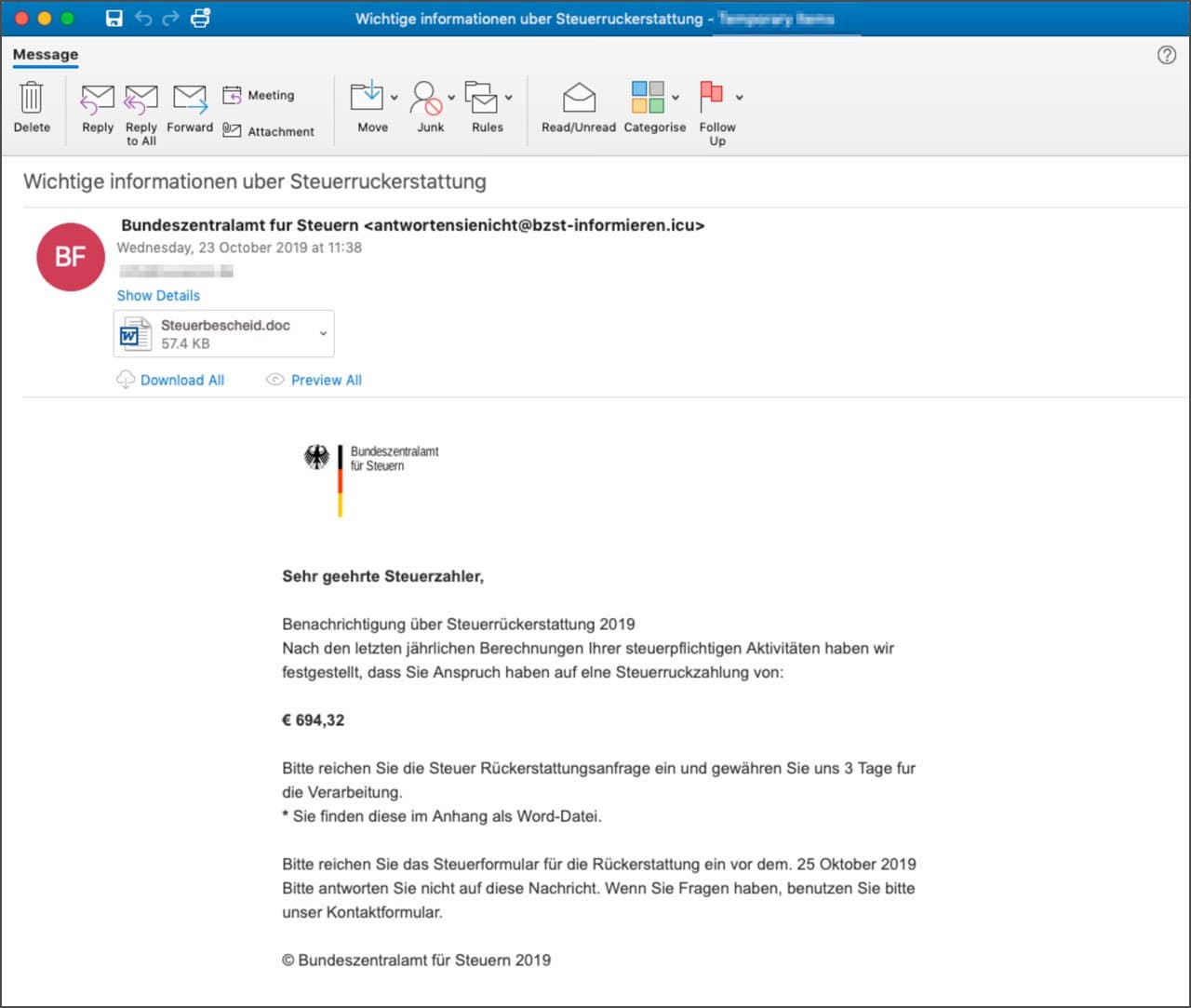
Between October and November 2019, the TA2101 threat actor carried out a malspam campaign against targets in Germany that impersonates the German Federal Ministry of Finance (“Bundeszentralamt fur Steuern”).

The spam messages pretend to be a notification from the above agencies that informs users of a tax refund. The emails use malicious Word attachments that claim to include instructions on how to request a refund.
Once the user opened the attachment and enabled the macros, the malicious code will install the Cobalt Strike
The threat actors also targeted IT support companies to compromise their MSP and use it to deliver the Maze Ransomware to its clients.
Another campaign observed by ProofPoint aimed at German users impersonating the German internet service provider 1&1 Internet AG.
On October 29, Proofpoint observed dozens of emails attempting to deliver
This bait email pretends to inform citizens about a message sent by the agency to inform the recipients about new activities related to the contrast to the tax evasion.

Proofpoint also observed a campaign using emails pretending to be sent by the United States Postal Service
The campaign is similar tot he one that hit the Italy campaign, the
If a user enabled the macros in this campaign, the macros will download and execute the IcedID banking Trojan on the victim’s computer.
“These spoofs are notable for using convincing stolen branding and lookalike domains of European taxation agencies and other public-facing entities such as Internet service providers. Most recently, the actor has attacked US organizations spoofing the United States Postal Service.” concludes Proofpoint. “The increasing sophistication of these lures mirrors improved social engineering and a focus on effectiveness over quantity appearing in many campaigns globally across the email threat landscape.”
| [adrotate banner=”9″] | [adrotate banner=”12″] |
(SecurityAffairs – TA2101, hacking)
[adrotate banner=”5″]
[adrotate banner=”13″]