
The Data “crown jewels” on global Cyber Risk: New scenarios of Cyber-politics to debate on surveillance versus privacy
After two-year, stop-and-go legislative effort on the controversy of section 215 of the Patriot Act, the American Senate voted in plenary 77-to-17 on Sunday-night to move a House bill forward to object political conflict on surveillance vs. privacy.
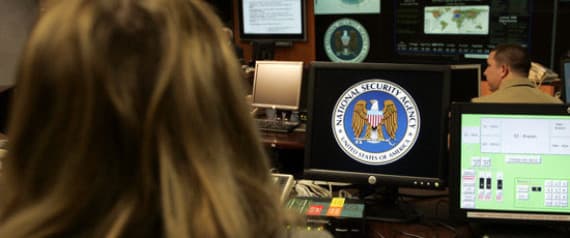
The Snowden’s revelations in 2013 demonstrated how surveillance and privacy were untouchable in terms of legislation and how information of millions of Americans have been exposed to the NSA’s authority. Following the section 215 of the Patriot Act, the process to collect data on Americans from security and intelligence agencies had been a data “crown jewels” to detect and prevent any risk of a security breach. Nonetheless, there is an alarming debate from a privacy perspective considering big differences between legal perform of Section 215 upon a pernicious application of Executive Order 12333 and 2008.

Nonetheless, there is an alarming debate from a privacy perspective considering big differences between legal perform of Section 215 upon a pernicious application of Executive Order 12333 and the 2008 FISA Amendments Act. In fact, those legal instruments have a different orientation from privacy perspective.
Cyber Risk is persisting with the materialization of terror attacks. Therefore, the importance to provide the best legal conditions to the NSA and security offices means a compromise to transform surveillance practices into a good example of accountability and transparency of government surveillance activities. Legal aspects of three parts of the Patriot Act expired, including Section 215.
Now, there is an example of controversy and conflict between political parties, private sector and civil society to find out a solution, considering critical factors to guarantee individual privacy rights upon government’s surveillance activities.
Currently, privacy is extremely important for governments in terms of geopolitics and cyber-politics. There are several examples where governments are taking “privacy extremely seriously”.
The Germans within their Federal Intelligence Service the BND has started several investigations to detect cyber-espionage activities. Brazil and its new internet freedom law is impelling best conditions to guarantee security and liberty in cyberspace.
France approved a bill for intrusive surveillance after January’s Charlie Hebdo attacks. In Canada, the government has tried to insert back doors into encryption. Last year, Australian legislation gave sweeping powers to monitor any device “connected” to a particular device with just a single warrant.
However, government surveillance powers require a prompt consensus to place substantive limits on legal aspects of Executive Order 12333 and the 2008 FISA Amendments Act. In this direction, Senate must reconsider the importance of accountability and oversight to government’s surveillance activities. Then, Cyber Risk could have different dimensions of materialization in cyberspace if governments’ don´t adopt a prompt action to defend the security and individual privacy rights of citizens.
Follow me on Twitter: @securityaffairs and Facebook
| [adrotate banner=”9″] | [adrotate banner=”12″] |
(SecurityAffairs – hacking)
[adrotate banner=”5″]
[adrotate banner=”13″]


