
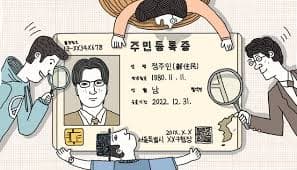
ID system of South Korea faces a significant overhaul in response to major data breaches occurred in the last years which impacted the entire population.
Several times we have discussed about the economic impact of a data breach, but in the majority of cases, they were just a raw estimation to give the experts an idea of the trend of the cost suffered by victims.
Today we will discuss about a real case, the South Korean government, which suffered a major hack that caused the exposure of as much as 80 per cent of the population, is evaluating the possibility to completely redesign the national identity number computer system. The hackers accessed the national system stolen the majority of the ID numbers, also the President Park Geun-hye is one of the 20 million victims.
“ID numbers and personal details of an estimated 80 percent of South Korea’s 50 million people have been stolen from banks and other targets since 2004, according to experts.” states the AP.
In South Korea, the Government issues for each citizen a lifetime unique ID number that is used to track any activity related to the individuals, from opening a bank account to getting an accredited email address. The number is used by the Korean authorities since the late 1960s.
“There is no doubt that we are talking about massive changes,” said Kim Ki-su, a director at Seoul’s Ministry of Security and Public Administration, at the hearing, according to the AP.
Modernizing the whole nation system will have a great economic impact, according his estimation, it would cost the Korean government about $650m. It must be also considered that the Government of Seoul needs to reissue the ID numbers of the population and this operation will increase the cost up to billion-dollar. Private companies, government entities and financial firms need to upgrade their systems to support the change and this would increase overall cost to several billion dollars. As explained by Kim, the new system must be designed with a security by design approach.
“We need different numbers for different social purposes,” he said at the government hearing. “And private companies should be restricted from keeping and using the data.”
In a valuation of the overall cost related to the data breach, security firms and government entities need to include the cost to mitigate criminal activities related to the theft of so precious data. Criminal gangs continue to exploit the stolen ID numbers for identity theft and incident response and monitoring activities represent an expense on the National Budget.
The illustrious Professor Kilnam Chon, has explained that today’s national ID system is not compliant with is security requirements and must be urgently re engineered. reform.
“The problems have grown to a point where finding a way to completely solve them looks unlikely,” he said.
Today the numbers aren’t randomized and for this reason easy to calculate, they start with the citizen’s Birthdate, then have the digit one or two to indicate the recipient’s sex, then other numbers depending on origin place.
“Resident registration numbers’ usage across different sectors made them ‘master keys’ for hackers to open every door and steal whole packages of personal information from unassuming victims,” said researcher Geum Chang-ho at the state-run Korea Research Institute for Local Administration. “Even if their numbers are leaked, people are unable to change them, so hackers are constantly trying to obtain these numbers and are managing it easily.”
I think the this change is a must for the South Korea, which is one of the most technological country and that is growing rapidly. To avoid further incidents, it is necessary to align the technological growth of the Country with the implementation of necessary security measures.
(Security Affairs – ID numbers, South Korea)


