
Microsoft, FireEye, and GoDaddy have partnered to create a kill switch for the Sunburst backdoor that was employed in the recent SolarWinds hack.
Microsoft, FireEye, and GoDaddy have created a kill switch for the Sunburst backdoor that was used in SolarWinds supply chain attack.
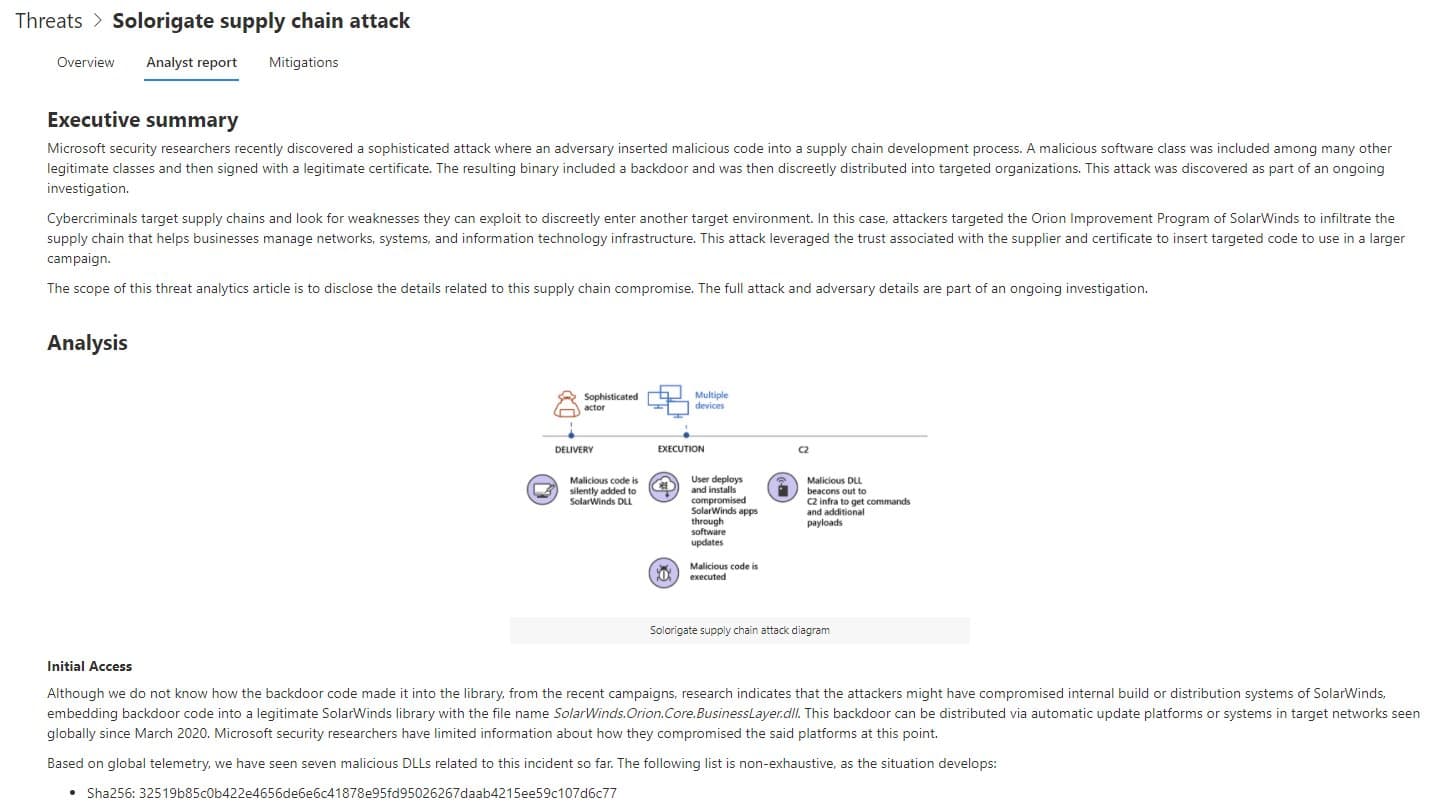
Last week, Russia-linked hackers breached SolarWinds, the attackers had used a trojanized SolarWinds Orion business software updates to distribute the backdoor tracked as SUNBURST (aka Solarigate (Microsoft)).

The company notified roughly 33,000 Orion customers of the incident, but it argued that less than 18,000” customers may have used the backboard version of its products.
Microsoft partnered with other cybersecurity firms to seize the primary domain used in the SolarWinds attack (avsvmcloud[.]com) in an attempt to identify all victims and prevent other systems from being served malicious software.
The domain avsvmcloud[.]com was the command and control (C&C) server for the backdoor delivered to around 18,000 SolarWinds customers through tainted updates for the SolarWinds Orion app.
The tainted version of SolarWinds Orion plug-in masqueraded network traffic as the Orion Improvement Program (OIP) protocol, it communicates via HTTP to C2 to retrieve and execute malicious commands, dubbed “Jobs.” The backdoor supports multiple features, including file transferring, executing files, disabling system services, and gathering system info.
The attackers used VPN servers in the same country as the victim to obfuscate the IP addresses and evade detection.
According to FireEye, if the C2 server resolved to an IP address in one of the following ranges, the backdoor would terminate and will never execute again:
- 10.0.0.0/8
- 172.16.0.0/12
- 192.168.0.0/16
- 224.0.0.0/3
- fc00:: – fe00::
- fec0:: – ffc0::
- ff00:: – ff00::
- 20.140.0.0/15
- 96.31.172.0/24
- 131.228.12.0/22
- 144.86.226.0/24
This information allowed FireEye and Microsoft to create a kill switch for the Sunburst backdoor, as first reported by the popular expert Brian Krebs.
“Depending on the IP address returned when the malware resolves avsvmcloud[.]com, under certain conditions, the malware would terminate itself and prevent further execution. FireEye collaborated with GoDaddy and Microsoft to deactivate SUNBURST infections.” FireEye told Brian Krebs.
“This killswitch will affect new and previous SUNBURST infections by disabling SUNBURST deployments that are still beaconing to avsvmcloud[.]com. However, in the intrusions FireEye has seen, this actor moved quickly to establish additional persistent mechanisms to access to victim networks beyond the SUNBURST backdoor.“
“This killswitch will not remove the actor from victim networks where they have established other backdoors. However, it will make it more difficult to for the actor to leverage the previously distributed versions of SUNBURST.”
As reported by BleepingComputer and Brian Krebs, GoDaddy has created a wildcard DNS resolution that resolves any subdomain of avsvmcloud[.]com to 20.140.0.1, which is controlled by Microsoft. This IP address is included in the 20.140.0.0/15 range that causes the malware to permanently terminates.
Experts pointed out that kill switch would only terminate the Sunburst infection, but other payloads dropped by the threat actors on the infected machine will likely continue to work.
“The killswitch revelations came as security researchers said they’d made progress in decoding SUNBURST’s obfuscated communications methods. Chinese cybersecurity firm RedDrip Team published their findings on Github, saying its decoder tool had identified nearly a hundred suspected victims of the SolarWinds/Orion breach, including universities, governments and high tech companies.” concludes Krebs.
| [adrotate banner=”9″] | [adrotate banner=”12″] |
(SecurityAffairs – hacking, SolarWinds)
[adrotate banner=”5″]
[adrotate banner=”13″]


