
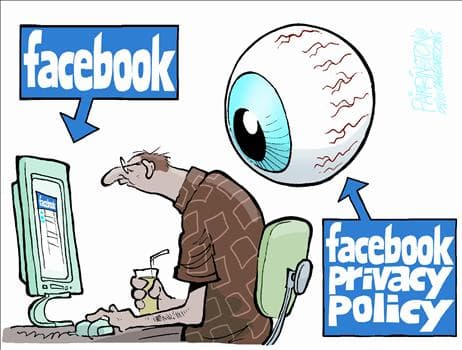
Do users know that Facebook analyzes everything they type and not publish (self-censorship content)? Why Facebook does not consider it a privacy violation?
Recent revelations on the NSA surveillance programs have raised many questions in user’s mind on the real roles of companies such as Facebook and Google, how do they manage users’ data and which kind of analysis they perform and for which purposes.
Does Facebook track everything its users type and then erase before hitting the ‘post’ button?
The answer is very concerning, Facebook is analyzing thoughts the writing that users have intentionally chosen not to share. Facebook implemented algorithms that analyzes what users have typed even if they decide not to publish it considering it’s not private stuff.
Facebook calls the unposted thoughts “self-censorship”, the researchers Sauvik Das and Adam Kramer published an article on their study of the self-censorship behaviour conducted on 5 million English-speaking Facebook users.

The study examined posts on other people’s timelines, aborted status updates and comments on others’ posts, the methods isn’t complex, Facebook instructs the user’s browser to analyze what user type into any text box and send back metadata to the company.
The problem is that the almost every user ignores this sneaky feature of Facebook, it is not clear how the data collected is covered by Facebook’s privacy policy.
The section “Information we receive and how it is used” in the Facebook’s Data Use Policy clearly inform that company collects information you choose to share or when you “view or otherwise interact with things”.
The problem is that the policy does not refer explicitly if Facebook manage self-censorship behavior, is the act of “Typing and deleting text” a form of interaction? Of course Facebook considers self-censorship behavior an explicit interaction from which it is useful extract data to profile users.
“We have arrived at a better understanding of how and where self-censorship manifests on social media; next, we will need to better understand what and why.” stated Das and Kramer
Facebook collects metadata on self-censorship behavior and probably the information could be used for intelligence purpose, the company analyzes it to better understand people thought and habits.
Facebook is analyzing thoughts that we have intentionally chosen not to share, Das and Kramer argue self-censorship analysis is an intrusion in users’ privacy.
If someone chooses not to post, they claim, “[Facebook] loses value from the lack of content generation.”
The information could be used for commercial purposes to propose the proper best ads to the users, even if they never published their thoughts or preferences, or to evaluate the sentiment of wide audience of users on a large scale.
The repercussions on security and privacy are evident, Facebook studies self-censorship behavior to improve its system and minimize self-censorship’s prevalence, but this data is a mine of information for intelligece agencies to spy on users.
(Security Affairs – Facebook, self-censorship)


