
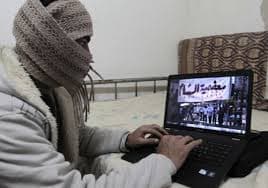
Analysis of the cyber threat landscape in the Middle East region provided by Tim Rains, director of Trustworthy Computing at Microsoft, at RSA 2014.
Middle East is historically a critical area for the diplomacy, but there is the same critical under the cyber security profile. The governments, the enterprises and the organizations present in the area are privileged targets for numerous categories of actors, like cyber criminals and state-sponsored hackers.
Events like Stuxnet case and Saudi Aramco cyber attacks are considered milestones in the history of high-profile malware attack. Data proposed by Microsoft Security Intelligence Report, Volume 15 links a variety of different socio-economic factors in the evolution of cyber threats in different countries, including the Middle East.
Microsoft has identified 11 factors as key indicators able to influence the overall cyber security of a country or of an entire region, government stability and level of corruption perceived may have a serious impact on the diffusion of cyber threats.

Rule of law, stability of the regime and literacy rate in conjunction with other factors, including the economic development and digital access can influence the health of a country under cyber security perspective.
“Malware infection rates are much higher in regions where there are raised levels of strife and turmoil. Political protests and unrest lead to an increased malware infection rate, for example” “Regional cyber vulnerabilities are not linked to any single factor”, “but to a variety of different socio-economic factors”. Tim Rains, director of Trustworthy Computing at Microsoft, explained.

The analysis of malware diffusion in different states in the area, including Bahrain, Kuwait, Oman, Qatar, Saudi Arabia and the United Arab Emirates, shows infection rates of 10 to 12.9 computers per thousand, nearly twice the worldwide average for infection rates. The situation is more alarming if we consider data of the remaining countries in the Middle East, which is almost five times the world average.
Egypt, Palestinian Authority, Syria, Pakistan and Iraq have an infection rate ranging between 25 and just over 30 computers per thousand, very disturbing is data related to Turkey as reported in the following image.

Tim Rains has made an intriguing presentation at the recent RSA conference 2014 in San Francisco about the security threat landscape in the Middle East titled “A deep dive into the security threat landscape of the Middle East/Southwest Asia” which contains a detailed analysis of the cyber threat landscape in the Middle East region.
Rains also enumerated the best practices adopeted by countries with low infection rates:
- Strong public – private partnerships aimed at driving down infection rates.
- CERTs, ISPs and others actively monitoring for threats in the region.
- An IT culture where system administrators respond rapidly to reports of system infections or abuse.
- Enforcement policies and active remediation of threats via quarantining infected systems on networks.
- Regional education campaigns and media attention.
- Low software piracy rates and widespread usage of Windows Update/Microsoft Update.
Let me close with a paradigm cited in the slides:
“Nations with below average digital access tend to see increases in CCM as they improve tech access, meanwhile Nations with above av3rage digital access tend to see decreases in CCM as they improve tech access.”
(Security Affairs – Middle East, malware)


