
Microsoft disrupted a hacking operation linked conducted by Russia-linked APT SEABORGIUM aimed at NATO countries.
The Microsoft Threat Intelligence Center (MSTIC) has disrupted activity by SEABORGIUM (aka ColdRiver, TA446), a Russia-linked threat actor that is behind a persistent hacking campaign targeting people and organizations in NATO countries.
SEABORGIUM has been active since at least 2017, its campaigns involve persistent phishing and credential theft campaigns leading to intrusions and data theft. The APT primarily targets NATO countries, but experts also observed campaigns targeting the Baltics, Nordics, and Eastern Europe regions, including Ukraine.
The SEABORGIUM group primarily focuses operations on defense and intelligence consulting companies, non-governmental organizations (NGOs) and intergovernmental organizations (IGOs), think tanks, and higher education.
The group also targets former intelligence officials, experts in Russian affairs, and Russian citizens abroad.
SEABORGIUM’s campaigns begin with a reconnaissance activity of target individuals, with a focus on identifying their contacts on social networks or the sphere of influence.
“Based on some of the impersonation and targeting observed, we suspect that the threat actor uses social media platforms, personal directories, and general open-source intelligence (OSINT) to supplement their reconnaissance efforts.” reads the post published by Microsoft. “MSTIC, in partnership with LinkedIn, has observed fraudulent profiles attributed to SEABORGIUM being used sporadically for conducting reconnaissance of employees from specific organizations of interest. “
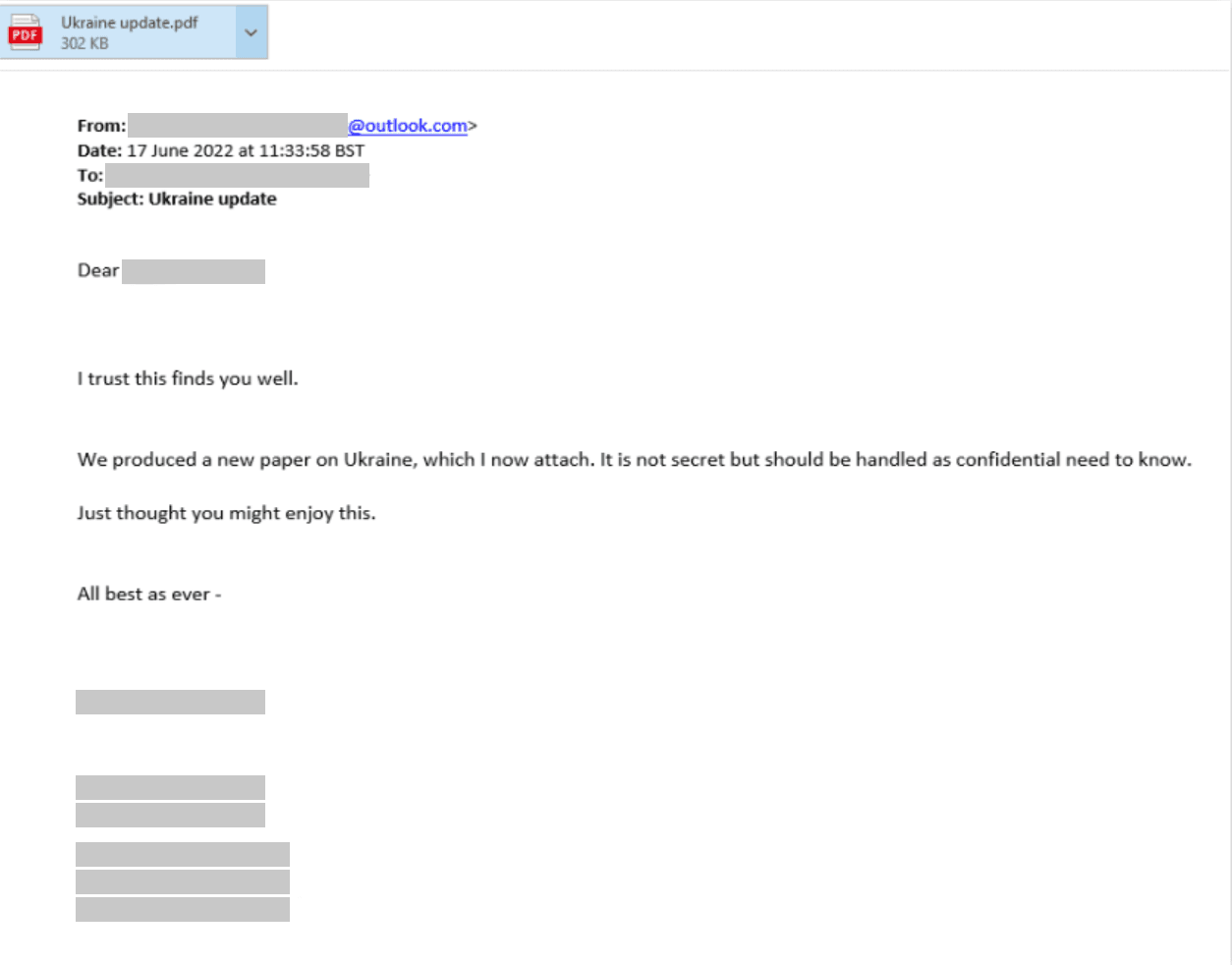
Threat actors used fake identities to contact target individuals and start a conversation with them to build a relationship and trick them into opening an attachment sent via phishing messages
The phishing messages used PDF attachments and in some cases, they included links to file or document hosting services, or to OneDrive accounts hosting the PDF documents.

Upon opening the PDF file, it will display a message stating that the document could not be viewed and that they should click on a button to try again.
Clicking the button, the victim is redirected to a landing page running phishing frameworks, such as EvilGinx, that displays the sign-in page for a legitimate provider and intercept any credentials
After the credentials are captured, the victim is redirected to a website or document to avoid raising suspicion.
Once the attackers have gained access to the targeted email account, they exfiltrate intelligence data (emails and attachments) or set up forwarding rules from victim inboxes to actor-controlled dead drop accounts.
In several cases, SEABORGIUM has been observed using their impersonation accounts to facilitate dialog with specific people of interest.
Microsoft confirmed it has taken action to disrupt SEABORGIUM’s operations by disabling accounts used for surveillance, phishing, and email collection. The IT giant also shared Indicators of compromise (IOCs) for this threat actor, which includes a list of more than sixty domains used by the APT in its phishing campaigns.
The complete list of domains can be found in Microsoft’s advisory, as well as safeguards that network defenders can use to prevent similar attacks.
Defenses include disabling email auto-forwarding in Microsoft 365, using the IOCs to investigate for potential compromise, requiring MFA on all accounts, and for more security, requiring FIDO security keys.
Microsoft has also released Azure Sentinel hunting queries [1, 2] that can be used to check for malicious activity.
Follow me on Twitter: @securityaffairs and Facebook
| [adrotate banner=”9″] | [adrotate banner=”12″] |
(SecurityAffairs – hacking, NATO)
[adrotate banner=”5″]
[adrotate banner=”13″]


