
U.S. CISA adds a Microsoft SharePoint Server flaw to its Known Exploited Vulnerabilities catalog|430,000 FortiGate Devices Exposed in FortiBleed Ransomware Link|Adobe fixed multiple maximum-severity flaws in ColdFusion and Campaign Classic|Alleged Scattered Spider Hacker Extradited to U.S. to Face Cybercrime Charges|Oracle E-Business Suite Flaw Under Active Attack, 950 Systems Exposed|Azure CLI Targeted in LSHIY Password Spray Campaign Across 64 Orgs|CISA Warns BlueHammer Flaw Is Now Exploited in Ransomware Attacks|RustDuck: The Botnet That’s Still Small but Engineering Like It Plans to Grow|GuardFall Flaw Hits 10 of 11 Popular Open-Source AI Agents|XSS.is, The Forum That Ran the Ransomware Supply Chain Is Down. The Market Isn’t|U.S. CISA adds SimpleHelp flaw to its Known Exploited Vulnerabilities catalog|Hackers Steal Data of 4.38 Million Aflac Japan Customers|U.S. CISA adds a Microsoft SharePoint Server flaw to its Known Exploited Vulnerabilities catalog|430,000 FortiGate Devices Exposed in FortiBleed Ransomware Link|Adobe fixed multiple maximum-severity flaws in ColdFusion and Campaign Classic|Alleged Scattered Spider Hacker Extradited to U.S. to Face Cybercrime Charges|Oracle E-Business Suite Flaw Under Active Attack, 950 Systems Exposed|Azure CLI Targeted in LSHIY Password Spray Campaign Across 64 Orgs|CISA Warns BlueHammer Flaw Is Now Exploited in Ransomware Attacks|RustDuck: The Botnet That’s Still Small but Engineering Like It Plans to Grow|GuardFall Flaw Hits 10 of 11 Popular Open-Source AI Agents|XSS.is, The Forum That Ran the Ransomware Supply Chain Is Down. The Market Isn’t|U.S. CISA adds SimpleHelp flaw to its Known Exploited Vulnerabilities catalog|Hackers Steal Data of 4.38 Million Aflac Japan Customers|
Advertisement

Ad Placeholder

Full Width × 90

Breaking News

Russian Government evaluates the immunity to hackers acting in the interests of Russia

The Russian Government proposed to give a sort of immunity to the hackers that operate in the interests of Moscow. Russian media reported that Alexander Khinshtein, the head of the Duma committee on information policy, announced that the Russian government is evaluating to avoid punishing hackers acting in the interests of Moscow. “The question of […]

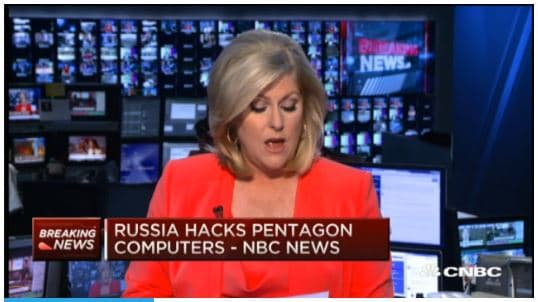
Russian government -hackers-hit-Pentagon.jpg

The Russian Government proposed to give a sort of immunity to the hackers that operate in the interests of Moscow.

Russian media reported that Alexander Khinshtein, the head of the Duma committee on information policy, announced that the Russian government is evaluating to avoid punishing hackers acting in the interests of Moscow.

“The question of their exemption from liability needs to be worked out, said Alexander Khinshtein, head of the Duma committee on information policy.” reported the Govoritmoskva website.

The Russian government recognizes the importance of cybercriminal gangs and hacktivists’ contribution to the defense of its interests. This is an important official announcement, even if the Russian government in the past demonstrated indulgence for cybercriminal gangs that avoided hitting computers in the country. Multiple ransomware gangs developed their malware to avoid infecting systems in the Commonwealth of Independent States (CIS) region (formed following the dissolution of the Soviet Union in 1991) and instructed the network of their affiliates not to target Russian organizations.

The topic is crucial, especially in this historical moment, the ongoing conflict between Russia and Ukraine is characterized by the presence of non-state actors in cyberspace, whose operations are reshaping the threat landscape.

“We are talking about, in general, working out the exemption from liability of those persons who act in the interests of the Russian Federation in the field of computer information both on the territory of our country and abroad,” TASS quotes Khinshtein.

The Russian Parliament announced that this proposal will be discussed more in detail in the next months with the intent to better formulate this initiative.

The Russian law framework currently punishes crooks charged with creating, using, and distributing malware with up to seven years in jail.

Follow me on Twitter: @securityaffairs and Facebook and Mastodon

Pierluigi Paganini

(SecurityAffairs – hacking, Russian Government)


