
Security experts at Proofpoint warn of the resurfacing of the Retefe banking Trojan that implements new techniques to avoid detection.
The Retefe banking Trojan resurfaces in that threat landscape and implements new techniques to avoid detection.
The new variant resurfaced in April, it uses the stunnel encrypted tunneling mechanism and abuses a legitimate shareware app.
One of the major changes in the new variant is the abandon of Tor for its communications and the abuse of a legitimate shareware application.
Unlike other banking Trojan that leverages on injection mechanisms, Retefe routes online banking traffic intended for targeted banks through a proxy. Retefe campaigns observed in the past were focused on customers in Austria, Sweden, Switzerland, and the UK.
The attack chain starts with spam messages using zipped JavaScript and weaponized Microsoft Word documents. Below key findings of the analysis published by Proofpoint:
- Using stunnel instead of TOR to secure its proxy redirection and command and control communications
- The use of Smoke Loader rather than sLoad as an intermediate loader
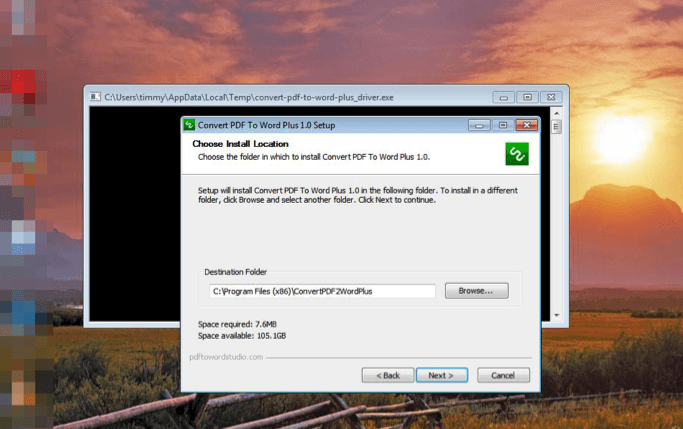
- The abuse of a shareware application known as “Convert PDF to Word Plus 1.0”; this is a Python script that has been packaged as an executable using PyInstaller and packed into an archive using the UPX packing engine.
Retefe remained quite dormant for more than a year (except for a few attacks in 2018), the last major campaign was observed in 2017, when threat actors added the NSA exploit EternalBlue exploit code to the malware to improve its spreading capabilities.
Since April the banking Trojan was involved in attacks on Swiss and German users with both a Windows and macOS version.
Threat actors included in the new variant an application called Stunnel, into the proceedings. Stunnel is a proxy designed to add TLS encryption functionality to existing clients and servers without any changes in the programs’ code.
“Retefe extracts stunnel via a compressed archive in place of the usual TOR Socat proxy. In addition to the use of the decoy abused shareware, this is the most significant observed change to Retefe’s behavior, along with the use of Smoke Loader.” reads the analysis published by Proofpoint. “We suspect that the use of a dedicated tunnel rather than Tor makes for a more secure connection because it eliminates the possibility of snooping on the hops between Tor nodes.”
Secure Tunneling (
The latest variant of the Retefe banking Trojan also included the abuse of a legitimate shareware application known as “Convert PDF to Word Plus 1.0”. The application is a Python script that has been packaged as an executable using PyInstaller and packed into an archive using the UPX packing engine.
The malicious script uses a certificate issued by DigiCert.
In the spam campaigns observed by the experts, attackers trick users into installing the application in order to correctly view the attached document. When the victim launches the application, the Python script writes two files to the victim machine. One is a legitimate installer for the Convert PDF to Word Plus application and is executed as a decoy, while the other is a loader for the banking Trojan. The loader extracts the files using the 7-Zip file-compression utility and stunnel from its resources, then decrypts and executes the main Retefe JavaScript code.

In one campaign uncovered by Proofpoint in April, experts observed attackers sending spam emails to Swiss users and used an Object Linking and Embedding (OLE) package to deliver Smoke Loader.
Campaigns targeting macOS users leverage digitally signed versions of fake Adobe Installers used to deliver their malware,
“By using signed binaries, actors attempt to bypass the macOS internal Gatekeeper security application, which checks if applications are signed by a valid developer certificate before running,” continues Proofpoint.
“Developers appear to have updated key features of the Trojan and are employing new distribution mechanisms…after a fairly lengthy absence from the landscape. As with many types of malware, developers continue to innovate, identifying new, more effective ways to infect victims and steal personal information to better monetize their attacks.”
| [adrotate banner=”9″] | [adrotate banner=”12″] |
(
[adrotate banner=”5″]
[adrotate banner=”13″]


