
Security Affairs
Dark Caracal Deploys New Go Malware With Ethereum-Based C2 Fallback|Australian Police Charge Two Over TeamPCP Credential Theft|Meta to Pay Up to $18B Over Teen Social Media Use|CISA Warns Water Utilities: Find Your Exposed PLCs Before Attackers Do|OpenAI banned Russian ChatGPT accounts backing covert influence operation|CISA Red Team Fully Compromised Two Critical Infrastructure Orgs|FBI Seizes China-Linked Hacking Platforms QScan and QTRouter Used Against Critical Infrastructure|U.S. CISA adds Gitea flaw to its Known Exploited Vulnerabilities catalog|88 ID Verification Breaches Show the Cost of Collecting Identity Data|WhatsApp Adds Stronger Security as Passkeys Hit 1 Billion|Operation Jackal: 58 Arrests Expose the Money Laundering Machine Behind Global Scams|Norway ’s Digital Government Infrastructure Hit by a new DDoS Attack|Dark Caracal Deploys New Go Malware With Ethereum-Based C2 Fallback|Australian Police Charge Two Over TeamPCP Credential Theft|Meta to Pay Up to $18B Over Teen Social Media Use|CISA Warns Water Utilities: Find Your Exposed PLCs Before Attackers Do|OpenAI banned Russian ChatGPT accounts backing covert influence operation|CISA Red Team Fully Compromised Two Critical Infrastructure Orgs|FBI Seizes China-Linked Hacking Platforms QScan and QTRouter Used Against Critical Infrastructure|U.S. CISA adds Gitea flaw to its Known Exploited Vulnerabilities catalog|88 ID Verification Breaches Show the Cost of Collecting Identity Data|WhatsApp Adds Stronger Security as Passkeys Hit 1 Billion|Operation Jackal: 58 Arrests Expose the Money Laundering Machine Behind Global Scams|Norway ’s Digital Government Infrastructure Hit by a new DDoS Attack|
Advertisement

Ad Placeholder

Full Width × 90

Breaking News

RCE flaw in Electronic Arts Origin client exposes gamers to hack

Electronic Arts (EA) has fixed a security issue in the Windows version of its gaming client Origin that allowed hackers to remotely execute code on an affected computer. Electronic Arts (EA) has addressed a vulnerability in the Windows version of its gaming client Origin that allowed hackers to remotely execute code on an affected computer. […]

Electronic Arts Origin client

Electronic Arts (EA) has fixed a security issue in the Windows version of its gaming client Origin that allowed hackers to remotely execute code on an affected computer.

Electronic Arts (EA) has addressed a vulnerability in the Windows version of its gaming client Origin that allowed hackers to remotely execute code on an affected computer.

Electronic Arts already released a security patch for the remote code execution vulnerability. The Origin app on Windows is used by tens of millions of gamers. The Origin client for macOS was not affected by this flaw.

The flaw was reported by security experts Dominik Penner and Daley Bee from Underdog Security.

“We located a client-sided template injection, where we proceeded to use an AngularJS sandbox escape and achieve RCE by communicating with QtApplication’s QDesktopServices.” reads a blog post published by
Underdog Security.

“To make it easier to access an individual game’s store from the web, the client has its own URL scheme that allows gamers to open the app and load a game from a web page by clicking a link with origin:// in the address.” reported Techcrunch.

“But two security researchers, Daley Bee and Dominik Penner of Underdog Security, found that the app could be tricked into running any app on the victim’s computer.”

The experts shared a proof-of-concept code with Techcrunch to trigger the issue.

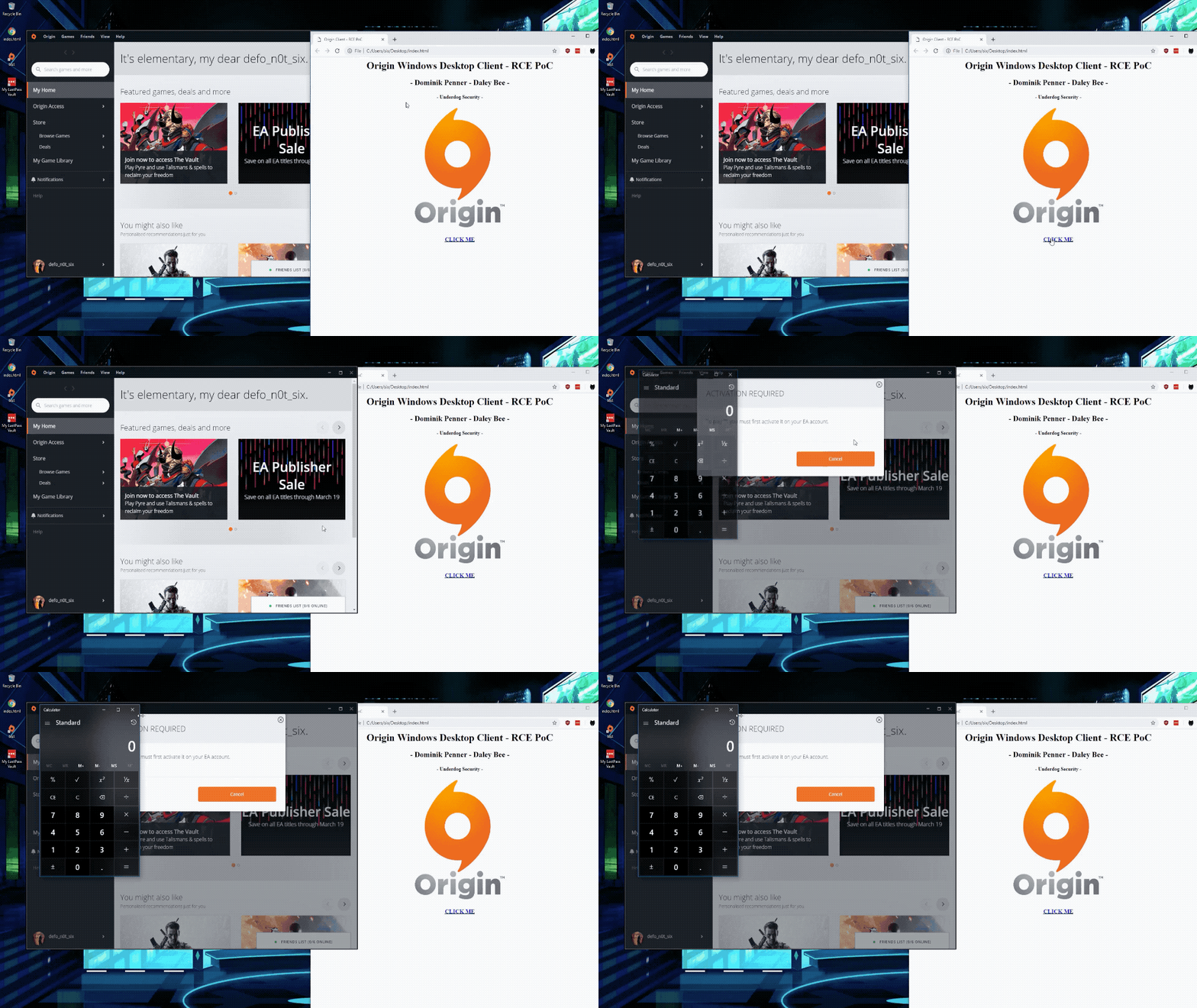
Researchers pointed out that the code allowed any app to run at the same level of privileges as the logged-in user. In the following image, the security duo popped open the Windows calculator remotely.

Electronic Arts Origin client

“But worse, a hacker could send malicious PowerShell commands, an in-built app often used by attackers to download additional malicious components and install ransomware.” continues the post.

An attacker could craft a malicious link and send it via email to the victims or include it on a webpage, the issue could also be triggered if the malicious code was combined with cross-site scripting exploit that ran automatically in the browser.

The flaw can also be exploited by an attacker to take over gamers’ accounts by stealing access token with just a single line of code.

[adrotate banner=”9″] [adrotate banner=”12″]

Pierluigi Paganini

(SecurityAffairs – hacking, Electronic Arts)

[adrotate banner=”5″]

[adrotate banner=”13″]


