
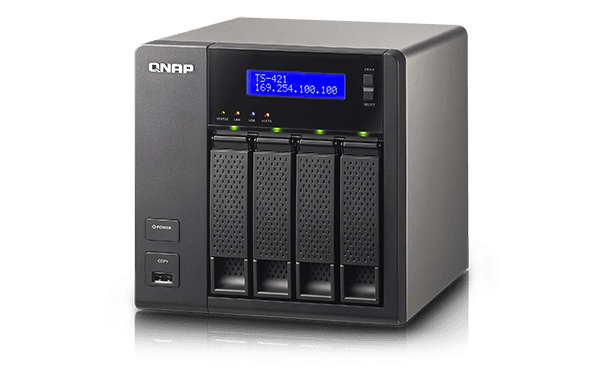
While the AgeLocker ransomware continues to target QNAP NAS systems, the Taiwanese vendor urges customers to update the firmware and apps.
Taiwanese vendor QNAP is urging its customers to update the firmware and apps installed on their network-attached storage (NAS) devices to prevent AgeLocker ransomware infections.
The name AgeLocker comes from the use of the Actually Good Encryption (AGE) algorithm to encrypt files, experts warn that encrypted files can’t be recovered without paying the ransom to the ransomware operators.
Security experts are observing the new strain of ransomware that is targeting QNAP devices since June.
Last week, the Taiwanese vendor published a security advisory that provides technical details about the AgeLocker and steps to mitigate threats. The company described two attack scenarios that allow the AgeLocker to gain access to QNAP devices. In the first scenario, the hackers could target the QNAP device firmware (known as QTS), while in the second one the target is represented by a default app that come preinstalled with recent QNAP systems (named PhotoStation).
“Current intelligence pointed out that AgeLocker-affected systems are mostly macOS and Linux devices, and QNAP’s initial investigation showed that no unpatched vulnerabilities are found in QTS. All known affected NAS are running older, unpatched QTS versions.” reads a blog post published by the vendor.
The vendor also confirmed that older versions of the PhotoStation app are affected by known security flaws.
“QNAP Product Security Incident Response Team (PSIRT) has found evidence that the ransomware may attack earlier versions of Photo Station. We are thoroughly investigating the case and will release more information as soon as possible.” the company added in an alert published last week.
Due to the above scenarios, the vendor recommends users to update both QTS and the PhotoStation app.
“Once again, QNAP urges users to periodically check and install product software updates to keep their devices away from malicious influences,” continues the post.
In August, researchers at Qihoo 360’s Network Security Research Lab (360 Netlab) reported that the attackers were exploiting a remote command execution vulnerability due to a command injection issue that resides in the firmware QNAP NAS devices. Hackers were scanning the Internet for vulnerable network-attached storage (NAS) devices running multiple QNAP firmware versions vulnerable to a remote code execution (RCE) vulnerability addressed by the vendor 3 years ago.

In early August, the Taiwanese company urged its users to update the Malware Remover app to prevent NAS devices from being infected by the QSnatch malware.
The United States Cybersecurity and Infrastructure Security Agency (CISA) and the United Kingdom’s National Cyber Security Centre (NCSC) also issued a joint advisory about a massive ongoing campaign spreading the QSnatch data-stealing malware.
Earlier this, the company issued another alert to warn its users of a wave of attacks spreading a ransomware strain tracked as eCh0raix.
| [adrotate banner=”9″] | [adrotate banner=”12″] |
(SecurityAffairs – hacking, QNap)
[adrotate banner=”5″]
[adrotate banner=”13″]


