
Security researchers at Akamai have discovered a proxy botnet composed of more than 65,000 routers exposed to the Internet via the Universal Plug and Play (UPnP) protocol.
Crooks have compromised the devices of this multi-purpose proxy botnet to conduct a wide range of malicious activities, including spamming and phishing, click fraud, account takeover and credit card fraud, distributed denial of service (DDoS) attacks, malware distribution, and also bypassing censorship,
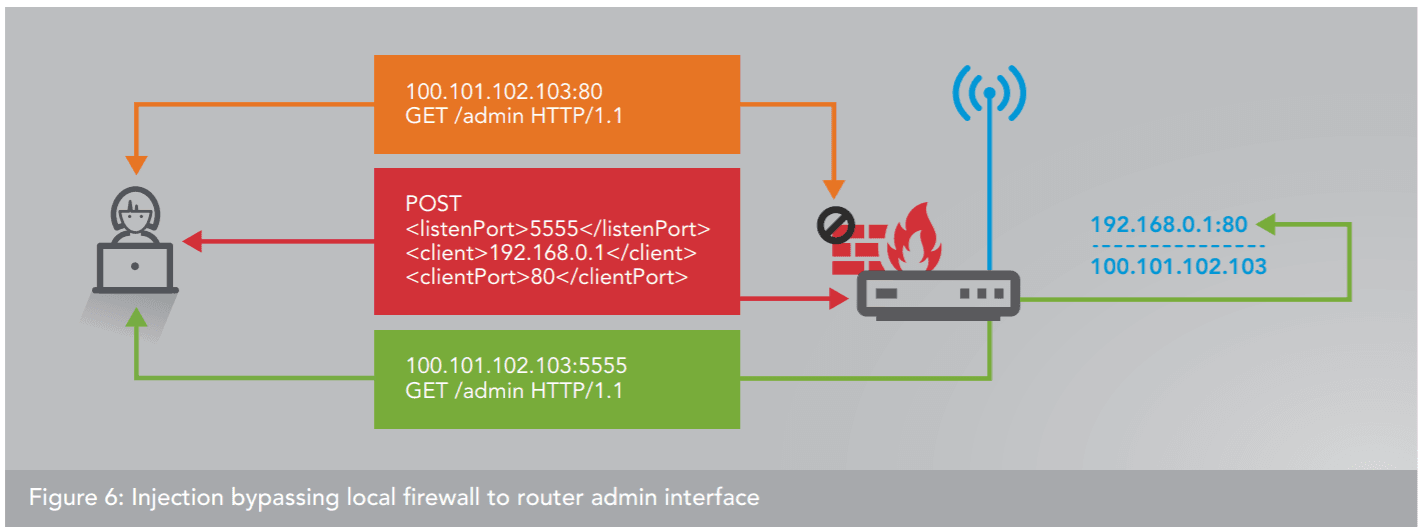
While the researchers were investigating attacks against its customers they discovered that vulnerable devices have NAT injections that allow attackers to abuse them.
“While researching UPnP-enabled devices detected as participants in attacks against Akamai customers, we discovered that some devices appeared to be more susceptible to this vulnerability than others, and contained malicious NAT injections.” reads the analysis published by Akamai. “These injections were present on a handful of the devices found in the wild, and appeared to be part of an organized and widespread abuse campaign”

Akamai discovered over 4.8 million devices that were found to be vulnerable to simple UDP SSDP inquiries. Of these, roughly 765,000 (16% of total) were confirmed to also
expose their vulnerable TCP implementations while over 65,000 (1.3% of total) were discovered to have NAT injections.
“These injections appeared to point to multiple services and servers around the Internet. A majority of the injections appear to target TCP ports 53 (15.9M for DNS), 80 (9.5M for HTTP), and 443 (155K for HTTPS).” continues the analysis. “A wide range of devices are affected, most of them being consumer-grade networking hardware. “73 brands/manufacturers and close to 400 models [were affected].”
The UPnP communication protocol is widely adopted even if it is known to be vulnerable. In early 2013, researchers at Rapid7 published an interesting whitepaper entitled “Security Flaws in Universal Plug and Play” that evaluated the global exposure of UPnP-enabled network devices.
The report highlighted that over 23 million IPs related to Portable UPnP SDK were vulnerable to remote code execution just through a single UDP packet, over 6,900 product versions from over 1,500 vendors were vulnerable through UPnP due to the exposure of UPnP SOAP service to the internet.
Abusing the protocol attackers can control the traffic in and out the networks, UPnP allows the automated negotiation and configuration of port opening/forwarding within a NATed networking environment.
The malicious botnet uncovered by Akamai is composed of vulnerable devices including malicious NAT injections, it turns routers into proxies, for this reason, the experts called the injected devices UPnProxy.
“The injected NAT entries were designed to be working in sets across various devices. Thus, across the 65,000 infected devices, 17,599 unique endpoint IP addresses were discovered.” continues the report. “The most-identified IP was injected over 18.8 million times across 23,286 devices, while the second-most-injected IP appeared over 11 million times across 59,943 devices.”
According to Akamai, part of this proxy botnet was already discovered by researchers at Symantec while investigating into the “Inception Framework” used by an APT group, in that circumstance Symantec research confirmed that the UPnProxy instances were used obfuscate the operators’ true locations.
The APT associated with Inception Framework is still active and continuously evolved its arsenal and TTPs.
In order to check if your router has been compromised for UPnProxying is to scan the endpoint and audit your NAT table entries.
Many frameworks and libraries available online could be used for this purpose.
| [adrotate banner=”9″] | [adrotate banner=”12″] |
(Security Affairs – UPnP, proxy botnet)
[adrotate banner=”5″]
[adrotate banner=”13″]


