Europe Confirms Record €4.1B Penalty Against Google for Android Practices|U.S. CISA adds a Microsoft SharePoint Server flaw to its Known Exploited Vulnerabilities catalog|430,000 FortiGate Devices Exposed in FortiBleed Ransomware Link|Adobe fixed multiple maximum-severity flaws in ColdFusion and Campaign Classic|Alleged Scattered Spider Hacker Extradited to U.S. to Face Cybercrime Charges|Oracle E-Business Suite Flaw Under Active Attack, 950 Systems Exposed|Azure CLI Targeted in LSHIY Password Spray Campaign Across 64 Orgs|CISA Warns BlueHammer Flaw Is Now Exploited in Ransomware Attacks|RustDuck: The Botnet That’s Still Small but Engineering Like It Plans to Grow|GuardFall Flaw Hits 10 of 11 Popular Open-Source AI Agents|XSS.is, The Forum That Ran the Ransomware Supply Chain Is Down. The Market Isn’t|U.S. CISA adds SimpleHelp flaw to its Known Exploited Vulnerabilities catalog|Europe Confirms Record €4.1B Penalty Against Google for Android Practices|U.S. CISA adds a Microsoft SharePoint Server flaw to its Known Exploited Vulnerabilities catalog|430,000 FortiGate Devices Exposed in FortiBleed Ransomware Link|Adobe fixed multiple maximum-severity flaws in ColdFusion and Campaign Classic|Alleged Scattered Spider Hacker Extradited to U.S. to Face Cybercrime Charges|Oracle E-Business Suite Flaw Under Active Attack, 950 Systems Exposed|Azure CLI Targeted in LSHIY Password Spray Campaign Across 64 Orgs|CISA Warns BlueHammer Flaw Is Now Exploited in Ransomware Attacks|RustDuck: The Botnet That’s Still Small but Engineering Like It Plans to Grow|GuardFall Flaw Hits 10 of 11 Popular Open-Source AI Agents|XSS.is, The Forum That Ran the Ransomware Supply Chain Is Down. The Market Isn’t|U.S. CISA adds SimpleHelp flaw to its Known Exploited Vulnerabilities catalog|
Advertisement

Ad Placeholder

Full Width × 90

Breaking News

The Port of Nagoya, the largest Japanese port, suffered a ransomware attack

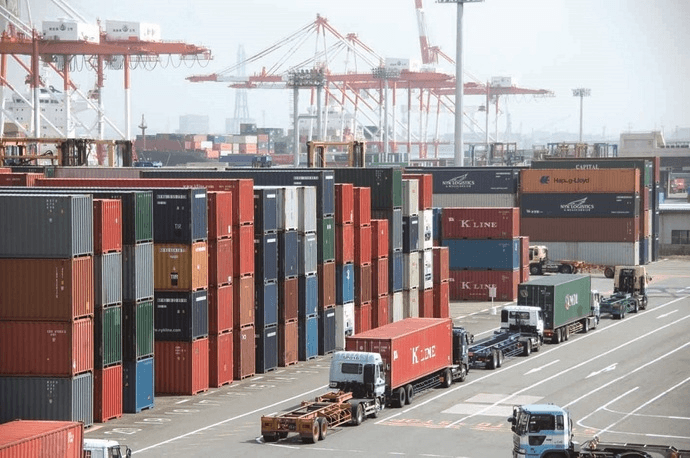
The Port of Nagoya, the largest port in Japan, suffered a ransomware attack that severely impacted its operations. The Port of Nagoya, in the Ise Bay, is the largest and busiest trading port in Japan, accounting for about 10% of the total trade value of Japan. Notably, this port is the largest exporter of cars […]

Port of Nagoya

Source https://www.port-of-nagoya.jp/shokai/kohoshiryo/photogallery/photogallery/1001056.html

The Port of Nagoya, the largest port in Japan, suffered a ransomware attack that severely impacted its operations.

The Port of Nagoya, in the Ise Bay, is the largest and busiest trading port in Japan, accounting for about 10% of the total trade value of Japan. Notably, this port is the largest exporter of cars in Japan and where the Toyota Motor Corporation exports most of its cars.

The Port suffered a ransomware attack that is impacting the operation of container terminals.

The Nagoya Harbor Transportation Association confirmed that the cyber attack is disrupting work to move containers in and out of the port.

“According to the Nagoya Port Management Association, a system failure occurred at the container terminal from around 6:30 am on the 4th. In addition to loading and unloading containers on trailers, it is said that loading and unloading work has stopped.” reported the Japanese website FNN.

The association reported that the system failure occurred at the container terminal from around 6:30 am on the 4th.

Port of Nagoya
Source https://www.port-of-nagoya.jp/shokai/kohoshiryo/photogallery/photogallery/1001056.html

At this time, the attack has yet to be claimed by any ransomware group and the family of ransomware that infected the systems at the post is still unknown.

BleepingComputer shared a notice published by the authority of the Port of Nagoya related to problems with the operations at the “Nagoya Port Unified Terminal System” (NUTS), which is the central system controlling all container terminals in the infrastructure.

“Upon investigating the cause, we held a meeting with the Nagoya Port Operation Association Terminal Committee, who operates the system, and the Aichi Prefectural Police Headquarters [and] it was discovered that the issue was a ransomware infection.” states the notice.

The security incident is going to have a huge financial impact on the port. The experts estimate that the incident can also impact the transportation of goods across the country.

This isn’t the first time that the Japanese port is a victim of a cyberattack, on September 2022, a massive DDoS attack carried out by the pro-Russia group Killnet shut down the website of the port.

Follow me on Twitter: @securityaffairs and Facebook and Mastodon

Pierluigi Paganini

(SecurityAffairs – hacking, Port of Nagoya)