
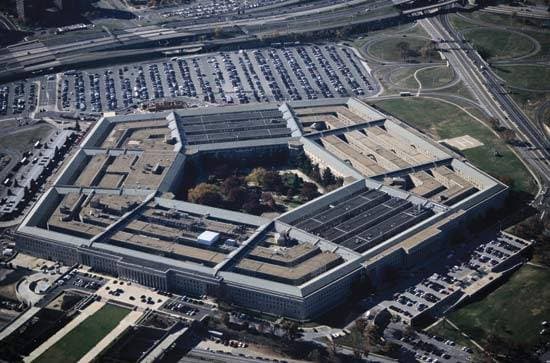
Part of a Pentagon email network taken down over suspicious activity, the US authorities are investigating on the alleged intrusion.
New problems for the White House emerges from the cyberspace, a portion of the Department of Defence’s email network has been taken down over suspicious activity.
According to Pentagon spokeswoman, the unclassified email network used by Army General Martin Dempsey and other members of the U.S. military’s Joint Staff has been taken off line after “suspicious activity” was detected on the systems over the weekend.
“We continue to identify and mitigate cybersecurity risks across our networks,” explained the Lieutenant Colonel Valerie Henderson. “With those goals in mind, we have taken the Joint Staff network down and continue to investigate.”
At the time I was writing there were no news regarding the incident occurred at the Pentagon network, the US government hasn’t released details of the nature of the event which is currently under investigation. The Pentagon confirmed that the shutdown was intentionally initiated by the DoD as a countermeasure and was not a direct consequence of the malicious activity.

Unfortunately, this isn’t the first incident occurred in a US Agency, in 2014 another unauthorized access to the systems at the U.S. State Department caused the precautional shut down of another unclassified email system.
In November 2014 the State Department has taken the unprecedented step of shutting down its entire unclassified email system in response to a suspected cyber attack.
‘Activity of concern’ was detected in the system concurrently with another cyber attack which hit the network at the White House computer network. A State Department staffer answering a call to the State Department Operations Center revealed that, as a precautionary measure, the e-mail system remained down.
Three months from the incursion in the network of the U.S. State Department e-mail system, US specialists were still working to secure the networks.
Security experts speculate that the timeline of these numerous attacks against the systems of the US Government could be indicative of an ongoing hacking campaign coordinated by threat actors that are interested in compromising federal systems. Part of the IT security community suspect that these attacks are part of a reconnaissance activity conducted by attackers that are searching for flaws to exploit in attacks later.
It is a shared conviction that threat actors behind the attacks are working for a foreign government.
(Security Affairs – Pentagon, hacking)


