
U.S. CISA adds a Microsoft SharePoint Server flaw to its Known Exploited Vulnerabilities catalog|430,000 FortiGate Devices Exposed in FortiBleed Ransomware Link|Adobe fixed multiple maximum-severity flaws in ColdFusion and Campaign Classic|Alleged Scattered Spider Hacker Extradited to U.S. to Face Cybercrime Charges|Oracle E-Business Suite Flaw Under Active Attack, 950 Systems Exposed|Azure CLI Targeted in LSHIY Password Spray Campaign Across 64 Orgs|CISA Warns BlueHammer Flaw Is Now Exploited in Ransomware Attacks|RustDuck: The Botnet That’s Still Small but Engineering Like It Plans to Grow|GuardFall Flaw Hits 10 of 11 Popular Open-Source AI Agents|XSS.is, The Forum That Ran the Ransomware Supply Chain Is Down. The Market Isn’t|U.S. CISA adds SimpleHelp flaw to its Known Exploited Vulnerabilities catalog|Hackers Steal Data of 4.38 Million Aflac Japan Customers|U.S. CISA adds a Microsoft SharePoint Server flaw to its Known Exploited Vulnerabilities catalog|430,000 FortiGate Devices Exposed in FortiBleed Ransomware Link|Adobe fixed multiple maximum-severity flaws in ColdFusion and Campaign Classic|Alleged Scattered Spider Hacker Extradited to U.S. to Face Cybercrime Charges|Oracle E-Business Suite Flaw Under Active Attack, 950 Systems Exposed|Azure CLI Targeted in LSHIY Password Spray Campaign Across 64 Orgs|CISA Warns BlueHammer Flaw Is Now Exploited in Ransomware Attacks|RustDuck: The Botnet That’s Still Small but Engineering Like It Plans to Grow|GuardFall Flaw Hits 10 of 11 Popular Open-Source AI Agents|XSS.is, The Forum That Ran the Ransomware Supply Chain Is Down. The Market Isn’t|U.S. CISA adds SimpleHelp flaw to its Known Exploited Vulnerabilities catalog|Hackers Steal Data of 4.38 Million Aflac Japan Customers|
Advertisement

Ad Placeholder

Full Width × 90

Breaking News

Watch out for Omicron COVID-19-themed phishing messages!

Threat actors have started to exploit the interest in the Omicron COVID-19 variant and are using it as a lure in phishing campaigns. Crooks have already started exploiting the interest in the Omicron COVID-19 variant and are using it as a lure in phishing attacks. People are interested in the spreading of the new variant, […]

Omicron scam

Threat actors have started to exploit the interest in the Omicron COVID-19 variant and are using it as a lure in phishing campaigns.

Crooks have already started exploiting the interest in the Omicron COVID-19 variant and are using it as a lure in phishing attacks.

People are interested in the spreading of the new variant, the efficiency of the vaccines and the measures that will adopt the states to prevent its spreading, and threat actors are attempting to take advantage of this situation.

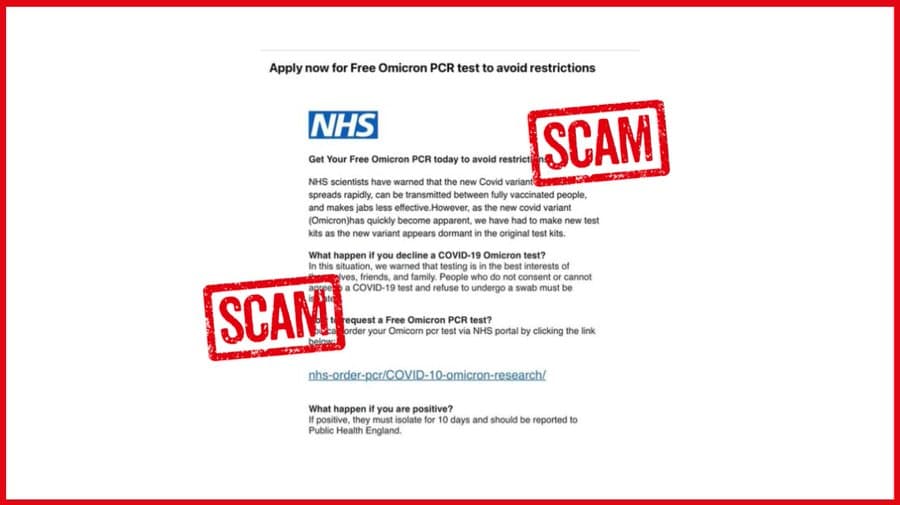
An Omicron COVID-19 campaign was spotted by UK authorities and the National Health Service (NHS) is warning about the Omicron COVID-19-themed phishing attacks.

These phishing messages offer a free Omicron PCR test that will allegedly allow recipients to avoid restrictions. One of the samples shared by UK’s consumer protection organization ‘Which?’ and published by BleepingComputer were sent by the email ‘contact-nhs@nhscontact.com’ in the attempt to make emails more credible.

Upon clicking on the link embedded into the message, recipients are redirected to a fake NHS website where to apply for a “COVID-19 Omicron PCR test.”

The recipients have to fill a form with their data (name, date of birth, home address, mobile phone number, and email address), some security questions (i.e. mother’s maiden name), and finalize the procedure by making a payment of £1.24 ($1.65).

Clearly, the scammers aim at stealing the payment details of the recipients while making the payment.

Authorities are urging the citizens to be aware of suspicious emails or text messages that may be asking for financial details (i.e. credit card data, banking data). The NHS never asks for financial details in legitimate email correspondence.

“The NHS will: NEVER ask for payment – the vaccine is free NEVER ask for your bank details.”

Users that will receive suspicious messages can report them at “report@phishing.gov.uk”.

Follow me on Twitter: @securityaffairs and Facebook

[adrotate banner=”9″][adrotate banner=”12″]

Pierluigi Paganini

(SecurityAffairs – hacking, Omicron COVID-19)

[adrotate banner=”5″]

[adrotate banner=”13″]


