
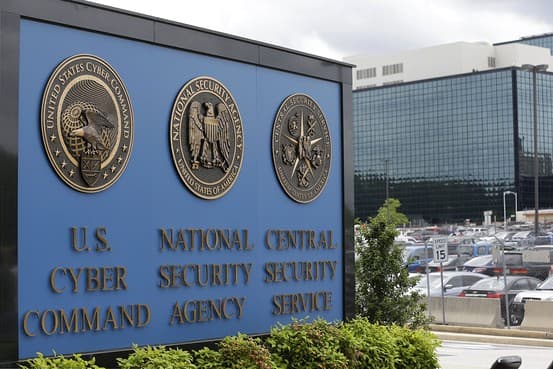
The United States National Security Agency (NSA) is warning of risks posed by location services for staff who work in defence or national security.
The United States National Security Agency (NSA) published a new guide to warn of the risks posed by location services for staff who work in defence or national security.
The guide, titled “Limiting Location Data Exposure” warn of geolocation features implemented by smartphones, tablets, and fitness trackers.
“Mobile devices store and share device geolocation data by design. This data is essential to device communications and provides features—such as mapping applications—that users consider indispensable. Mobile devices determine location through any combination of Global Positioning System (GPS) and wireless signals (e.g., cellular, wireless (Wi-Fi®1 ), or Bluetooth®2 (BT)).” reads the NSA’s guide. “Location data can be extremely valuable and must be protected. It can reveal details about the number of users in a location, user and supply movements, daily routines (user and organizational), and can expose otherwise unknown associations between users and locations.”
The agency reminds its staff that location data are extremely valuable information that must be properly protected. It can reveal the position of the individuals, user and supply movements, and daily routines, among others. The exposure of such data is especially critical for personnel of intelligence agencies and defense.
The guide pointed that such location devices may have been designed to store or transmit location data even when location settings or all wireless capabilities have been disabled.
The guide also highlights that location data from a mobile device can be obtained even without provider cooperation. An attacker could use commercially available rogue base stations to easily obtain real-time location data and track targets.
“This equipment is difficult to distinguish from legitimate equipment, and devices will automatically try to connect to it, if it is the strongest signal present.” continues the guide.
Mitigations could help to reduce, but do not eliminate, location tracking risks in mobile devices. In many cases, users rely on features disabled by such mitigations, making such safeguards impractical.
The guide includes multiple mitigations, including turning off radios when not in use, disabling features like “Find my Phone,” and using a VPN,
The experts also recommend disabling advertising permissions to the greatest extent possible by limiting ad tracking and resetting the advertising ID for the device on a regular basis (at least on a weekly basis).
“While it may not always be possible to completely prevent the exposure of location information, it is possible—through careful configuration and use—to reduce the amount of location data shared,” the guide concludes. “Awareness of the ways in which such information is available is the first step.”
| [adrotate banner=”9″] | [adrotate banner=”12″] |
(SecurityAffairs – NSA, location services)
[adrotate banner=”5″]
[adrotate banner=”13″]


