

Researchers uncovered a new supply chain attack targeting the npm registry that impacted over 40 packages belonging to multiple maintainers.
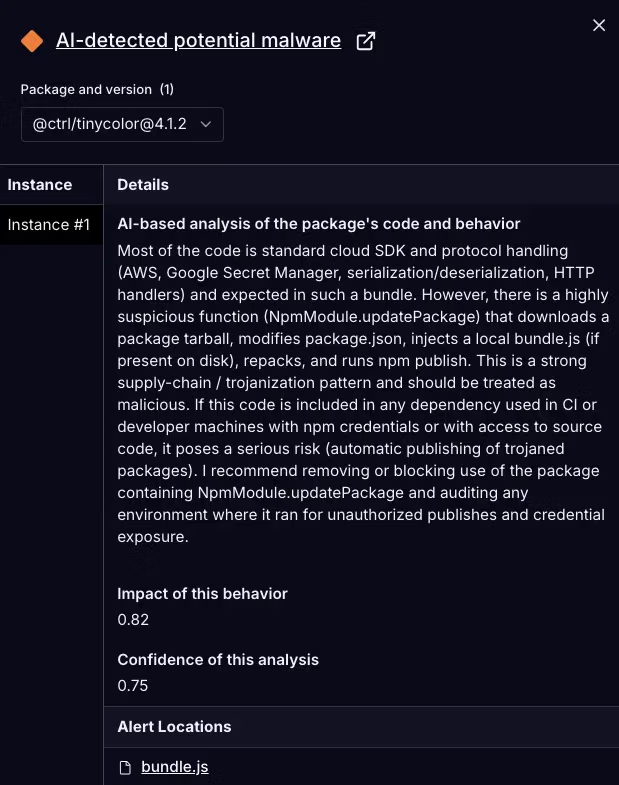
Security researchers at Socket uncovered a malicious update to @ctrl/tinycolor, a package with 2.2M weekly downloads on npm. While investigating the case, they discovered it was linked to a larger supply chain attack that compromised over 40 packages from multiple maintainers. The rogue code added a function that tampered with package.json, injected a local script, and republished altered tarballs, automatically trojanizing downstream projects.
The researcher Daniel dos Santos Pereira first spotted suspicious behavior, and Socket’s detection flagged dozens of related threats. Tinycolor drew attention due to its popularity, but it was only one target in a broad campaign still under investigation.
Socket published the list of packages and versions compromised in the supply chain attack.
The malicious bundle.js downloads the legitimate secret scanner TruffleHog, profiles the host, and then scans files and repos for tokens and cloud credentials. It validates and reuses developer/cloud credentials, drops a GitHub Actions workflow using any available PAT, and exfiltrates findings (base64) to a hardcoded webhook. The script fetches platform-specific TruffleHog binaries, executes them locally, and automates secret theft and repository compromise.
The script scans hosts and repos for environment secrets (e.g., GITHUB_TOKEN, NPM_TOKEN, AWS keys). The malicious code verifies npm tokens via the whoami endpoint before calling GitHub APIs when a token exists. It probes cloud metadata endpoints (AWS/GCP) to harvest short-lived credentials from build agents. The malware also plants a GitHub Actions workflow in repositories, so future CI runs can exfiltrate secrets and artifacts.
“The workflow that it writes to repositories persists beyond the initial host. Once committed, any future CI run can trigger the exfiltration step from within the pipeline where sensitive secrets and artifacts are available by design.” concludes Socket’s report.
The researchers also published Indicators of Compromise for this attack.
Socket recommends developers uninstalling or pinning safe versions, auditing developer and CI/CD environments, rotating npm tokens and exposed secrets, and monitoring logs for unusual npm activity.
Follow me on Twitter: @securityaffairs and Facebook and Mastodon
(SecurityAffairs – hacking, supply chain attack)


