Security Affairs
Google Fined €890M Under EU Digital Markets Act Over Search and Play Store Practices|Thailand’s Ministry of Finance Targeted With Hermes AI Agent Running Unattended, Hades Implant Staged|UAC-0099 Is Now Hiding Malware Inside a Fake Notepad++ Plugin to Target Ukrainian Organizations|The AI Trust Paradox: Businesses Are Racing Ahead, but Consumers Are Hesitating|US Agencies Warn of Laundry Bear Campaign Targeting Unpatched Zimbra Servers|U.S. CISA adds Microsoft SharePoint and Check Point SmartConsole flaws to its Known Exploited Vulnerabilities catalog|Chaos ransomware deploys browser-based msaRAT to evade network detection|Google Released Gemini 3.5 Flash Cyber AI, a Specialized AI Model for Vulnerability Hunting|Check Point patches actively exploited SmartConsole authentication bypass flaw|CVE-2026-8933: Ubuntu security flaw breaks Snap sandbox protections|Adobe Acrobat Chrome extension bug enabled silent WhatsApp data theft|U.S. CISA adds DD-WRT, Langflow and WordPress flaws to its Known Exploited Vulnerabilities catalog|Google Fined €890M Under EU Digital Markets Act Over Search and Play Store Practices|Thailand’s Ministry of Finance Targeted With Hermes AI Agent Running Unattended, Hades Implant Staged|UAC-0099 Is Now Hiding Malware Inside a Fake Notepad++ Plugin to Target Ukrainian Organizations|The AI Trust Paradox: Businesses Are Racing Ahead, but Consumers Are Hesitating|US Agencies Warn of Laundry Bear Campaign Targeting Unpatched Zimbra Servers|U.S. CISA adds Microsoft SharePoint and Check Point SmartConsole flaws to its Known Exploited Vulnerabilities catalog|Chaos ransomware deploys browser-based msaRAT to evade network detection|Google Released Gemini 3.5 Flash Cyber AI, a Specialized AI Model for Vulnerability Hunting|Check Point patches actively exploited SmartConsole authentication bypass flaw|CVE-2026-8933: Ubuntu security flaw breaks Snap sandbox protections|Adobe Acrobat Chrome extension bug enabled silent WhatsApp data theft|U.S. CISA adds DD-WRT, Langflow and WordPress flaws to its Known Exploited Vulnerabilities catalog|
Advertisement

Ad Placeholder

Full Width × 90

Breaking News

NetBSD security improved with the implementation of kernel ASLR (KASLR)

The development team at NetBSD is going to implement the KASLR (kernel Address Space Layout Randomisation) for 64-bit AMD processors. The KASLR coding technique allows randomizing the location of memory where the NetBSD kernel is loaded. The ASRL technique is widely adopted as a security measure to protect applications from the exploitation of vulnerabilities like buffer overflow because […]

netbsd KASLR

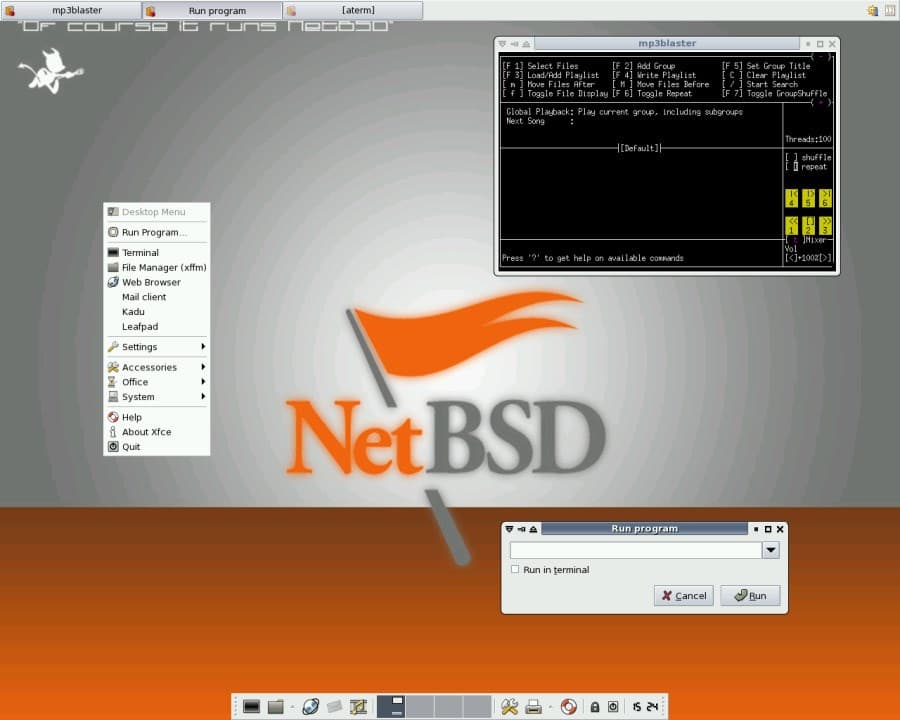
The development team at NetBSD is going to implement the KASLR (kernel Address Space Layout Randomisation) for 64-bit AMD processors.

The KASLR coding technique allows randomizing the location of memory where the NetBSD kernel is loaded. The ASRL technique is widely adopted as a security measure to protect applications from the exploitation of vulnerabilities like buffer overflow because it is impossible for the attacker to predict the memory location that could be used to inject malicious code.

The current design decouples the bootloader and the kernel with an additional layer dubbed “prekern.”

“The current design is based on a specialized kernel called the “prekern“, which operates between the bootloader and the kernel itself. The kernel is compiled as a raw library with the GENERIC_KASLR configuration file, while the prekern is compiled as a static binary.” explained the developer Maxime Villard.

“When the machine boots, the bootloader jumps into the prekern. The prekern relocates the kernel at a random virtual address (VA), and jumps into it. Finally, the kernel performs some cleanup, and executes normally.”

netbsd KASLR

The implementation is still incomplete, Villard anticipated the future work:

  • Randomise the kernel sections independently, and intertwine them;
  • Modify several kernel entry points not to leak kernel addresses to userland;
  • Randomise the kernel heap too (which is still static for now).”

All of the patches are already available in the current NetBSD, the post written by the developer also includes a link to the instructions on how to install and use this implementation.

This KASLR implementation will be available starting from NetBSD 9.

“Once it is stabilized, it may be backported to NetBSD 8. Until then, feel free to test it!”

[adrotate banner=”9″] [adrotate banner=”12″]

Pierluigi Paganini

(Security Affairs – NetBSD , KASLR)

[adrotate banner=”5″]

[adrotate banner=”13″]