
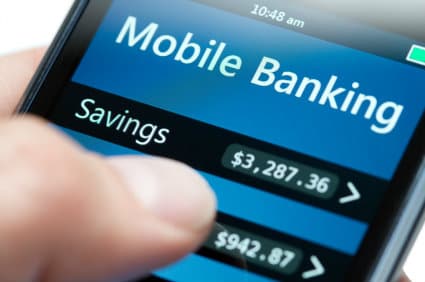
A recent study published by RiskIQ security firm revealed that more than 11 percent of mobile banking apps includes harmful code.
With the rapid spread of mobile banking services has increased significantly the number of cyber crimes targeting users of major financial institutions.
According to an interesting research conducted by the company RiskIQ more than 11 percent (40000) of the 350,000 apps which reference banking in the world’s top 90 app stores contain malicious code or suspicious binaries, and more than 5 percent include a banking trojan.RiskIQ inspected the apps by emulating human behavior to detect suspect applications, application

RiskIQ analyzed mobile banking apps by emulating human behavior to uncover any suspect application, the Apps code was analyzed by a consortium of 70 anti-virus vendors.
Below the detailed data related to the 40,000 mobile banking apps flagged as suspicious:
- 21,076 contained adware
- 20,000 contained Trojan malware
- 3,823 contained spyware
- 209 contained exploit code
- 178 contained malicious JavaScript
“These findings show that criminals are using look-a-like banking apps to distribute malware and capture data on the device in order to commit crimes. Policing app stores for malicious apps and taking them down is a never-ending battle for banks and any other brand that uses the mobile channel to interact with customers.” declared RiskIQ CEO Elias Manousos.
Another element of concern is related to excessive permissions exhibited by the mobile banking apps, data related to more than 40,000 mobile banking apps.
- 8,672 could capture device logs
- 8,408 could record audio
- 7,188 could access contacts lists
- 4,892 could read SMS messages
- 2,961 could write to contacts lists
- 4,018 could disable key guard
- 3,783 could read the device’s settings
- 1,148 could install packages
- 1,028 could access GPS information
I’m personally surprised by the large number of mobile banking apps that could record audio (8,408) and could install additional packages (1,148).
“These permissions grant the mobile application developer access to the data people store on their mobile phones,” wrote Peter Zavlaris, in a blog“This isn’t always a bad thing, but when a mobile application is compromised, it gives the attacker access to information he or she can use to exploit the user, sometimes even without using any malware at all.”
According to the findings of the study, the malicious mobile banking apps are disguised as a clone of legitimate banking applications, which are trojanized by threat actors.
“These findings show that criminals are using look-a-like banking apps to distribute malware and capture data on the device in order to commit crimes,” Manousos said. “Policing app stores for malicious apps and taking them down is a never ending battle for banks, and any other brand that uses the mobile channel to interact with customers.”
Mobile devices are a privileged target for cyber criminals, for this reason it is essential to protect out devices with efficient security software.
(Security Affairs – mobile banking apps, cybercrime)


