
Threat actors install Cobalt Strike beacons on vulnerable Microsoft SQL Servers to achieve a foothold in the target network.
Researchers from Ahn Lab’s ASEC spotted a new wave of attacks deploying Cobalt Strike beacons on vulnerable Microsoft SQL Servers to achieve initial access to target networks and deploy malicious payloads.
The threat actors behind the campaign are targeting poorly secured Microsoft SQL Servers exposed online.
The attack chain starts threat actors scanning for MS-SQL servers which have an open TCP port 1433. Then the attackers carry out brute-forcing and dictionary attacks in an attempt to crack the password.
Upon gaining access to the server, the attackers have been observed deploying crypto-currency miners such as Lemon Duck, KingMiner, and Vollgar. The attackers achieve persistence by installing the post-exploitation tool Cobalt Strike and use it for lateral movement.
“If the attacker succeeds to log in to the admin account through these processes, they use various methods including the xp_cmdshell command to execute the command in the infected system.” reads the analysis published by Ahn Lab’s ASEC. “Cobalt Strike that has recently been discovered was downloaded through cmd.exe and powershell.exe via the MS-SQL process as shown below.”
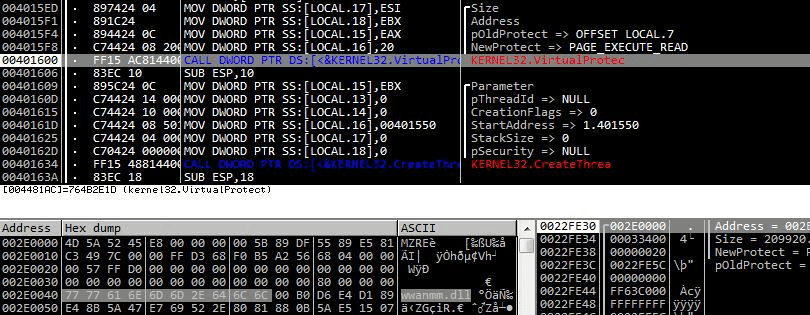
The Cobalt Strike beacon is injected into the legitimate Windows wwanmm.dll process, it waits for the commands of the attackers.
“Cobalt Strike that is executed in MSBuild.exe has an additional settings option to bypass detection of security products, where it loads the normal dll wwanmm.dll, then writes and executes a beacon in the memory area of the DLL.” continues the analysis. “As the beacon that receives the attacker’s command and performs the malicious behavior does not exist in a suspicious memory area and instead operates in the normal module wwanmm.dll, it can bypass memory-based detection.”

At this, it is unclear how attackers installed the malware on the compromised MS-SQL
Although it is not certain in which method the attacker dominated MS-SQL and installed the malware, experts believe that the targeted system had inappropriately managed the account credentials.
AhnLab’s published Indicators of Compromise for these attacks, including download URLs, MD5 hashes for the beacons, and C2 server URLs.
Follow me on Twitter: @securityaffairs and Facebook
| [adrotate banner=”9″] | [adrotate banner=”12″] |
(SecurityAffairs – hacking, Microsoft SQL Servers)
[adrotate banner=”5″]
[adrotate banner=”13″]


