Security Affairs
GitLab Users Urged to Patch After Research Reveals Critical RCE Chain|EFF: Most Smart Wearables Still Fall Short on Privacy and Transparency|LockBit5 and Qilin Lead Ransomware Attacks Against Italian Organizations|SECURITY AFFAIRS MALWARE NEWSLETTER ROUND 107|Hackers Hijack Hotel Wi-Fi to Steal Microsoft 365 Credentials|Security Affairs newsletter Round 587 by Pierluigi Paganini – INTERNATIONAL EDITION|Iran-Linked Actors Breach Are Targeting US Water and Energy Control Systems|Australian energy provider Origin Energy disclosed a data breach impacting customer data|Google Fined €890M Under EU Digital Markets Act Over Search and Play Store Practices|Thailand’s Ministry of Finance Targeted With Hermes AI Agent Running Unattended, Hades Implant Staged|UAC-0099 Is Now Hiding Malware Inside a Fake Notepad++ Plugin to Target Ukrainian Organizations|The AI Trust Paradox: Businesses Are Racing Ahead, but Consumers Are Hesitating|GitLab Users Urged to Patch After Research Reveals Critical RCE Chain|EFF: Most Smart Wearables Still Fall Short on Privacy and Transparency|LockBit5 and Qilin Lead Ransomware Attacks Against Italian Organizations|SECURITY AFFAIRS MALWARE NEWSLETTER ROUND 107|Hackers Hijack Hotel Wi-Fi to Steal Microsoft 365 Credentials|Security Affairs newsletter Round 587 by Pierluigi Paganini – INTERNATIONAL EDITION|Iran-Linked Actors Breach Are Targeting US Water and Energy Control Systems|Australian energy provider Origin Energy disclosed a data breach impacting customer data|Google Fined €890M Under EU Digital Markets Act Over Search and Play Store Practices|Thailand’s Ministry of Finance Targeted With Hermes AI Agent Running Unattended, Hades Implant Staged|UAC-0099 Is Now Hiding Malware Inside a Fake Notepad++ Plugin to Target Ukrainian Organizations|The AI Trust Paradox: Businesses Are Racing Ahead, but Consumers Are Hesitating|
Advertisement

Ad Placeholder

Full Width × 90

Hacking

Microsoft SimuLand, an open-source lab environment to simulate attack scenarios

Microsoft released SimuLand, an open-source tool that can be used to build lab environments to simulate attacks and verify their detection. Microsoft has released SimuLand, an open-source lab environment that allows to reproduce the techniques used in real attack scenarios. The tool could be used to test and improve Microsoft solutions, including Microsoft 365 Defender, […]

Simuland

Microsoft released SimuLand, an open-source tool that can be used to build lab environments to simulate attacks and verify their detection.

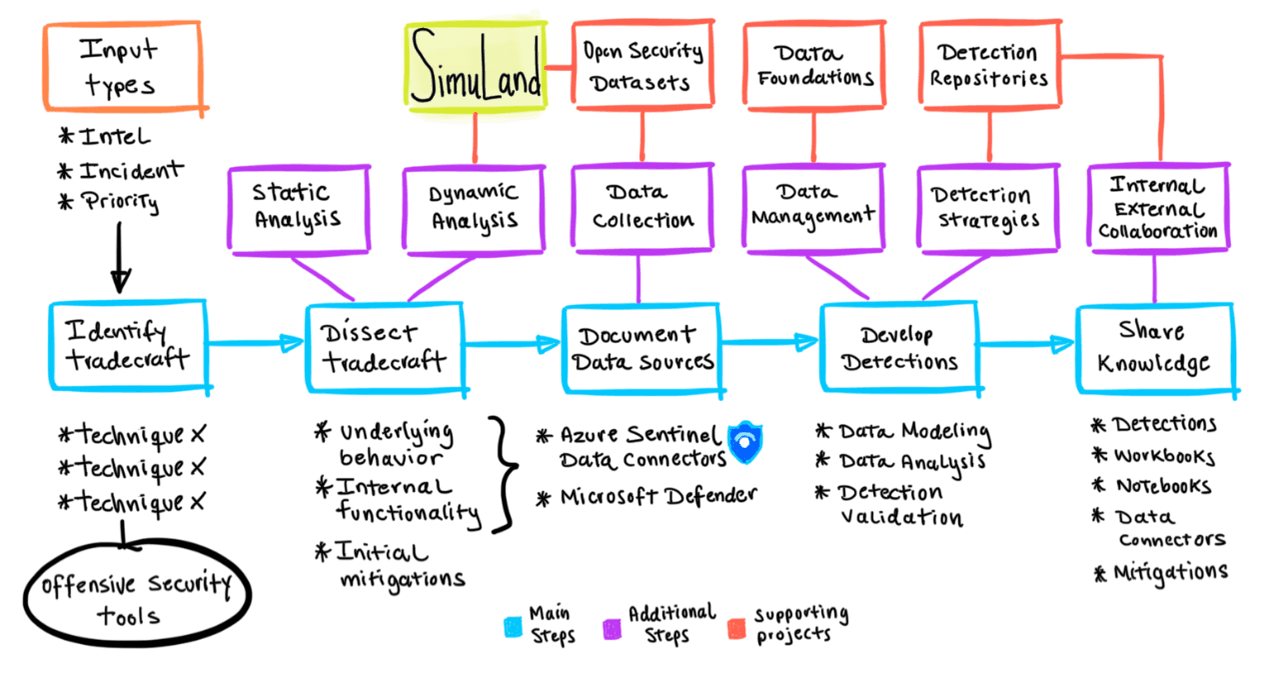
Microsoft has released SimuLand, an open-source lab environment that allows to reproduce the techniques used in real attack scenarios. The tool could be used to test and improve Microsoft solutions, including Microsoft 365 Defender, Azure Defender, and Azure Sentinel defenses against real attack scenarios.

“SimuLand is an open-source initiative by Microsoft to help security researchers around the world deploy lab environments that reproduce well-known techniques used in real attack scenarios, actively test and verify effectiveness of related Microsoft 365 Defender, Azure Defender and Azure Sentinel detections, and extend threat research using telemetry and forensic artifacts generated after each simulation exercise.” reads the announcement published by Microsoft.

“These lab environments will provide use cases from a variety of data sources including telemetry from Microsoft 365 Defender security products, Azure Defender and other integrated data sources through Azure Sentinel data connectors.”

Simuland

The project has a modular structure, each module can be re-used to test combinations of attacker actions using different lab environment designs. 

Microsoft has also released a lab environment for SimuLand that focuses on Golden SAML attacks, the IT giant plans to release new ones in the future. Anyway, Microsoft is inviting security experts to contribute to the creation of new lab environments and improved detection rules for the attack scenario they have shared.

“Every simulation plan provided through this project is research-based and broken down into attacker actions mapped to the MITRE ATT&CK framework.” reads a blog post published by Microsoft. “The goal of the simulate and detect component is to also summarize the main steps used by a threat actor to accomplish a specific object and allow security researchers to get familiarized with the attacker behavior at a high level.”

Follow me on Twitter: @securityaffairs and Facebook

[adrotate banner=”9″][adrotate banner=”12″]

Pierluigi Paganini

(SecurityAffairs – hacking, Simuland)

[adrotate banner=”5″]

[adrotate banner=”13″]