
430,000 FortiGate Devices Exposed in FortiBleed Ransomware Link|Adobe fixed multiple maximum-severity flaws in ColdFusion and Campaign Classic|Alleged Scattered Spider Hacker Extradited to U.S. to Face Cybercrime Charges|Oracle E-Business Suite Flaw Under Active Attack, 950 Systems Exposed|Azure CLI Targeted in LSHIY Password Spray Campaign Across 64 Orgs|CISA Warns BlueHammer Flaw Is Now Exploited in Ransomware Attacks|RustDuck: The Botnet That’s Still Small but Engineering Like It Plans to Grow|GuardFall Flaw Hits 10 of 11 Popular Open-Source AI Agents|XSS.is, The Forum That Ran the Ransomware Supply Chain Is Down. The Market Isn’t|U.S. CISA adds SimpleHelp flaw to its Known Exploited Vulnerabilities catalog|Hackers Steal Data of 4.38 Million Aflac Japan Customers|Apple Fixes WebKit Flaws in iOS and macOS, With Help From AI Tools|430,000 FortiGate Devices Exposed in FortiBleed Ransomware Link|Adobe fixed multiple maximum-severity flaws in ColdFusion and Campaign Classic|Alleged Scattered Spider Hacker Extradited to U.S. to Face Cybercrime Charges|Oracle E-Business Suite Flaw Under Active Attack, 950 Systems Exposed|Azure CLI Targeted in LSHIY Password Spray Campaign Across 64 Orgs|CISA Warns BlueHammer Flaw Is Now Exploited in Ransomware Attacks|RustDuck: The Botnet That’s Still Small but Engineering Like It Plans to Grow|GuardFall Flaw Hits 10 of 11 Popular Open-Source AI Agents|XSS.is, The Forum That Ran the Ransomware Supply Chain Is Down. The Market Isn’t|U.S. CISA adds SimpleHelp flaw to its Known Exploited Vulnerabilities catalog|Hackers Steal Data of 4.38 Million Aflac Japan Customers|Apple Fixes WebKit Flaws in iOS and macOS, With Help From AI Tools|
Advertisement

Ad Placeholder

Full Width × 90

Breaking News

Expert disclosed two Zero-Day flaws in Microsoft browsers

The 20-year-old security researcher James Lee publicly disclosed details and proof-of-concept exploits for two zero-day vulnerabilities in Microsoft web browsers. The expert opted to disclose the flaw after the tech giant allegedly failed to address the zero-day issues privately he reported.The researcher reported the issues to Microsoft ten months ago, but the company did not […]

Microsoft browser zero-day

The 20-year-old security researcher James Lee publicly disclosed details and proof-of-concept exploits for two zero-day vulnerabilities in Microsoft web browsers.

The expert opted to disclose the flaw after the tech giant allegedly failed to address the zero-day issues privately he reported.
The researcher reported the issues to Microsoft ten months ago, but the company did not respond to the responsible disclosure.

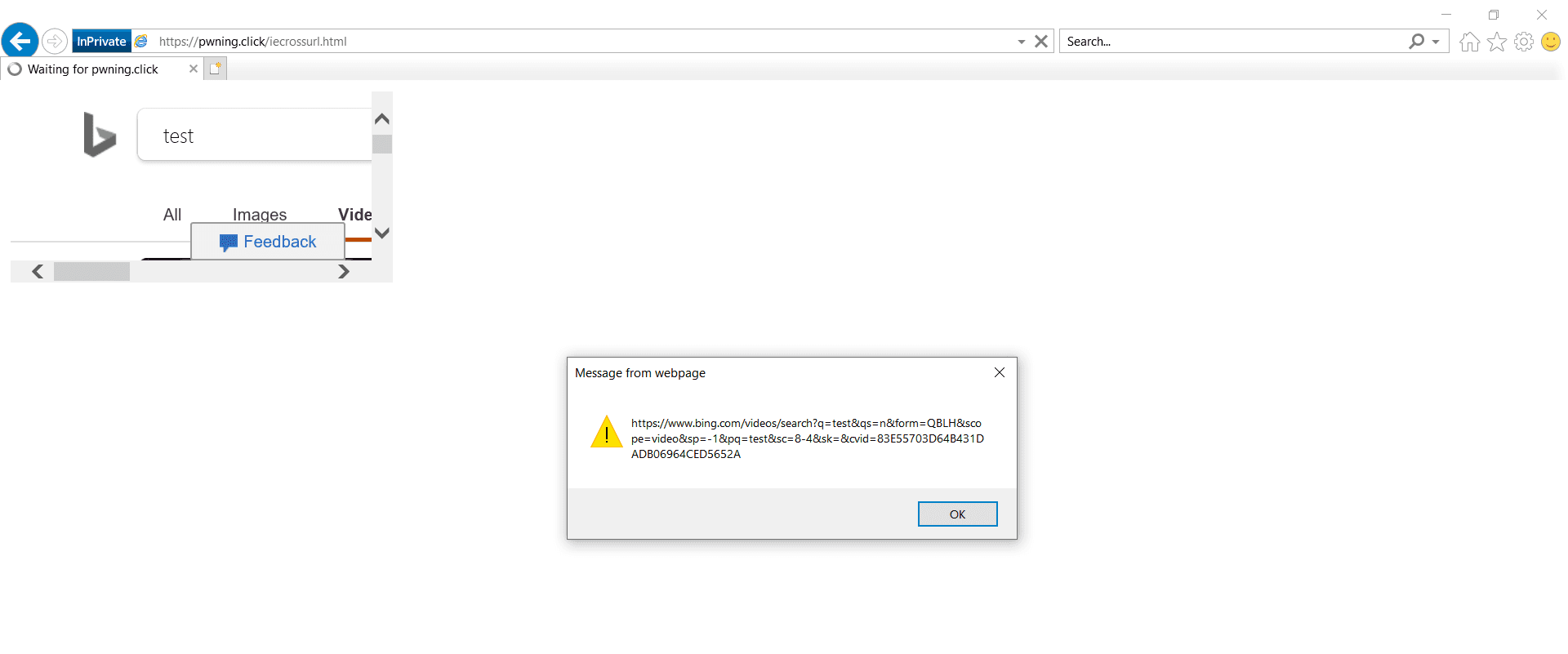
One of the flaws affects the latest version of the Edge Browser, both flaws could be exploited by a remote attacker to bypass same-origin policy on the victim’s web browser.

Same Origin Policy (SOP) is a security mechanism that is implemented in modern browsers, the basic idea behind the SOP is the javaScript from one origin should not be able to access the properties of a website on another origin. A SOP bypass occurs when a sitea.com is somehow able to access the properties of siteb.com such as cookies, location, response etc.

Microsoft browser zero-day

The zero-day flaw discovered by James Lee, who shared technical details with The Hacker News, could be exploited by attackers to set up a malicious website to perform universal cross-site scripting (UXSS) attacks against any domain visited using the vulnerable Microsoft web browsers.

The attacker just needs to trick victims into visiting a malicious website created to steal victim’s sensitive data (i.e. login session, cookies), from other sites visited on the same browser.

“The issue is within Resource Timing Entries in Microsoft Browsers which inappropriately leak Cross-Origin URLs after redirection,” Lee told The Hacker News in an email.

Lee also released proof-of-concept (PoCs) exploits for both vulnerabilities.

https://twitter.com/Windowsrcer/status/1111593640357355520

My friends at the Hacker News have tested and confirmed both the zero-day flaw against the latest version of Internet Explorer and Edge running on a fully-patched Windows 10 operating system.

The availability of the PoC exploit code could allows threat actors to exploit both zero-day vulnerabilities to target Microsoft users.

Waiting for a fix, users could use other web browsers such as Chrome or Firefox.

[adrotate banner=”9″] [adrotate banner=”12″]

Pierluigi Paganini

(SecurityAffairs – Microsoft browsers, zero-day)

[adrotate banner=”5″]

[adrotate banner=”13″]


