
Europe Confirms Record €4.1B Penalty Against Google for Android Practices|U.S. CISA adds a Microsoft SharePoint Server flaw to its Known Exploited Vulnerabilities catalog|430,000 FortiGate Devices Exposed in FortiBleed Ransomware Link|Adobe fixed multiple maximum-severity flaws in ColdFusion and Campaign Classic|Alleged Scattered Spider Hacker Extradited to U.S. to Face Cybercrime Charges|Oracle E-Business Suite Flaw Under Active Attack, 950 Systems Exposed|Azure CLI Targeted in LSHIY Password Spray Campaign Across 64 Orgs|CISA Warns BlueHammer Flaw Is Now Exploited in Ransomware Attacks|RustDuck: The Botnet That’s Still Small but Engineering Like It Plans to Grow|GuardFall Flaw Hits 10 of 11 Popular Open-Source AI Agents|XSS.is, The Forum That Ran the Ransomware Supply Chain Is Down. The Market Isn’t|U.S. CISA adds SimpleHelp flaw to its Known Exploited Vulnerabilities catalog|Europe Confirms Record €4.1B Penalty Against Google for Android Practices|U.S. CISA adds a Microsoft SharePoint Server flaw to its Known Exploited Vulnerabilities catalog|430,000 FortiGate Devices Exposed in FortiBleed Ransomware Link|Adobe fixed multiple maximum-severity flaws in ColdFusion and Campaign Classic|Alleged Scattered Spider Hacker Extradited to U.S. to Face Cybercrime Charges|Oracle E-Business Suite Flaw Under Active Attack, 950 Systems Exposed|Azure CLI Targeted in LSHIY Password Spray Campaign Across 64 Orgs|CISA Warns BlueHammer Flaw Is Now Exploited in Ransomware Attacks|RustDuck: The Botnet That’s Still Small but Engineering Like It Plans to Grow|GuardFall Flaw Hits 10 of 11 Popular Open-Source AI Agents|XSS.is, The Forum That Ran the Ransomware Supply Chain Is Down. The Market Isn’t|U.S. CISA adds SimpleHelp flaw to its Known Exploited Vulnerabilities catalog|
Advertisement

Ad Placeholder

Full Width × 90

Breaking News

Malicious NPM packages target PayPal users

Threat actors deploy malicious NPM packages to steal PayPal credentials and hijack cryptocurrency transfers. Fortinet researchers discovered multiple malicious NPM packages that are used to target PayPal users. The packages were uploaded to the repository in early March by a threat actor known as tommyboy_h1 and tommyboy_h2, and were used to steal PayPal credentials and hijack cryptocurrency transfers. “Using PayPal-related […]

malicious NPM packages targets PayPal

Threat actors deploy malicious NPM packages to steal PayPal credentials and hijack cryptocurrency transfers.

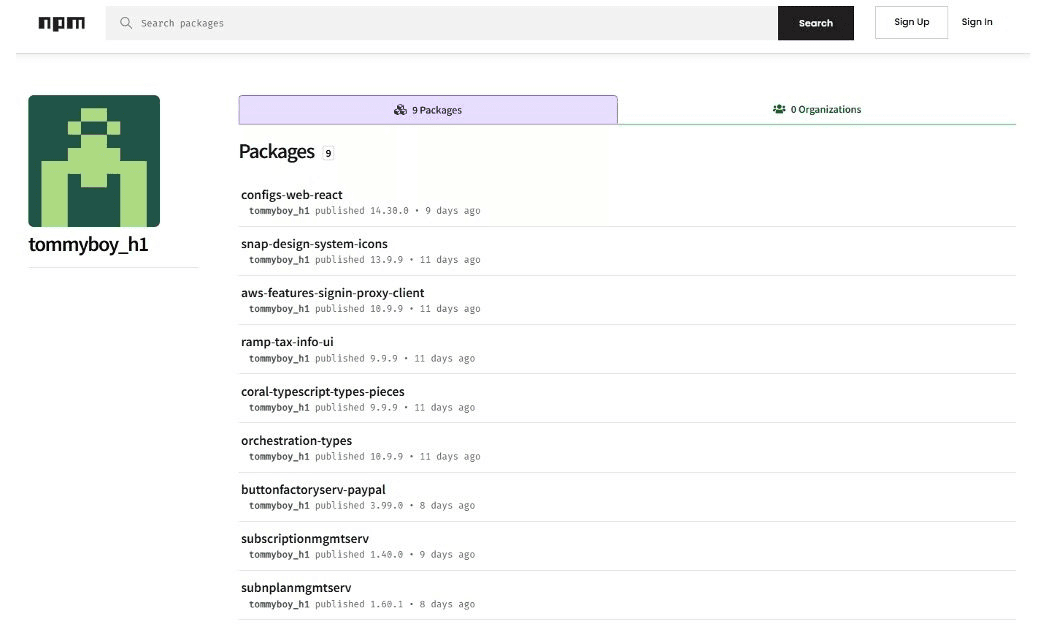
Fortinet researchers discovered multiple malicious NPM packages that are used to target PayPal users. The packages were uploaded to the repository in early March by a threat actor known as tommyboy_h1 and tommyboy_h2, and were used to steal PayPal credentials and hijack cryptocurrency transfers.

“Using PayPal-related names helps these malicious packages avoid detection, making it easier for attackers to steal sensitive information. By including “PayPal” in the name of the malicious packages, such as oauth2-paypal and buttonfactoryserv-paypal, the attackers also create a false sense of legitimacy, tricking developers into installing them.” reads the analysis published by Fortinet. “The code collects and exfiltrates system data, such as usernames and directory paths, which can then be used to target PayPal accounts or be sold for fraudulent purposes.”

Malicious NPM packages use a preinstall hook to run hidden scripts, steal system info, obfuscate data, and exfiltrate it to attacker-controlled servers for future attacks.

Fortinet researchers recommend watching for fake PayPal-related packages, checking network logs for odd connections, removing threats, updating credentials, and staying cautious when installing packages.

The same attacker likely created the tommyboy_h1 and tommyboy_h2 malicious packages to target PayPal users.

“The authors of tommyboy_h1 and tommyboy_h2 are likely the same person, publishing multiple malicious packages in a short time. We suspect that the same author created these packages to target PayPal users.” concludes the report. “We urge the public to be cautious when downloading packages and to ensure they are from trusted sources to avoid falling victim to such attacks.”

Follow me on Twitter: @securityaffairs and Facebook and Mastodon

Pierluigi Paganini

(SecurityAffairs – hacking, malicious NPM packages)


