
Experts at Trend Micro have detected a new strain of MacOS malware that hides inside a Windows executable to avoid detection.
Security experts at Trend Micro have spotted a new strain of MacOS malware disguises itself as a Windows executable file to evade detection. The malware is carried
The experts discovered the malicious code inside the installer for a popular firewall and network monitor called Little Snitch, the .ZIP files were available for download from various torrent websites.
“By default, attempting to run an EXE file on a Mac or Linux OS will only show an error notification.” reads the analysis published by Trend Micro.
“However, we found EXE files in the wild delivering a malicious payload that overrides Mac’s built-in protection mechanisms such as Gatekeeper. This routine evades Gatekeeper because EXE is not checked by this software, bypassing the code signature check and verification since the technology only checks native Mac files.”
When the
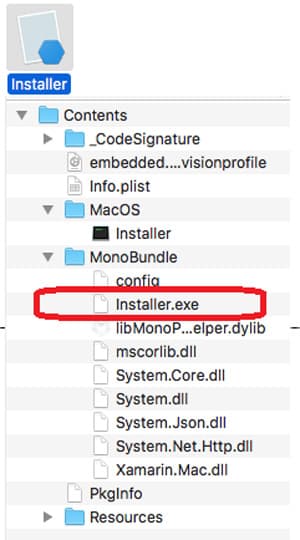
Experts noticed inside the installer the strange presence of

“When the installer is executed, the main file also launched the executable as it is enabled by the mono framework included in the bundle. This framework allows the execution of Microsoft .NET applications across platforms such as OSX.” continues the report.
The malware initially collects the system information such as ModelName,
Then the malware downloads potentially unwanted applications (PUAs) that include adware masqueraded as Adobe Flash and a potentially tainted copy of Little Snitch.
In this specific attack, malware authors used .EXE files that are not executed on MacOS and for this reason are ignore by anti-malware packages running on Apple systems.
Experts noticed that the execution of
Most of the infections were observed in the United Kingdom, Australia, Armenia, Luxembourg, South Africa, and the United States.
Experts believe that the discovery made by the researchers is related to a study conducted by malware authors on new techniques to spread the malware.
“We suspect that this specific malware can be used as an evasion technique for other attack or infection attempts to bypass some built-in safeguards such as digital certification checks since it is an unsupported binary executable in Mac systems by design.” concludes the experts.
“We think that the cybercriminals are still studying the development and opportunities from this malware bundled in apps and available in torrent sites, and therefore we will continue investigating how cybercriminals can use this information and routine.”
| [adrotate banner=”9″] | [adrotate banner=”12″] |
(SecurityAffairs – MacOS malware, hacking)
[adrotate banner="5"]
[adrotate banner=”13″]


