Security Affairs
Former Ransomware Negotiator Sentenced to 70 Months in Prison for Secretly Helping BlackCat Gang|GigaWiper Merges Three Malware Families Into One Destructive Backdoor|INTERPOL Operation First Light Nets 5,811 Arrests and Seizes $293 Million|GodDamn Ransomware Uses PoisonX to Blind Security Software|AssuranceAmerica Breach Exposes 7 Million Driver’s Licenses After Employee Account Hack|Microsoft fixed Defender flaw RoguePlanet (CVE-2026-50656)|Fake VPN and 7-Zip Apps Turn Victims Into Residential Proxy Nodes|Ubiquiti Patches Critical UniFi OS Flaws Allowing Command Injection and Privilege Escalation|A Hacker Claims 35 GB of Accenture Source Code. The Company discloses the data breach|Telegram-Hosted RedWing Malware Lets Anyone Rent Android Spyware Tools|U.S. CISA adds Adobe ColdFusion, Joomlack Page Builder, Langflow, and JoomShaper SP Page Builder flaws to its Known Exploited Vulnerabilities catalog|CISA Deploys Anthropic’s Mythos AI to Hunt Vulnerabilities in U.S. Government Code|Former Ransomware Negotiator Sentenced to 70 Months in Prison for Secretly Helping BlackCat Gang|GigaWiper Merges Three Malware Families Into One Destructive Backdoor|INTERPOL Operation First Light Nets 5,811 Arrests and Seizes $293 Million|GodDamn Ransomware Uses PoisonX to Blind Security Software|AssuranceAmerica Breach Exposes 7 Million Driver’s Licenses After Employee Account Hack|Microsoft fixed Defender flaw RoguePlanet (CVE-2026-50656)|Fake VPN and 7-Zip Apps Turn Victims Into Residential Proxy Nodes|Ubiquiti Patches Critical UniFi OS Flaws Allowing Command Injection and Privilege Escalation|A Hacker Claims 35 GB of Accenture Source Code. The Company discloses the data breach|Telegram-Hosted RedWing Malware Lets Anyone Rent Android Spyware Tools|U.S. CISA adds Adobe ColdFusion, Joomlack Page Builder, Langflow, and JoomShaper SP Page Builder flaws to its Known Exploited Vulnerabilities catalog|CISA Deploys Anthropic’s Mythos AI to Hunt Vulnerabilities in U.S. Government Code|
Advertisement

Ad Placeholder

Full Width × 90

Breaking News

Kaspersky warns of a new Loki Bot campaign target corporate mailboxes

Security experts from Kaspersky Lab have uncovered a new spam campaign leveraging the Loki Bot malware to target corporate mailboxes. The Loki Bot attacks started in July and aimed at stealing passwords from browsers, messaging applications, mail and FTP clients, and cryptocurrency wallets Loki Bot operators employ various social engineering technique to trick victims into opening weaponized attachments that […]

Loki Bot

Security experts from Kaspersky Lab have uncovered a new spam campaign leveraging the Loki Bot malware to target corporate mailboxes.

The Loki Bot attacks started in July and aimed at stealing passwords from browsers, messaging applications, mail and FTP clients, and cryptocurrency wallets

Loki Bot operators employ various social engineering technique to trick victims into opening weaponized attachments that would deploy the Loki Bot stealer.

The messages use attachments with .iso extensions, a type of file that worked as a container for delivering malware.

“Starting from early July, we have seen malicious spam activity that has targeted corporate mailboxes. The messages discovered so far contain an attachment with an .iso extension that Kaspersky Lab solutions detect as Loki Bot.” reads the analysis published by Kaspersky.

“The malware’s key objective is to steal passwords from browsers, messaging applications, mail and FTP clients, and cryptocurrency wallets. Loki Bot dispatches all its loot to the malware owners.”

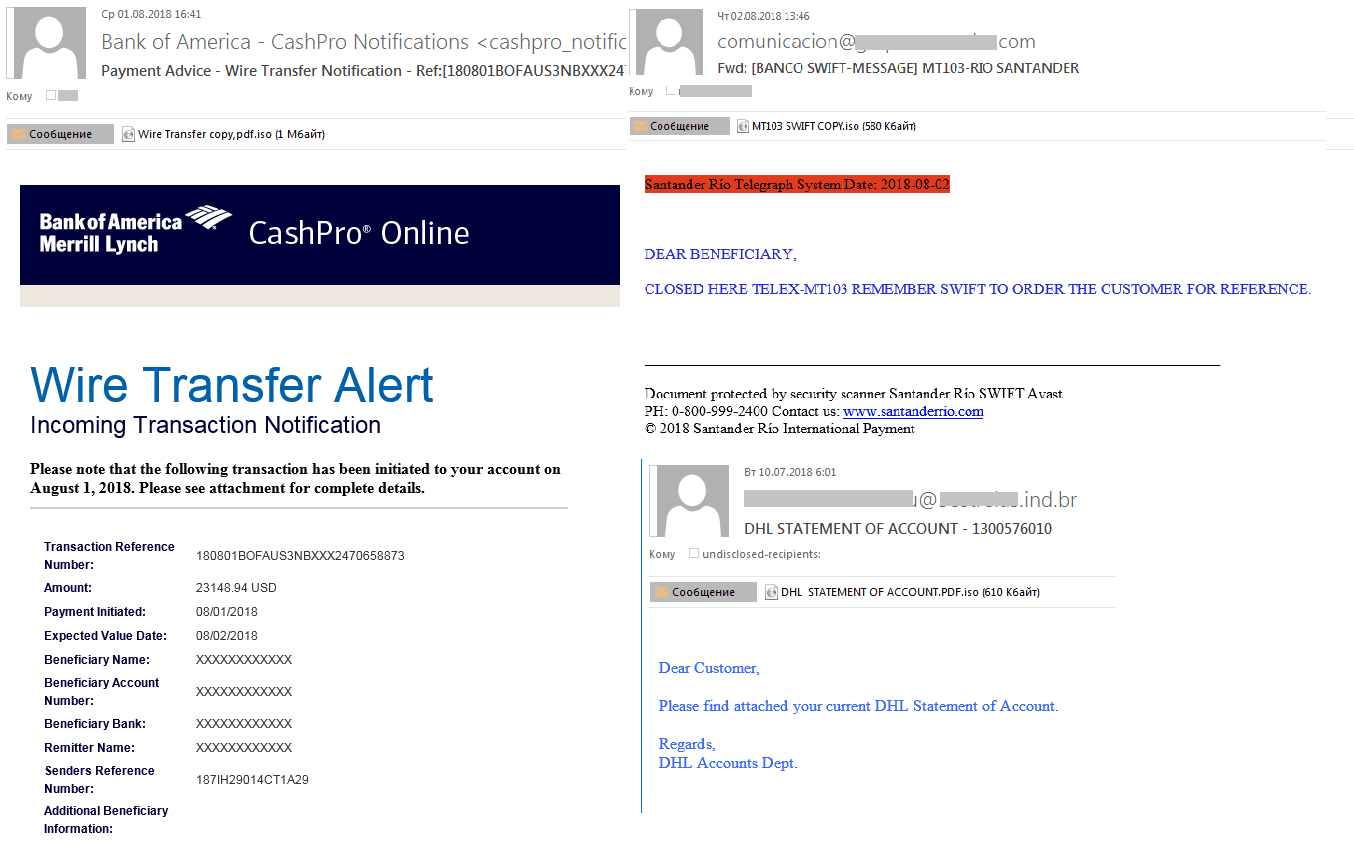
The messages masquerade as notifications from other companies, or as orders and offers.

Threat actors are sending out copies of Loki Bot to company email addresses that were available on public sources or from the companies’ own websites.

Loki Bot

Experts observed different spam messages including fake notifications from well-known companies, fake notifications containing financial documents, and fake orders or offers.

Researchers highlighted the importance for organizations of adopting security measures that include both technical protections and training for employees.

“Every year we observe an increase in spam attacks on the corporate sector.” Kaspersky concludes.

“The perpetrators have used phishing and malicious spam, including forged business emails, in their pursuit of confidential corporate information: intellectual property, authentication data, databases, bank accounts, etc.” 

[adrotate banner=”9″] [adrotate banner=”12″]

Pierluigi Paganini

(Security Affairs – Loki Bot, malware)

[adrotate banner=”5″]

[adrotate banner=”13″]