
Security Affairs
Dark Caracal Deploys New Go Malware With Ethereum-Based C2 Fallback|Australian Police Charge Two Over TeamPCP Credential Theft|Meta to Pay Up to $18B Over Teen Social Media Use|CISA Warns Water Utilities: Find Your Exposed PLCs Before Attackers Do|OpenAI banned Russian ChatGPT accounts backing covert influence operation|CISA Red Team Fully Compromised Two Critical Infrastructure Orgs|FBI Seizes China-Linked Hacking Platforms QScan and QTRouter Used Against Critical Infrastructure|U.S. CISA adds Gitea flaw to its Known Exploited Vulnerabilities catalog|88 ID Verification Breaches Show the Cost of Collecting Identity Data|WhatsApp Adds Stronger Security as Passkeys Hit 1 Billion|Operation Jackal: 58 Arrests Expose the Money Laundering Machine Behind Global Scams|Norway ’s Digital Government Infrastructure Hit by a new DDoS Attack|Dark Caracal Deploys New Go Malware With Ethereum-Based C2 Fallback|Australian Police Charge Two Over TeamPCP Credential Theft|Meta to Pay Up to $18B Over Teen Social Media Use|CISA Warns Water Utilities: Find Your Exposed PLCs Before Attackers Do|OpenAI banned Russian ChatGPT accounts backing covert influence operation|CISA Red Team Fully Compromised Two Critical Infrastructure Orgs|FBI Seizes China-Linked Hacking Platforms QScan and QTRouter Used Against Critical Infrastructure|U.S. CISA adds Gitea flaw to its Known Exploited Vulnerabilities catalog|88 ID Verification Breaches Show the Cost of Collecting Identity Data|WhatsApp Adds Stronger Security as Passkeys Hit 1 Billion|Operation Jackal: 58 Arrests Expose the Money Laundering Machine Behind Global Scams|Norway ’s Digital Government Infrastructure Hit by a new DDoS Attack|
Advertisement

Ad Placeholder

Full Width × 90

Breaking News

Ecuador suffered 40 Million Cyber attacks after the Julian Assange arrest

Ecuador suffered 40 million cyber attacks on websites of public institutions since the arrest of Wikileaks founder Julian Assange. Last week, WikiLeaks founder Julian Assange has been arrested at the Ecuadorian Embassy in London. after Ecuador withdrew asylum after seven years. In response to the arrest acktivist communities launched several attacks against the Ecuador government. […]

Julian Assange arrest

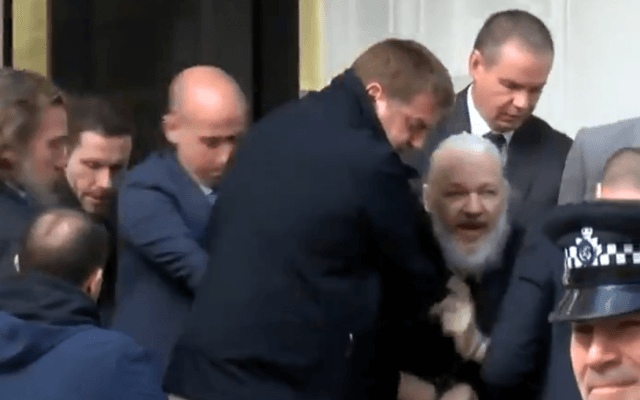
Wikileaks founder Julian Assange is arrested at the Ecuadorian embassy in London

Ecuador suffered 40 million cyber attacks on websites of public institutions since the arrest of Wikileaks founder Julian Assange.

Last week, WikiLeaks founder Julian Assange has been arrested at the Ecuadorian Embassy in London. after Ecuador withdrew asylum after seven years.

In response to the arrest acktivist communities launched several attacks against the Ecuador government.

Yesterday Ecuador confirmed that over 40 million cyber attacks hit the webpages of public institutions since stripping the arrest of Julian Assange.

Patricio Real, Ecuador’s deputy minister for information and communication technologies, revealed that the attacks had “principally come from the United States, Brazil, Holland, Germany, Romania, France, Austria and the United Kingdom,” as well as from the South American country itself.

Assange was arrested at the Ecuadorian Embassy in London after President Lenin Moreno withdrew asylum after seven years.

Julian Assange arrest
Wikileaks founder Julian Assange is arrested at the Ecuadorian embassy in London

Moreno officially decided to remove the asylum because of Assange’s interferences in the “processes of other states” and “spying.”

“Moreno accused Assange of interfering in the “processes of other states” and “spying.” reported the AFP agency.

“As well as overturning Assange’s asylum status, Ecuador stripped him of the nationality he was given in 2017 under the government of Moreno’s predecessor Rafael Correa.”

Javier Jara, undersecretary of the electronic government department of the telecommunications ministry, confirmed that groups linked to Julian Assange launched “volumetric attacks” that blocked access to the internet.

Government websites were hit by massive DDoS attacks that isolated them from the Internet, most of the attacks targeted websites of the foreign ministry, the central bank, the president’s office, the internal revenue service, and several ministries and universities.

At the time of publishing there is no news of data breach.

[adrotate banner=”9″] [adrotate banner=”12″]

Pierluigi Paganini

(SecurityAffairs – Julian Assange, hacking)

[adrotate banner=”5″]

[adrotate banner=”13″]


