| [adrotate banner=”9″] | [adrotate banner=”12″] |
(Security Affairs – IoT devices, hacking)
[adrotate banner=”5″]
[adrotate banner=”13″]

Ad Placeholder
Full Width × 90
Security experts from Kaspersky have published an interesting report on the new trends in the IoT threat landscape. What is infecting IoT devices and how? The researchers set up a honeypot to collect data on infected IoT devices, the way threat actors infect IoT devices and what families of malware are involved. The first data that emerged […]
The researchers set up a honeypot to collect data on infected IoT devices, the way threat actors infect IoT devices and what families of malware are involved.
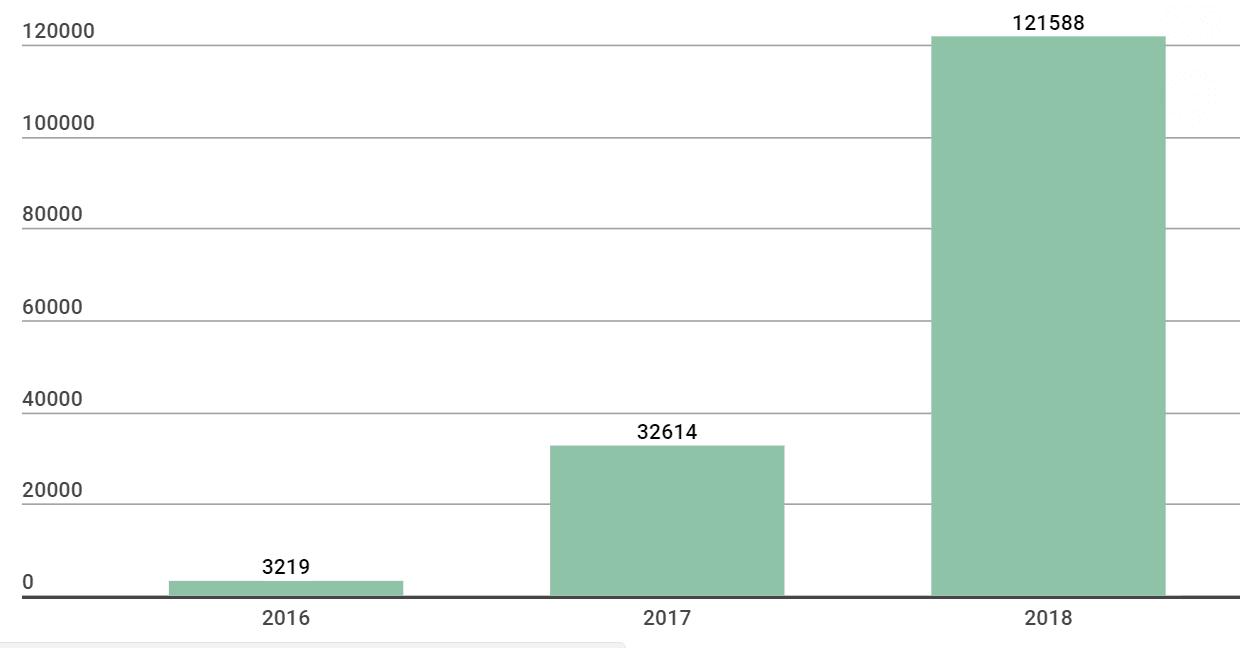
The first data that emerged from the study is that threat actors continue to look at the IoT devices with increasing interest. In the first six months of 2018, the experts observed a number of malware samples that was up three times as many samples targeting IoT devices as in the whole of 2017. In 2017 there were ten times more than in 2016.

In the first half of 2018, researchers at Kaspersky Lab said that the most popular attack vector against IoT devices remains cracking Telnet passwords (75,40%), followed by cracking SSH passwords (11,59%).
Mirai dominates the IoT threat landscape, 20.9% of IoT devices were infected by this malicious code, other prominent malware are Hajime (5.89%) and Gafgyt.
Top 10 countries from which Kaspersky traps were hit by Telnet password attacks is led by Brazil, China, and Japan.
“As we see, in Q2 2018 the leader by number of unique IP addresses from which Telnet password attacks originated was Brazil (23%). Second place went to China (17%). Russia in our list took 4th place (7%).” reads the report.
“Overall for the period January 1 – July 2018, our Telnet honeypot registered more than 12 million attacks from 86,560 unique IP addresses, and malware was downloaded from 27,693 unique IP addresses.”
Experts pointed out that infected MikroTik routers made up 37.23 percent of all the data collected, followed by TP-Link that accounted for 9.07%.
MikroTik devices running under RouterOS are targeted by malicious code that includes the exploit for the Chimay-Red vulnerability.
The Chimay Red hacking tool leverages 2 exploits, the Winbox Any Directory File Read (CVE-2018-14847) and Webfig Remote Code Execution Vulnerability.
MikroTik devices were involved in several campaigns in the past months, including the VPNfilter botnet that infected almost a million routers in more than 50 countries

Experts highlighted that IoT malware is increasing both in quantity and quality.
“More and more exploits are being weaponized by cybercriminals, and infected devices are used to steal personal data and mine cryptocurrencies, on top of traditional DDoS attacks.” concludes Kaspersky.
Let me suggest to read to read the report, is full of interesting data.
| [adrotate banner=”9″] | [adrotate banner=”12″] |
(Security Affairs – IoT devices, hacking)
[adrotate banner=”5″]
[adrotate banner=”13″]
Ad Placeholder
160 × 600
Ad Placeholder
160 × 600


