
Experts at Trend Micro reported malware attacks that leveraged the Hangul Word Processor (HWP) word processing application to target users.
It has happened again, attackers leveraged the Hangul Word Processor (HWP) word processing application to target users in South Korea.
The application is very popular in South Korea and was exploited in several hacking campaigns against entities in the country.
In the recent attacks, hackers use the Hangul Word Processor in association with PostScript. The attackers use emails containing malicious attachments to deliver the malware.
“A branch of PostScript called Encapsulated PostScript exists, which adds restrictions to the code that may be run. This is supposed to make opening these documents safer, but unfortunately older HWP versions implement these restrictions improperly. We have started seeing malicious attachments that contain malicious PostScript, which is in turn being used to drop shortcuts (or actual malicious files) onto the affected system.” states the analysis published by Trend Micro.
Although the Encapsulated PostScript adds restrictions to secure the system while opening a document, the older HWP versions implement these restrictions improperly. The attackers have started using attachments containing malicious PostScript to drop shortcuts or malicious files onto the affected system.
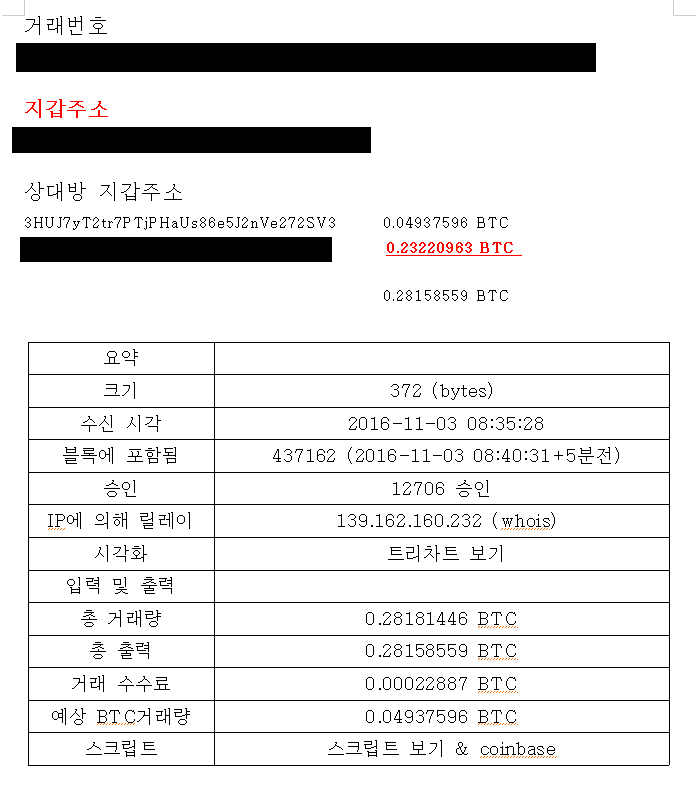
Experts noticed that some of the subject lines and document names used by attackers include “Bitcoin” and “Financial Security Standardization”.

Researchers highlighted that attackers don’t use an actual exploit, but abuse a feature of PostScript to manipulate files.
PostScript doesn’t have the ability to execute shell commands, but attackers obtain a similar behavior by dropping files into various startup folders, then these files are executed when the user reboots the machine.
“Some of the ways we’ve seen this seen of this include:
- Drops a shortcut in the startup folder, which executes MSHTA.exe to execute a Javascript file.
- Drops a shortcut in startup folder and a DLL file in %Temp% directory. The shortcut calls rundll32.exe to execute the said DLL file.
- Drops an executable file in the startup folder.
” reads the analysis.
One of the attacks observed by the researchers at Trend Micro would overwrite the file gswin32c.exe, which is the PostScript interpreter used by the Hangul Word Processor application. The file is replaced with a legitimate version of Calc.exe, in this way the attackers prevent the execution of other embedded PostScript content.
Newer versions of the Hangul Word Processor implement EPS properly, for this reason, users must upgrade the application to stay protected.
“Newer versions of the Hangul Word Processor implement EPS correctly, with the 2014 versions and later not being susceptible to this problem. We suggest upgrading to these newer, safer versions.” Trend Micro says.
| [adrotate banner=”9″] | [adrotate banner=”12″] |
(Security Affairs – Malware, HWP)
[adrotate banner=”5″]
[adrotate banner=”13″]


