
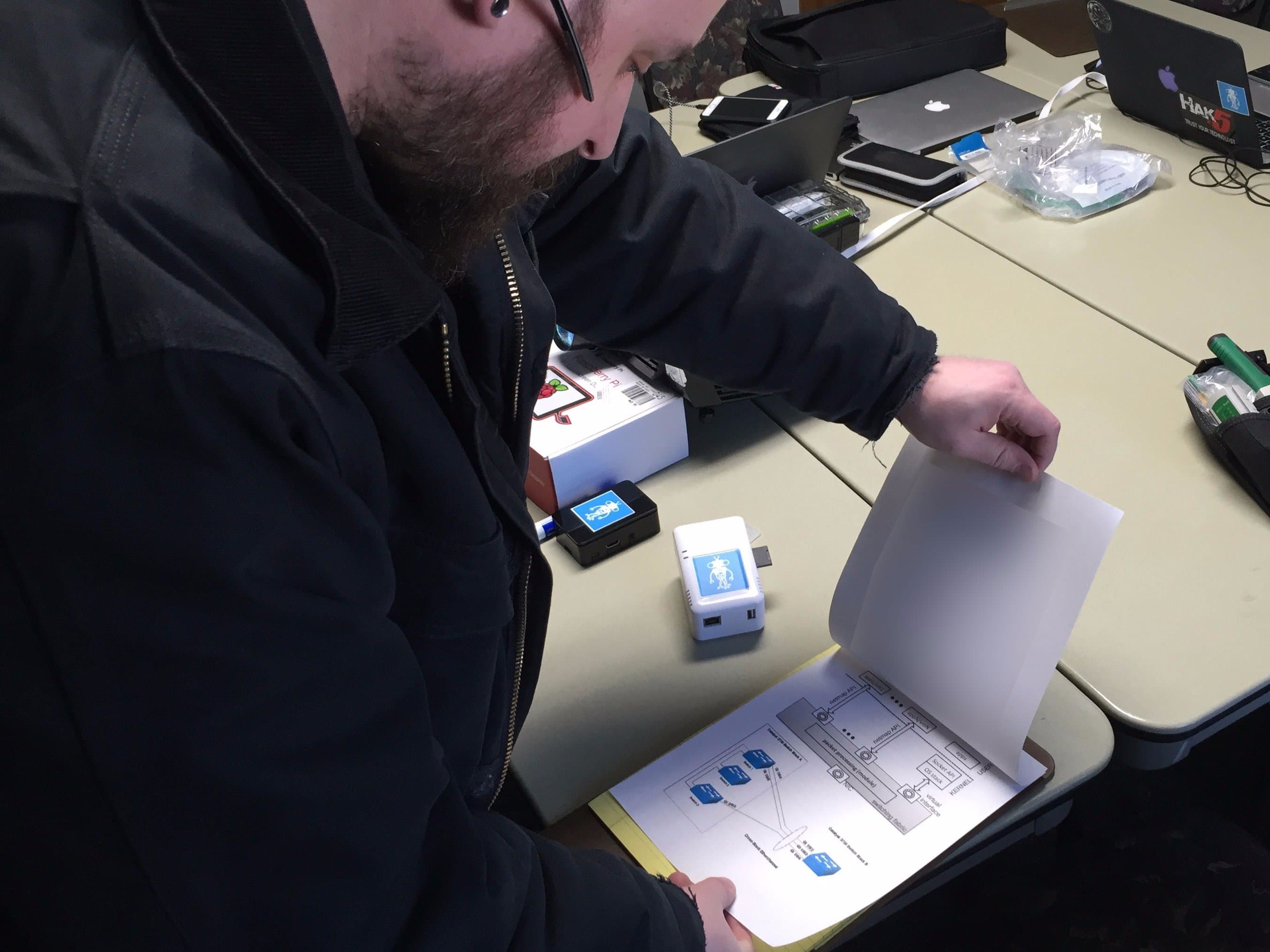
A group of white hat hackers from RedTeam traveled to the Midwest to test the systems of a major power company and breach it with Social Engineering.
RedTeam Security is a group of ethical hackers who specialize in offensive security, believing that the best defense is a good offense. Engaging in social engineering, in addition to penetration testing, RedTeam tests the effectiveness of a business’s security controls before hackers have the opportunity to do so.
Social engineering is the act of manipulating people into relinquishing confidential information. Webroot explains that, “criminals use social engineering tactics because it is usually easier to exploit your natural inclination to trust than it is to discover ways to hack your software. For example, it is much easier to fool someone into giving you their password than it is for you to try hacking their password (unless the password is really weak).”
According to Paul Szoldra, writing for Tech Insider:
“‘Social engineering is also referred to as people hacking,’ says Jeremiah Talamantes, president and founder of RedTeam Security. Though social engineering over the phone is less risky, in-person contact can be rather fruitful as RedTeam’s efforts showed. The team was hired to test the physical and virtual security of eight different locations and they gained useful information, or in one case, full access, just through this method.”

Szoldra recently made his way to the Midwest to shadow the RedTeam Security professionals as they tested the security of a major power company, using social engineering.
- Pretending to be The IT Guy – RedTeam’s first test involved an attempt to gain access to the network server room at one of the company’s branches. If that could be accomplished, the next step would be to install hardware that called back to them over the internet. Alternatively, they could simply take over workstations in the building.
RedTeam director Ryan Manship emphasizes the important role that confidence plays in the successful outcome of a mission such as this. Presenting yourself with the right pretext–having a legitimate reason for being where you are–is critical, according to Manship.
As it turns out, he wasn’t even asked for ID. The secretary accepted Manship’s fabrication, which cleverly included the first name of one of the company’s network administrators.
A supervisor, however, found the carefully crafted story a bit suspect and did ask for identification. Manship claimed to not have his ID on him. At that point, according to Szoldra, the supervisor, “made a phone call to an IT manager — the person who actually hired Manship and RedTeam to test them — and handed him the phone. The jig was up.”
- Two College Students With a Big Project – The second attempt at social engineering was more successful. RedTeam had come up with a plan to shoot video and photos inside an office location in order to become familiar with the environment. They also wanted to try to retrieve data from an employee RFID badge that would unlock office doors. Ideally, a door to a server room could be unlocked. Just the day before, RedTeam consultant Kurt Muhl contacted the office pretending to be a college student from a technical college. He explained that he was working on a class project on renewable energy and was interested in interviewing someone. Muhl got a call back and was able to set up an appointment for the next day. This second endeavor went off without a hitch.
Szoldra writes that, “it was all smoke and mirrors, of course; a way for Muhl to build rapport so he could get what he really came for: Bill’s access badge.
Muhl brought along what looked like a laptop case to carry his notepad, but what was really inside the black bag was a device to scan anyone’s RFID badge who happened to come within two to three feet of it and store it in memory, so the hacker team could clone it for later use.”
Patrick Engebretson, author of The Basics of Hacking and Penetration Testing: Ethical Hacking and Penetration Testing Made Easy illuminates the preparation needed in order to pull feats like this off: “If I had to chop down a tree, I’d spend the first four of them sharpening my axe.”
Written by: Sneacker
Author Bio: Sneacker is a writer who works in the information technology field. She is a member of GhostSec, a counterterrorism unit within the Anonymous collective, and participant in #OpISIS.
| [adrotate banner=”9″] | [adrotate banner=”12″] |
(Security Affairs – Social engineering, Ethical Hacking)
[adrotate banner=”13″]


