Security Affairs
Pegasus Used Against MEP Investigating Pegasus, Citizen Lab Finds|JADEPUFFER: First End-to-End AI-Driven Ransomware Operation|The Anatomy of a Shadow AI Supply-Chain Breach: Lessons from the 2026 Vercel Incident|Law enforcememt operation disrupted Malicious Residential Proxy Networks NetNut|Government and Healthcare Are the Weakest Links in Global Email Security|Europe Confirms Record €4.1B Penalty Against Google for Android Practices|U.S. CISA adds a Microsoft SharePoint Server flaw to its Known Exploited Vulnerabilities catalog|430,000 FortiGate Devices Exposed in FortiBleed Ransomware Link|Adobe fixed multiple maximum-severity flaws in ColdFusion and Campaign Classic|Alleged Scattered Spider Hacker Extradited to U.S. to Face Cybercrime Charges|Oracle E-Business Suite Flaw Under Active Attack, 950 Systems Exposed|Azure CLI Targeted in LSHIY Password Spray Campaign Across 64 Orgs|Pegasus Used Against MEP Investigating Pegasus, Citizen Lab Finds|JADEPUFFER: First End-to-End AI-Driven Ransomware Operation|The Anatomy of a Shadow AI Supply-Chain Breach: Lessons from the 2026 Vercel Incident|Law enforcememt operation disrupted Malicious Residential Proxy Networks NetNut|Government and Healthcare Are the Weakest Links in Global Email Security|Europe Confirms Record €4.1B Penalty Against Google for Android Practices|U.S. CISA adds a Microsoft SharePoint Server flaw to its Known Exploited Vulnerabilities catalog|430,000 FortiGate Devices Exposed in FortiBleed Ransomware Link|Adobe fixed multiple maximum-severity flaws in ColdFusion and Campaign Classic|Alleged Scattered Spider Hacker Extradited to U.S. to Face Cybercrime Charges|Oracle E-Business Suite Flaw Under Active Attack, 950 Systems Exposed|Azure CLI Targeted in LSHIY Password Spray Campaign Across 64 Orgs|
Advertisement

Ad Placeholder

Full Width × 90

Breaking News

The GIBON Ransomware appears in the threat landscape

A new strain of ransomware dubbed GIBON ransomware was spotted by the ProofPoint researcher Matthew Mesa that observed it being distributed via malspam. The spam messages use a malicious document as attachment containing macros that once enabled will download and install the ransomware on a victim’s machine. The researcher dubbed the ransomware GIBON because of the presence of the string “GIBON” in two […]

GIBON ransomware 2.png

A new strain of ransomware dubbed GIBON ransomware was spotted by the ProofPoint researcher Matthew Mesa that observed it being distributed via malspam.

The spam messages use a malicious document as attachment containing macros that once enabled will download and install the ransomware on a victim’s machine.

The researcher dubbed the ransomware GIBON because of the presence of the string “GIBON” in two places. The experts first noticed this name in the user agent string of the malware using in the communications with the Command & Control server.

GIBON ransomware

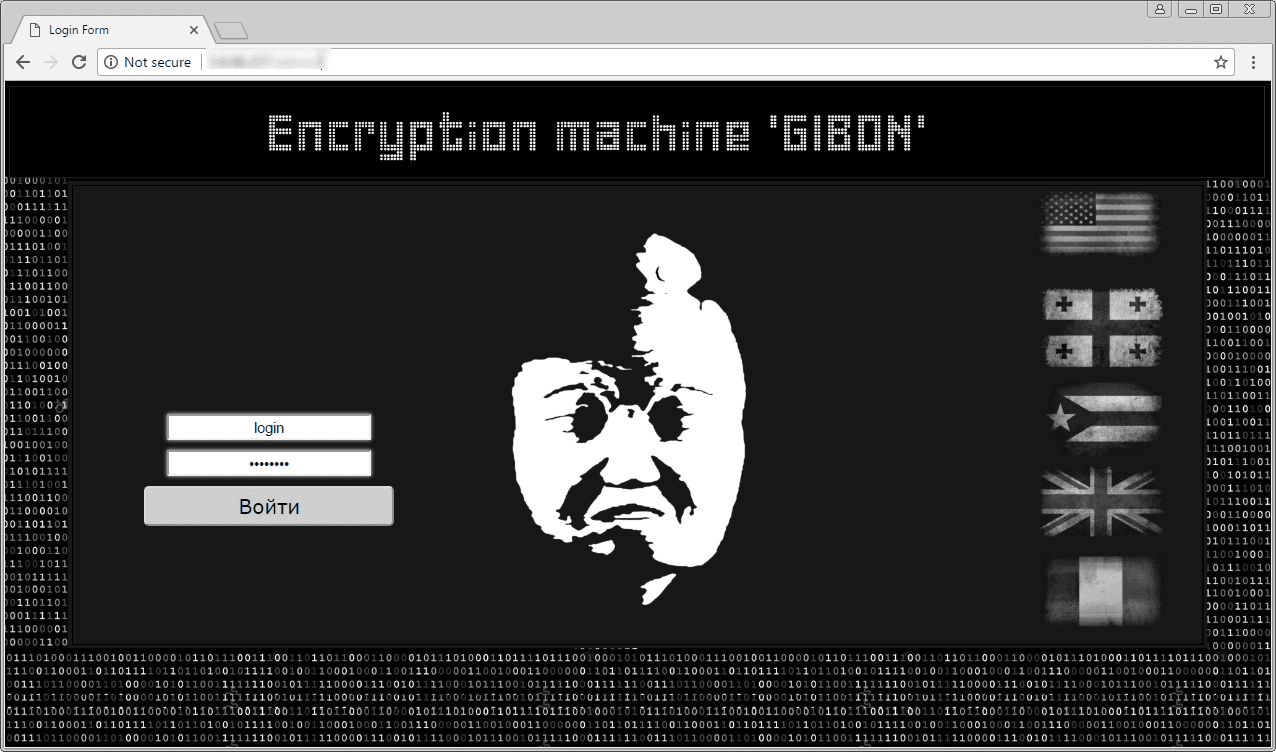
The second place where it is possible to find the string “GIBON” is the Admin panel for the ransomware, the logo is from the Russian television company VID.

GIBON ransomware 2.png

When the GIBON ransomware is first executed, it will connect to the C&C and register a new victim by sending a base64 encoded string that contains the timestamp, the version of Windows, and the “register” string.

The C&C, in turn, will send back a response that contains a base64 encoded string that will be used by GIBON ransomware as the ransom note.

Once the infected machine is registered with the C&C,  it will locally generate an encryption key and send it to the server as a base64 encoded string. The malware will use the key to encrypt all files on the target computer, it appends the .encrypt extension to the encrypted file’s name.

“Now that the victim has been registered and key transmitted to the C2, the ransomware will begin to encrypt the computer. While encrypting the computer, it will target all files regardless of the extension as long as they are not in the Windows folder.” reads the blog post published by Lawrence Abrams.

“During the encryption process, GIBON will routinely connect to the C2 server and send it a “PING” to indicate that it is still encrypting the computer.”

The malware drops a ransom note in each folder containing the encrypted files, it also generates a ransom note named READ_ME_NOW.txt.

“Attention! All the files are encrypted!
To restore the files, write to the mail:bomboms123@mail.ru
If you do not receive a response from this mail within 24 hours,
then write to the subsidiary:yourfood20@mail.ru”

Once the GIBON ransomware completed the file encryption a computer, it will send a message to the C&C server with the string “finish”, a timestamp, the Windows version, and the number of  files that were encrypted.

The good news is that files encrypted by this ransomware can be decrypted using the GibonDecrypter.

[adrotate banner=”9″] [adrotate banner=”12″]

Pierluigi Paganini

(Security Affairs – GIBON ransomware, malware)

[adrotate banner=”5″]

[adrotate banner=”13″]