
Experts from Kaspersky have discovered a new APT dubbed FruityArmor APT using a zero-day vulnerability patched this month by Microsoft.
A new APT group, dubbed FruityArmor, targeted activists, researchers, and individuals related to government organizations.
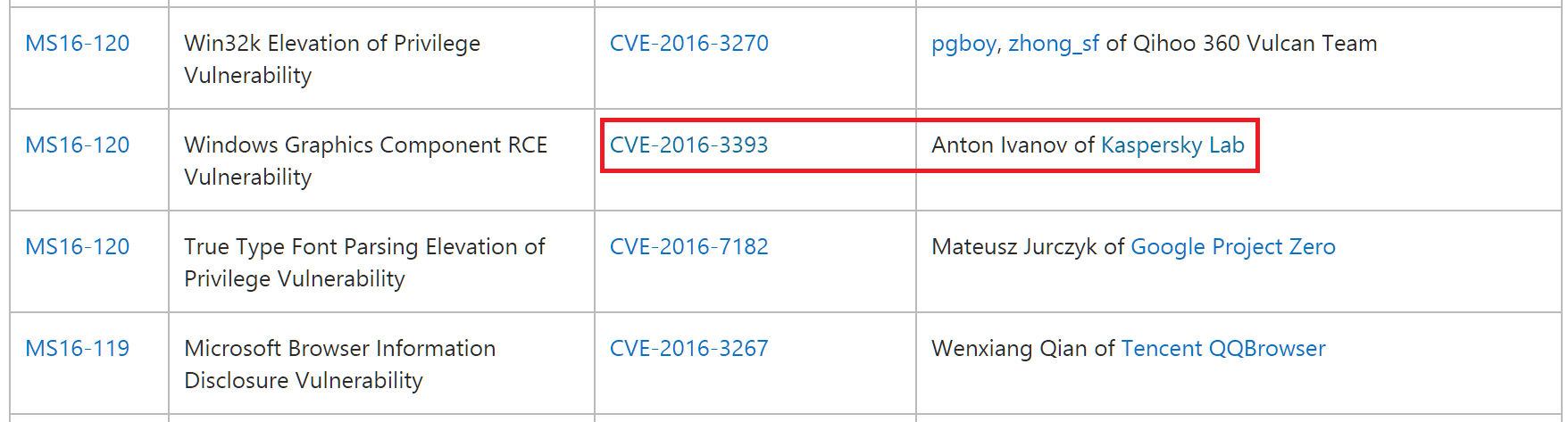
According to experts at Kaspersky Lab, the FruityArmor APT conducted targeted attacks leveraging on a Windows zero-day vulnerability, tracked as CVE-2016-3393, recently patched by Microsoft.
The security bulletins issued by Microsoft in October patched four zero-day flaws, including the CVE-2016-3393 one that it a remote code execution vulnerability.

The experts have observed victims in different countries, including Iran, Algeria, Thailand, Yemen, Saudi Arabia, and Sweden.
According to Kaspersky Lab, the hackers behind FruityArmor exploited several zero-day vulnerabilities and used an attack platform built around the Microsoft PowerShell framework.
“FruityArmor is perhaps a bit unusual due to the fact that it leverages an attack platform that is built entirely around PowerShell. The group’s primary malware implant is written in PowerShell and all commands from the operators are also sent in the form of PowerShell scripts.” reads a blog post published on Thursday by Kaspersky.
Another peculiarity of the group is the use of the Windows Management Instrumentation (WMI) for persistence.
The malicious code used by the APT is hard to detect, the experts from Kaspersky highlighted that its payloads run directly in memory.
According to the experts, the FruityArmor APT group exploits the zero-day flaw for privilege escalation, that combined with browser exploits allow the attackers to escape the browser sandbox.
“To achieve remote code execution on a victim’s machine, FruityArmor normally relies on a browser exploit. Since many modern browsers are built around sandboxes, a single exploit is generally not sufficient to allow full access to a targeted machine.” reads the blog post.
“In the case of FruityArmor, the initial browser exploitation is always followed by an EoP exploit. This comes in the form of a module, which runs directly in memory. The main goal of this module is to unpack a specially crafted TTF font containing the CVE-2016-3393 exploit. After unpacking, the module directly loads the code exploit from memory with the help of AddFontMemResourceEx. After successfully leveraging CVE-2016-3393, a second stage payload is executed with higher privileges to execute PowerShell with a meterpreter-style script that connects to the C&C.”
For further details give a look at the Kaspersky analysis.
| [adrotate banner=”9″] | [adrotate banner=”12″] |
(Security Affairs – FruityArmor APT, Zero-day)
[adrotate banner=”5″]
[adrotate banner=”13″]


