
A researcher released a free decryptor for Linux Akira ransomware, using GPU power to recover keys through brute force.
Security researcher Yohanes Nugroho created a free decryptor for Linux Akira ransomware, using GPUs to brute force the decryption keys. Initially estimating a week, the project took three weeks and cost $1,200 in GPU resources due to unexpected complexities. The tool doesn’t work like traditional decryptors but instead brute-forces encryption keys using timestamp-based methods.
The researchers explained that he devised the decryption technique recently after he helped a company recovering their data from the Akira ransomware without paying the ransom. The company was infected with a variant that has been active from late 2023 to the present.
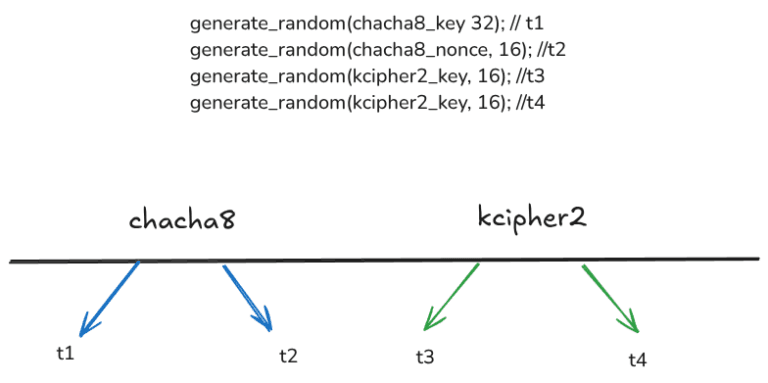
Nugroho’s decryptor brute-forces encryption keys by exploiting Akira ransomware’s use of timestamp-based seeds. Akira generates unique keys for each file using four different timestamps with nanosecond precision, hashed through 1,500 rounds of SHA-256. The researcher analyzed log files, file metadata, and hardware benchmarks to estimate encryption timestamps, making brute-forcing decryption keys more efficient.
“The malware doesn’t rely on a single moment in time but uses four moments, each with nanosecond resolution. The fist two and last two are related, so we can’t just bruteforce the time one by one. Key generation is complex, involving 1,500 rounds of SHA-256 for each timestamp. Each file ends up with a unique key.” reads the report published by the expert. “Not all ESXi hosts have millisecond resolution in their log files, some only log with second-level precision. I am still unsure what configuration file causes this different behavior”
Akira ransomware generates unique encryption keys for each file using four nanosecond-precision timestamps as seeds in the generate_random function. Akira ransomware encrypts file keys with RSA-4096 and appends them to files, making decryption difficult. High timestamp precision and multi-threading add complexity.

Since the encryption seed is crucial for key generation, attackers can recreate decryption keys through brute force. Nugroho’s method leverages this weakness to unlock files without ransom payments.
The researcher found local GPUs too slow for brute-forcing Akira’s decryption key. Using cloud GPU services, he deployed sixteen RTX 4090s, reducing the process to 10 hours. However, recovery time may vary based on file volume. He noted that further optimizations could enhance performance.
The researcher chose the RTX 4090 for brute-force decryption due to its high CUDA core count and cost efficiency. Initially, Google Cloud was considered but deemed too expensive. Instead, RunPod and Vast.ai were used, reducing costs significantly. Brute-forcing a 4.5 million nanosecond range costs $261, with total expenses reaching $1,200. The malware encrypts files using KCipher2 and Chacha8.
Nugroho published the full source code on GigHub.
Follow me on Twitter: @securityaffairs and Facebook and Mastodon
(SecurityAffairs – hacking, akira ransomware)


