
U.S. CISA adds a Microsoft SharePoint Server flaw to its Known Exploited Vulnerabilities catalog|430,000 FortiGate Devices Exposed in FortiBleed Ransomware Link|Adobe fixed multiple maximum-severity flaws in ColdFusion and Campaign Classic|Alleged Scattered Spider Hacker Extradited to U.S. to Face Cybercrime Charges|Oracle E-Business Suite Flaw Under Active Attack, 950 Systems Exposed|Azure CLI Targeted in LSHIY Password Spray Campaign Across 64 Orgs|CISA Warns BlueHammer Flaw Is Now Exploited in Ransomware Attacks|RustDuck: The Botnet That’s Still Small but Engineering Like It Plans to Grow|GuardFall Flaw Hits 10 of 11 Popular Open-Source AI Agents|XSS.is, The Forum That Ran the Ransomware Supply Chain Is Down. The Market Isn’t|U.S. CISA adds SimpleHelp flaw to its Known Exploited Vulnerabilities catalog|Hackers Steal Data of 4.38 Million Aflac Japan Customers|U.S. CISA adds a Microsoft SharePoint Server flaw to its Known Exploited Vulnerabilities catalog|430,000 FortiGate Devices Exposed in FortiBleed Ransomware Link|Adobe fixed multiple maximum-severity flaws in ColdFusion and Campaign Classic|Alleged Scattered Spider Hacker Extradited to U.S. to Face Cybercrime Charges|Oracle E-Business Suite Flaw Under Active Attack, 950 Systems Exposed|Azure CLI Targeted in LSHIY Password Spray Campaign Across 64 Orgs|CISA Warns BlueHammer Flaw Is Now Exploited in Ransomware Attacks|RustDuck: The Botnet That’s Still Small but Engineering Like It Plans to Grow|GuardFall Flaw Hits 10 of 11 Popular Open-Source AI Agents|XSS.is, The Forum That Ran the Ransomware Supply Chain Is Down. The Market Isn’t|U.S. CISA adds SimpleHelp flaw to its Known Exploited Vulnerabilities catalog|Hackers Steal Data of 4.38 Million Aflac Japan Customers|
Advertisement

Ad Placeholder

Full Width × 90

Cyber Crime

US Treasury FinCEN linked $5.2 billion in BTC transactions to ransomware payments

The U.S. Treasury Department’s Financial Crimes Enforcement Network (FinCEN) linked roughly $5.2 billion worth of Bitcoin transactions to ransomware. The U.S. Treasury Department’s Financial Crimes Enforcement Network (FinCEN) has identified approximately $5.2 billion worth of Bitcoin transactions likely associated with operations of top 10 most commonly reported ransomware variants FinCEN analyzed a data set composed […]

FinCEN ransomware

The U.S. Treasury Department’s Financial Crimes Enforcement Network (FinCEN) linked roughly $5.2 billion worth of Bitcoin transactions to ransomware.

The U.S. Treasury Department’s Financial Crimes Enforcement Network (FinCEN) has identified approximately $5.2 billion worth of Bitcoin transactions likely associated with operations of top 10 most commonly reported ransomware variants

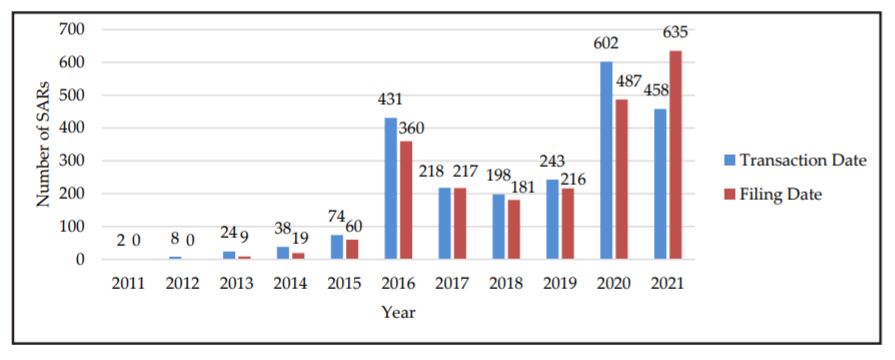
FinCEN analyzed a data set composed of 2,184 SARs filed between 1 January 2011 and 30 June 2021 and identified 177 CVC (convertible virtual currency) wallets addresses that were used in ransomware operations associated with the above ransomware variants.

The US agency identified $590 million in ransomware-related SARs, +42 compared to 2020,

“FinCEN identified $590 million in ransomware-related SARs, a 42 percent increase compared to a total of $416 million for all of 2020. If current trends continue, SARs filed in 2021 are projected to have a higher ransomware-related transaction value than SARs filed in the previous 10 years combined, which would represent a continuing trend of substantial increases in reported year-over-year ransomware activity.” reads the report published by FinCEN.
FinCEN ransomware

Studying data generated from ransomware-related SARs, the mean average total monthly suspicious amount of ransomware transactions was $66.4 million and the median average was $45 million.

According to the financial trend analysis, the most popular ransomware-related payment method in reported transactions was Bitcoin.

FinCEN identified 68 active ransomware variants, the most commonly reported ones were REvil/Sodinokibi, Conti, DarkSide, Avaddon, and Phobos.

FinCEN also identified most common money laundering techniques used by ransomware operators in 2021, including payments in Anonymity-enhanced Cryptocurrencies (AECs) like Monero, avoiding reusing wallet addresses, “chain hopping” to exchange funds into other cryptocurrency scheme, cashing out at centralized exchanges, and using mixing services and decentralized exchanges.

Follow me on Twitter: @securityaffairs and Facebook

[adrotate banner=”9″][adrotate banner=”12″]

Pierluigi Paganini

(SecurityAffairs – hacking, FinCEN)

[adrotate banner=”5″]

[adrotate banner=”13″]


