
Europe Confirms Record €4.1B Penalty Against Google for Android Practices|U.S. CISA adds a Microsoft SharePoint Server flaw to its Known Exploited Vulnerabilities catalog|430,000 FortiGate Devices Exposed in FortiBleed Ransomware Link|Adobe fixed multiple maximum-severity flaws in ColdFusion and Campaign Classic|Alleged Scattered Spider Hacker Extradited to U.S. to Face Cybercrime Charges|Oracle E-Business Suite Flaw Under Active Attack, 950 Systems Exposed|Azure CLI Targeted in LSHIY Password Spray Campaign Across 64 Orgs|CISA Warns BlueHammer Flaw Is Now Exploited in Ransomware Attacks|RustDuck: The Botnet That’s Still Small but Engineering Like It Plans to Grow|GuardFall Flaw Hits 10 of 11 Popular Open-Source AI Agents|XSS.is, The Forum That Ran the Ransomware Supply Chain Is Down. The Market Isn’t|U.S. CISA adds SimpleHelp flaw to its Known Exploited Vulnerabilities catalog|Europe Confirms Record €4.1B Penalty Against Google for Android Practices|U.S. CISA adds a Microsoft SharePoint Server flaw to its Known Exploited Vulnerabilities catalog|430,000 FortiGate Devices Exposed in FortiBleed Ransomware Link|Adobe fixed multiple maximum-severity flaws in ColdFusion and Campaign Classic|Alleged Scattered Spider Hacker Extradited to U.S. to Face Cybercrime Charges|Oracle E-Business Suite Flaw Under Active Attack, 950 Systems Exposed|Azure CLI Targeted in LSHIY Password Spray Campaign Across 64 Orgs|CISA Warns BlueHammer Flaw Is Now Exploited in Ransomware Attacks|RustDuck: The Botnet That’s Still Small but Engineering Like It Plans to Grow|GuardFall Flaw Hits 10 of 11 Popular Open-Source AI Agents|XSS.is, The Forum That Ran the Ransomware Supply Chain Is Down. The Market Isn’t|U.S. CISA adds SimpleHelp flaw to its Known Exploited Vulnerabilities catalog|
Advertisement

Ad Placeholder

Full Width × 90

Breaking News

A new Facebook security feature reveals fraudulent Facebook-like mails

A new Facebook security feature protects users from identity theft, the tech giant is taking note of every email it has “recently” sent to its users. Facebook has rolled out a new security feature to protect users from identity theft, the tech giant is taking note of every email it has “recently” sent to its users. […]

Facebook security feature

A new Facebook security feature protects users from identity theft, the tech giant is taking note of every email it has “recently” sent to its users.

Facebook has rolled out a new security feature to protect users from identity theft, the tech giant is taking note of every email it has “recently” sent to its users.

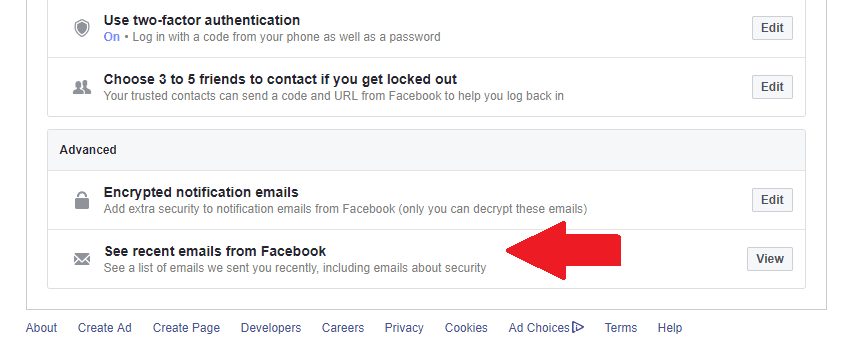
The full list of email sent by Facebook is available under the Settings menu on the social network platform.

Facebook users that will receive a message allegedly sent by the social network giant can check its authenticity by viewing the new “See recent emails from Facebook” section at the bottom of the Security and Login page.

Facebook security feature

If the message is not included in the list it is fraudulent and must be discarded.

Facebookmail.com is a common domain that Facebook uses to send notifications when we detect an attempt to log in to your account or change a password. If you’re unsure if an email you received was from Facebook, you can check its legitimacy by visiting facebook.com/settings to view a list of security-related emails that have been recently sent.” states the announcement published by Facebook. 

Even if threat actors are able to disguise emails, to make them look like official messages sent by Facebook, the new Facebook security feature will help users to identify phishing attacks.

Crooks use phishing attacks to obtain victim’s credentials, access their profile, and perform a wide range of fraudulent activities.

Compromised accounts could be used to send out phishing messages or to spread malware.

Users that will discover email scam pretending to be sent from the Facebook platform can report it to phish@facebook.com.

If your account has been compromised due to a phishing attempt, visit facebook.com/hacked.

“If you’ve checked this tool and determined that an email you received is fake, we encourage you to report it to phish@facebook.com, and if you believe your account has been compromised due to a phishing attempt, you may attempt to regain access to your account at: facebook.com/hacked. ” concludes Facebook.

[adrotate banner=”9″] [adrotate banner=”12″]

Pierluigi Paganini

(Security Affairs – Facebook security feature, phishing)

[adrotate banner=”5″]

[adrotate banner=”13″]


