
Security researchers from ESET revealed that the infamous Russian hacker group known as Energetic Bear is behind the hack of two San Francisco International Airport (SFO) websites.
Researchers from ESET believe that the attacks against two San Francisco International Airport (SFO) websites were carried out by the Russian cyber-espionage group known as Energetic Bear (aka DragonFly, Crouching Yeti).
The Energetic Bear APT group has been active since at least 2010 most of the victims of the group are organizations in the energy and industrial sectors.
In March 2018, the Department of Homeland Security and Federal Bureau of Investigation issued a joint technical alert to warn of attacks on US critical infrastructure powered by Russian threat actors. The US-CERT blamed the APT group tracked as Dragonfly, Crouching Yeti, and Energetic Bear.
Now ESET researchers are blaming the Russia-linked APT group for the attacks that took place in March, the hackers also disclosed a data breach.
SFO is a major gateway to Europe and Asia, it serves 45 international carriers. The attackers may have gained access to some users’ login credentials after deploying malware on both websites.
“The attackers inserted malicious computer code on these websites to steal some users’ login credentials,” reads a message posted to both site’s by the SFO’s Airport Information Technology and Telecommunications (ITT) director. “Users possibly impacted by this attack include those accessing these websites from outside the airport network through Internet Explorer on a Windows-based personal device or a device not maintained by SFO.”
Hackers may have accessed the impacted users’ credentials and used them to log on to those personal devices. The SFO ITT urges anyone who even visited either website using the Internet Explorer web browser to change the device’s password.
The IT staff at the SFO has already removed the malicious code injected within its websites and took both offline after the attack.
In response to the incident, the SFO Airport reset all email and network passwords.
“The malicious code was removed from the affected websites. SFOConnect.com and SFOConstruction.com were taken offline. The airport also forced a reset of all SFO related email and network passwords on Monday, March 23, 2020.” continues the data breach notice.
The websites hit by hackers are SFOConnect.com which is used by airport employees, and SFOConstruction.com used by airport construction contractors.
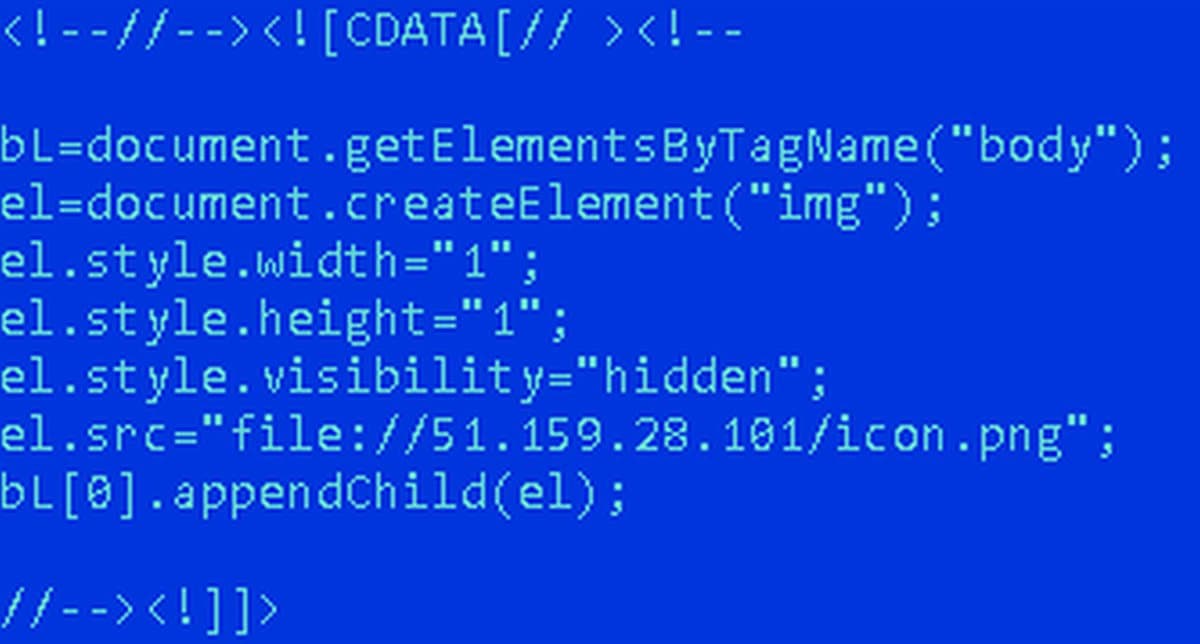
According to ESET, hackers were targeting the visitor’s own Windows credentials, the attackers exploited an SMB feature and the file:// prefix.
“The intent was to collect Windows credentials (username/NTLM hash) of visitors by exploiting an SMB feature and the file:// prefix,” reads the post published by ESET.
Attackers could have used stolen credentials to attempt lateral movements within the airport’s internal network to conduct reconnaissance and other malicious activities.
In April 2018, Kaspersky researchers analyzed the serves compromised by the Energetic Bear APT in a series of watering hole attacks.
The state-sponsored hackers used the same “file:// prefix” trick to gather NTLM hashes from users visiting a compromised website.
At the time it is not clear if the attackers compromised the websites of other airports worldwide.
| [adrotate banner=”9″] | [adrotate banner=”12″] |
(SecurityAffairs – Energetic Bear, hacking)
[adrotate banner=”5″]
[adrotate banner=”13″]


