
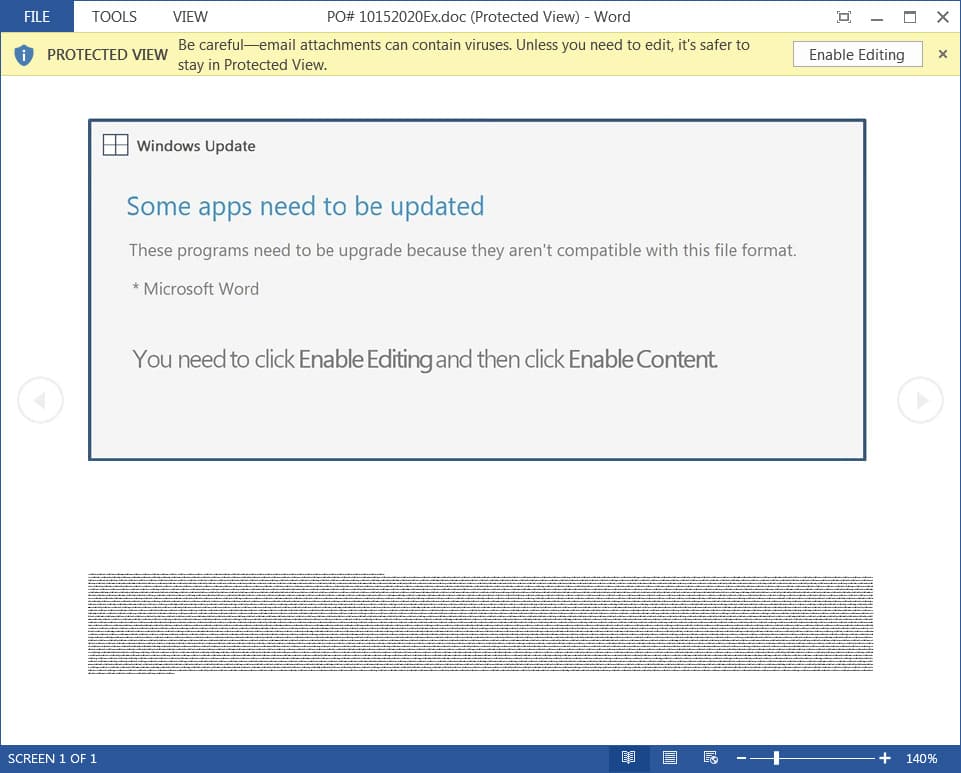
After a short pause, a new Emotet malware campaign was spotted by the experts on October 14th, crooks began using a new ‘Windows Update’ attachment.
After a short interruption, a new Emotet malware campaign was spotted by the experts in October. Threat actors began using new Windows Update attachments in a spam campaign aimed at users worldwide.
The spam campaign uses a new malicious attachment that pretends to be a message from Windows Update and attempts to trick the victims recommending to upgrade Microsoft Word.
The Emotet banking trojan has been active at least since 2014, the botnet is operated by a threat actor tracked as TA542. In the middle-August, the malware was employed in fresh COVID19-themed spam campaign
Recent spam campaigns used messages with malicious Word documents, or links to them, pretending to be an invoice, shipping information, COVID-19 information, resumes, financial documents, or scanned documents.
The infamous banking trojan is also used to deliver other malicious code, such as Trickbot and QBot trojan or ransomware such as Conti (TrickBot) or ProLock (QBot).
Emotet is a modular malware, its operators could develop new Dynamic Link Libraries to update its capabilities.
Recently, the Cybersecurity and Infrastructure Security Agency (CISA) issued an alert to warn of a surge of Emotet attacks that have targeted multiple state and local governments in the U.S. since August.
During that time, the agency’s EINSTEIN Intrusion Detection System has detected roughly 16,000 alerts related to Emotet activity.
The new campaign was observed on October 14th, the attackers are using multiple lures, including invoices, purchase orders, shipping information, COVID-19 information, and information about President Trump’s health.
The spam messages come with malicious Word (.doc) attachments or include links to download the bait document.
Upon opening the attachments users are instructed to ‘Enable Content,’ in this way the malicious macros will be executed starting the infection process.
“To trick users into enabling the macros, Emotet uses various document templates, including pretending to be created on iOS devices, Windows 10 Mobile, or that the document is protected.” reported BleepingComputer.
The recent campaign employed a new template that pretends to be a message from Windows Update urging the update of Microsoft Word to correctly view the document.
Below the message displayed to the users:
Windows Update
Some apps need to be updated
These programs need to be upgrade because they aren't compatible with this file format.
* Microsoft Word
You need to click Enable Editing and then click Enable Content.

Researchers recommend sharing knowledge about malicious document templates used by Emotet in order to quickly identify them and avoid being infected.
| [adrotate banner=”9″] | [adrotate banner=”12″] |
(SecurityAffairs – hacking, Emotet)
[adrotate banner=”5″]
[adrotate banner=”13″]


