
430,000 FortiGate Devices Exposed in FortiBleed Ransomware Link|Adobe fixed multiple maximum-severity flaws in ColdFusion and Campaign Classic|Alleged Scattered Spider Hacker Extradited to U.S. to Face Cybercrime Charges|Oracle E-Business Suite Flaw Under Active Attack, 950 Systems Exposed|Azure CLI Targeted in LSHIY Password Spray Campaign Across 64 Orgs|CISA Warns BlueHammer Flaw Is Now Exploited in Ransomware Attacks|RustDuck: The Botnet That’s Still Small but Engineering Like It Plans to Grow|GuardFall Flaw Hits 10 of 11 Popular Open-Source AI Agents|XSS.is, The Forum That Ran the Ransomware Supply Chain Is Down. The Market Isn’t|U.S. CISA adds SimpleHelp flaw to its Known Exploited Vulnerabilities catalog|Hackers Steal Data of 4.38 Million Aflac Japan Customers|Apple Fixes WebKit Flaws in iOS and macOS, With Help From AI Tools|430,000 FortiGate Devices Exposed in FortiBleed Ransomware Link|Adobe fixed multiple maximum-severity flaws in ColdFusion and Campaign Classic|Alleged Scattered Spider Hacker Extradited to U.S. to Face Cybercrime Charges|Oracle E-Business Suite Flaw Under Active Attack, 950 Systems Exposed|Azure CLI Targeted in LSHIY Password Spray Campaign Across 64 Orgs|CISA Warns BlueHammer Flaw Is Now Exploited in Ransomware Attacks|RustDuck: The Botnet That’s Still Small but Engineering Like It Plans to Grow|GuardFall Flaw Hits 10 of 11 Popular Open-Source AI Agents|XSS.is, The Forum That Ran the Ransomware Supply Chain Is Down. The Market Isn’t|U.S. CISA adds SimpleHelp flaw to its Known Exploited Vulnerabilities catalog|Hackers Steal Data of 4.38 Million Aflac Japan Customers|Apple Fixes WebKit Flaws in iOS and macOS, With Help From AI Tools|
Advertisement

Ad Placeholder

Full Width × 90

Breaking News

Nefilim ransomware operators leaked data alleged stolen from the Dussmann group

Cyble researchers reported that Nefilim ransomware operators allegedly targeted the Dussmann group, the German largest private multi-service provider Researchers from threat intelligence firm Cyble reported that Nefilim ransomware operators allegedly targeted the Dussmann group, the German largest private multi-service provider. The Dussmann Group has over 64,500 employees in 22 countries, it is one of the […]

DUSSMANN GROUP

Cyble researchers reported that Nefilim ransomware operators allegedly targeted the Dussmann group, the German largest private multi-service provider

Researchers from threat intelligence firm Cyble reported that Nefilim ransomware operators allegedly targeted the Dussmann group, the German largest private multi-service provider. The Dussmann Group has over 64,500 employees in 22 countries, it is one of the largest private multi-service providers worldwide.

In the past months, the number of ransomware attacks spiked, numerous ransomware operators made the headlines targeting organizations worldwide. One of these crews is behind the Nefilim ransomware that recently targeted the mobile network operator Orange.

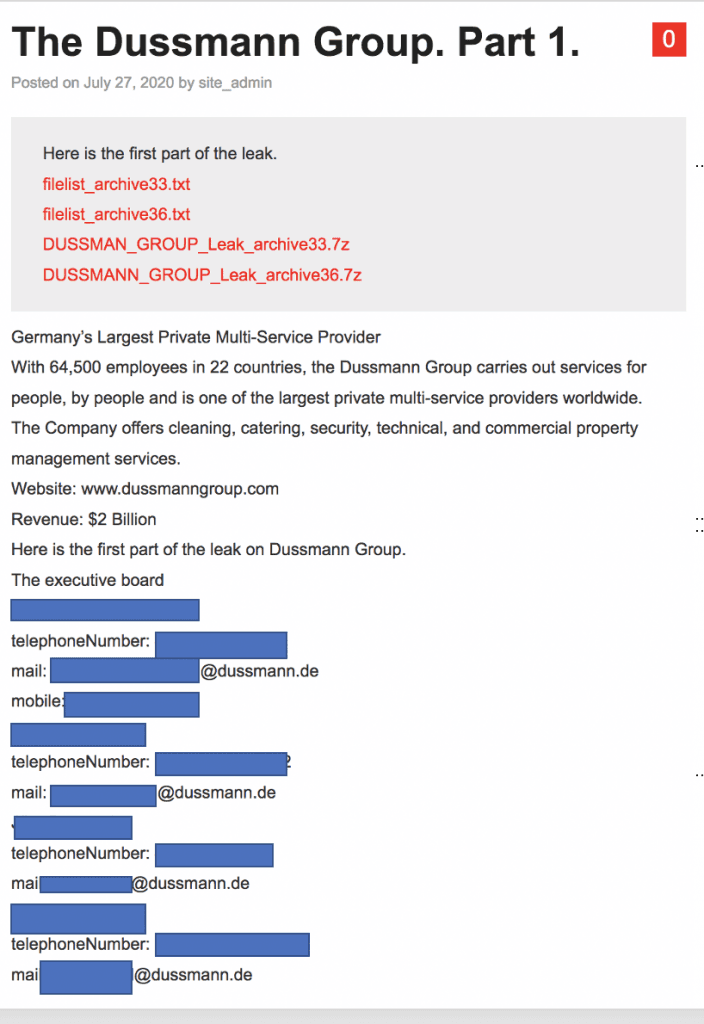
During its continuous darkweb and deepweb monitoring, the Cyble Research Team came across the post of Nefilim ransomware operators in which the crew claimed to have breached The Dussmann Group and have exfiltrated sensitive data.

Below the message published by Nefilim ransomware operators to announce the data breach:

DUSSMANN GROUP

Cyble Research Team analyzed the leaked files included in a first batch of documents released by the group. The first archive of files allegedly stolen by the company is around 15.7 GB in size, the ransomware operators leaked a total of 16,805 company’s files.

“The data leak seems to consist of corporate operational documents which include the company’s claim settlement documents, compulsory security mortgages documents, legal contracts, Cooperation and Project agreements, and much more.” reads the post published by Cyble.

The ransomware gang is now threatening the company of releasing other stolen data if it will not pay the ransom.

Below a list of tips provided by Cyble to prevent ransomware attacks:

  • Never click on unverified/unidentified links
  • Do not open untrusted email attachments
  • Only download from sites you trust
  • Never use unfamiliar USBs
  • Use security software and keep it updated
  • Backup your data periodically
  • Isolate the infected system from the network
  • Use mail server content scanning and filtering
  • Never pay the ransom.
[adrotate banner=”9″][adrotate banner=”12″]

Pierluigi Paganini

(SecurityAffairs – hacking, Nefilim ransomware)

[adrotate banner=”5″]

[adrotate banner=”13″]


