
Europe Confirms Record €4.1B Penalty Against Google for Android Practices|U.S. CISA adds a Microsoft SharePoint Server flaw to its Known Exploited Vulnerabilities catalog|430,000 FortiGate Devices Exposed in FortiBleed Ransomware Link|Adobe fixed multiple maximum-severity flaws in ColdFusion and Campaign Classic|Alleged Scattered Spider Hacker Extradited to U.S. to Face Cybercrime Charges|Oracle E-Business Suite Flaw Under Active Attack, 950 Systems Exposed|Azure CLI Targeted in LSHIY Password Spray Campaign Across 64 Orgs|CISA Warns BlueHammer Flaw Is Now Exploited in Ransomware Attacks|RustDuck: The Botnet That’s Still Small but Engineering Like It Plans to Grow|GuardFall Flaw Hits 10 of 11 Popular Open-Source AI Agents|XSS.is, The Forum That Ran the Ransomware Supply Chain Is Down. The Market Isn’t|U.S. CISA adds SimpleHelp flaw to its Known Exploited Vulnerabilities catalog|Europe Confirms Record €4.1B Penalty Against Google for Android Practices|U.S. CISA adds a Microsoft SharePoint Server flaw to its Known Exploited Vulnerabilities catalog|430,000 FortiGate Devices Exposed in FortiBleed Ransomware Link|Adobe fixed multiple maximum-severity flaws in ColdFusion and Campaign Classic|Alleged Scattered Spider Hacker Extradited to U.S. to Face Cybercrime Charges|Oracle E-Business Suite Flaw Under Active Attack, 950 Systems Exposed|Azure CLI Targeted in LSHIY Password Spray Campaign Across 64 Orgs|CISA Warns BlueHammer Flaw Is Now Exploited in Ransomware Attacks|RustDuck: The Botnet That’s Still Small but Engineering Like It Plans to Grow|GuardFall Flaw Hits 10 of 11 Popular Open-Source AI Agents|XSS.is, The Forum That Ran the Ransomware Supply Chain Is Down. The Market Isn’t|U.S. CISA adds SimpleHelp flaw to its Known Exploited Vulnerabilities catalog|
Advertisement

Ad Placeholder

Full Width × 90

Breaking News

Researchers spotted a hidden backdoor in Chinese IoT devices from the firm DblTek

Security experts at Trustwave have discovered a hidden backdoor in Internet of Things devices manufactured by the Chinese firm DblTek. Researchers from Trustwave have discovered a backdoor in IoT devices manufactured by a Chinese vendor that is refusing to fix it. The backdoored devices are produced by the VoIP firm Dbltek, the researchers speculate the backdoor was […]

Researchers spotted a hidden backdoor in Chinese IoT devices from the firm DblTek

Security experts at Trustwave have discovered a hidden backdoor in Internet of Things devices manufactured by the Chinese firm DblTek.

Researchers from Trustwave have discovered a backdoor in IoT devices manufactured by a Chinese vendor that is refusing to fix it.

The backdoored devices are produced by the VoIP firm Dbltek, the researchers speculate the backdoor was introduced for debugging purposes.

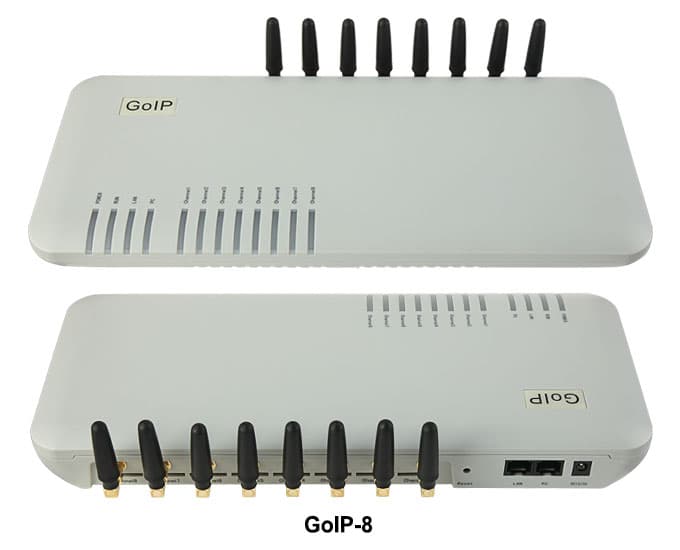
The experts discovered that the Telnet interface of the GoIP has an undocumented user, namely “dbladm,” which provides root level shell access on the device. The account is not protected by a password, instead, it is protected by a proprietary challenge-response authentication scheme.

Dbltek GoIP

When the attacker tries to Telnet into the device as dbladm, the IoT component tries to connect to UDP port 11000 on 192.168.2.1 on the local network. If the flawed device receives a valid response, it grants access.

“Trustwave recently reported a remotely exploitable issue in the Telnet administrative interface of numerous DblTek branded devices. The issue permits a remote attacker to gain a shell with root privileges on the affected device due to a vendor backdoor in the authentication procedure.” reads the analysis published by Trustwave.

The researchers ethically reported the issue to the IoT vendor, but the manufacturer issued a new firmware with minor changes that leave the access open.

Dbltek then has closed any contact with Trustwave that has continued the analysis of the backdoor and has written the PoC exploits for the backdoors in both the old and new firmware versions.

The flawed firmware is present in almost all Dbltek GSM-to-VoIP devices that are mostly used by small to medium size businesses.

An internet scan for vulnerable devices revealed the existence of hundreds of devices online.

[adrotate banner=”9″]

Pierluigi Paganini

(Security Affairs – Dbltek, VoIP )


